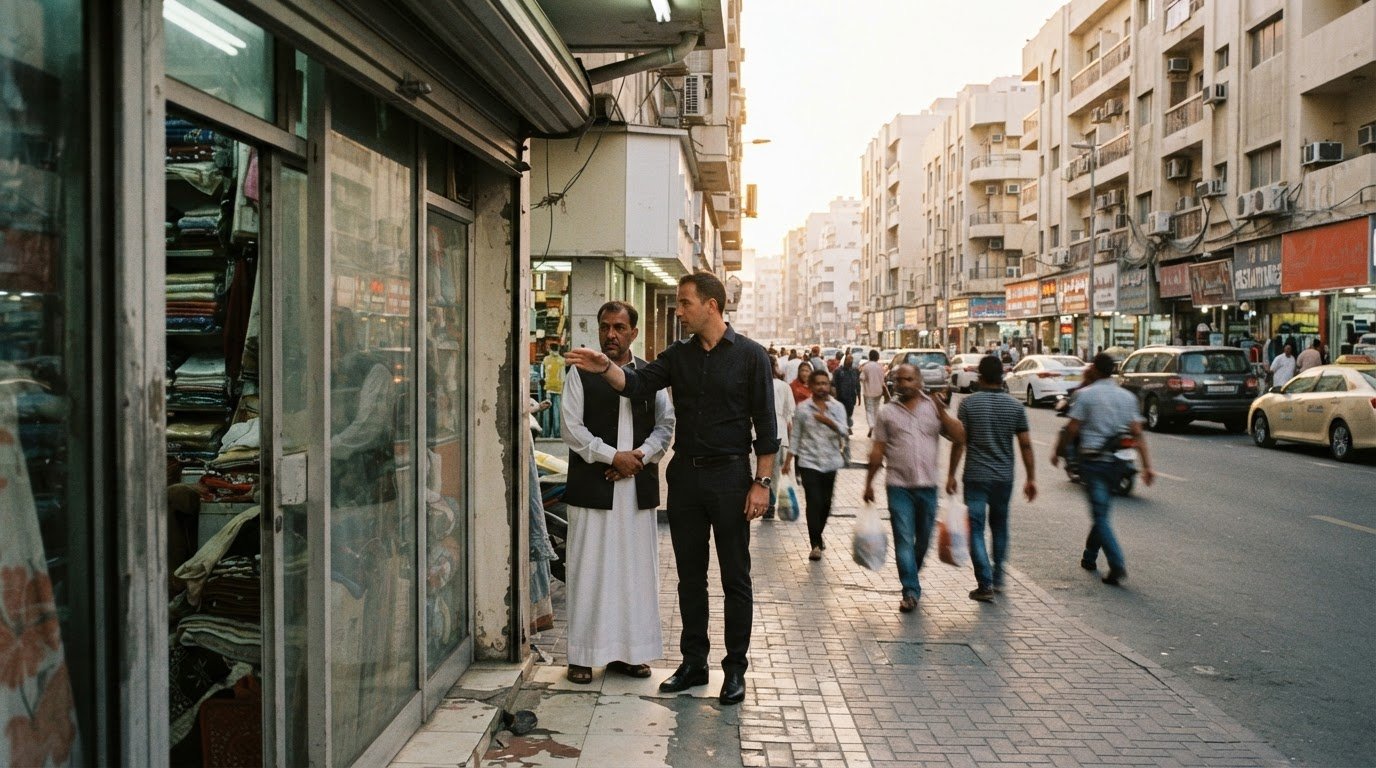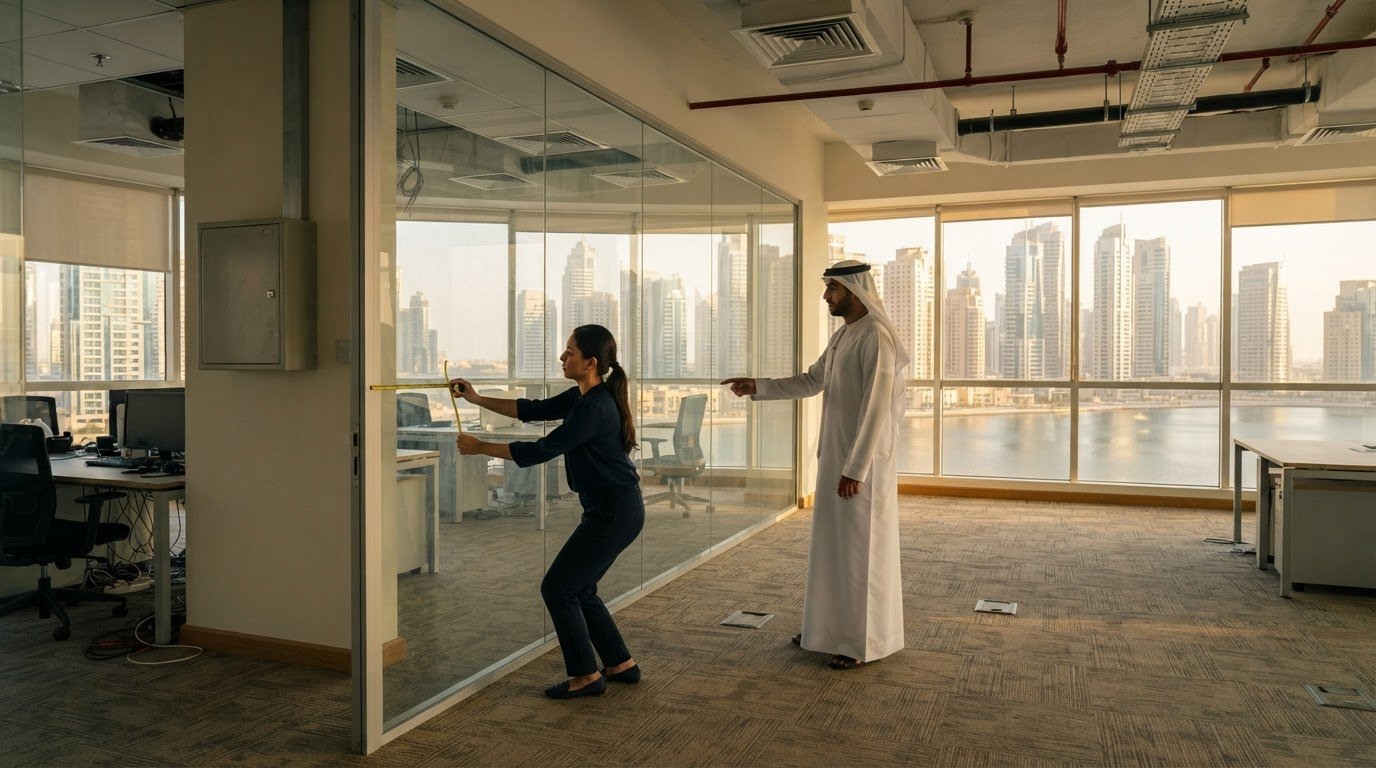
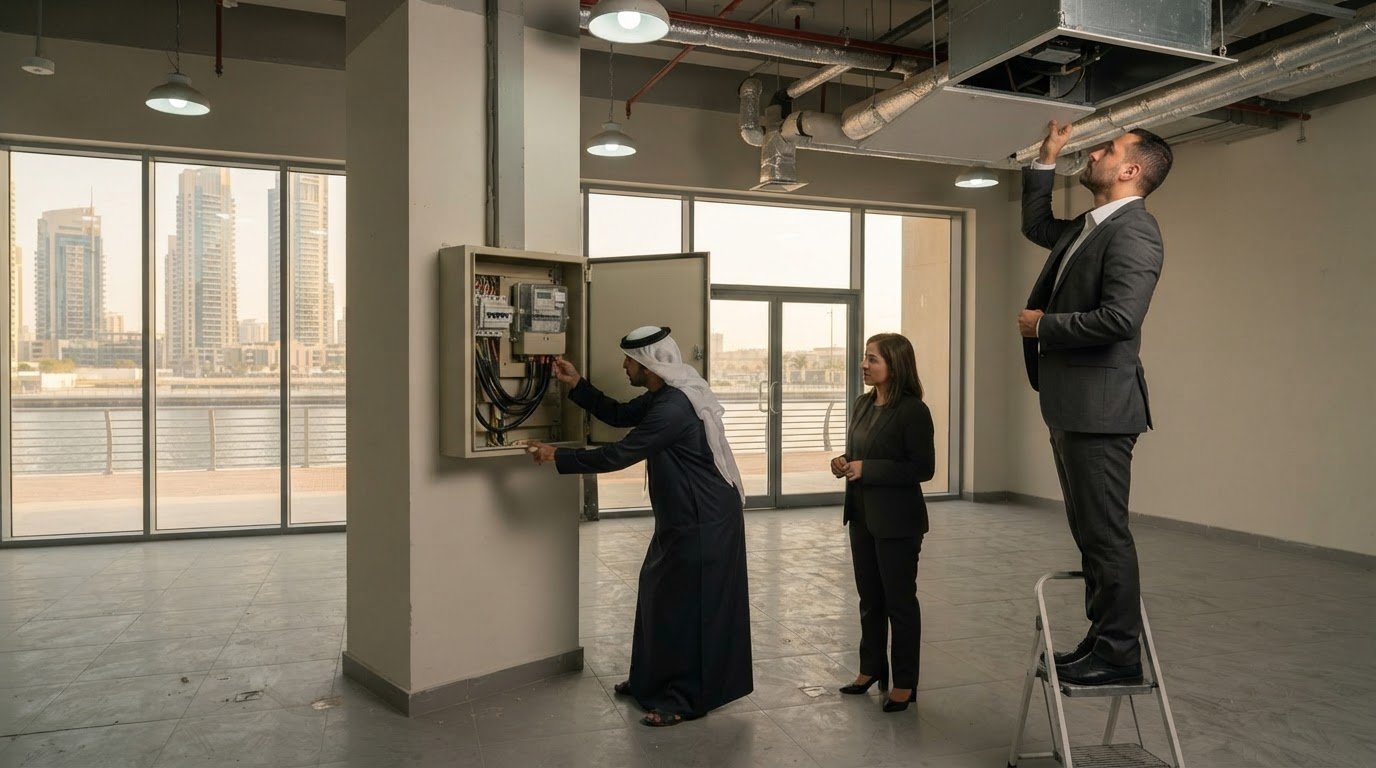
The lease label matters less than the costs and responsibilities set out in the contract. The main types of commercial leases in the UAE include gross, single-net, double-net and triple-net arrangements. Fitted or turnkey space describes a different starting point: the condition of the premises when you take possession. Each arrangement affects who pays operating expenses and who is responsible for property obligations.
Choosing between them can shape a business’s costs throughout the tenancy. Gross leases generally place more operating costs with the landlord, while net leases pass some or more of those expenses to the tenant. In Dubai, commercial tenancy rules also matter: Law No. 33 of 2008 amends Law No. 26 of 2007, and the Dubai Land Department says commercial leases must be registered with EJARI.
This guide explains how commercial lease types differ, how landlord and tenant duties are allocated, and what to understand about lease terms and registration. It also outlines the Dubai rules governing commercial tenancies, helping you assess the full agreement rather than focusing only on the headline rent.
Key Takeaways
- Identify how gross, net and fitted lease structures allocate costs before comparing headline rent.
- Understand which maintenance, utility and operating expenses may fall to the landlord or tenant under different agreements.
- See how lease duration affects the registration route, including the distinction between EJARI and Dubai Land Department registration.
- Learn how Dubai tenancy legislation shapes lease obligations and why the written terms matter alongside the applicable law.
What is a Commercial Lease?
A commercial lease gives a business the right to use property for an agreed period in return for rent. The contract allocates expenses, sets payment dates and records the condition of the premises.
Mainland leases generally fall under the relevant emirate’s tenancy framework. DIFC and ADGM have separate free-zone frameworks, and neither prescribes a maximum lease term.
Office leases support business operations, retail leases cover customer-facing premises, and warehouse leases provide storage space. Industrial leases suit production and related activities. In every case, check that the permitted use matches your business and that the premises’ condition meets your operational needs.
Lease Duration and Payment Terms
Duration and payment terms define how long a business occupies a property and when rent falls due. UAE commercial leases typically last between 1 and 5 years, while Dubai terms commonly range from 3 to 10 years. Rent is generally stated in AED, with quarterly payments common and payment made by post-dated cheque or electronic transfer. The agreement should set the due dates and any advance payment schedule. UAE landlords commonly request one to four rent cheques per year, making payment frequency a point to negotiate before signing. To manage payment default risks and maintain predictable cash flow, property owners often turn to a landlord rental guarantee UAE alongside standard lease agreements.
Rent Escalation and Review
A rent escalation clause sets when and how rent changes during the lease; a review clause can refer to market rent. Multi-year Dubai commercial leases commonly include increases of 5% to 10%, but statutory limits also apply. Under Decree No. (43) of 2013, no increase is permitted when rent is up to 10% below the average rental value of similar units. Where rent is 11% to 20% below that average, the maximum increase is 5%; where it is more than 40% below, the maximum is 20%. The Smart Rental Index provides a reference for rent-adjustment disputes in Dubai, including commercial tenancies, from January 2025. Review the clause’s timing and calculation method before agreeing to an escalation.
Expenses Beyond Base Rent
A full lease comparison adds operating charges to base rent to show the overall occupancy commitment. Depending on the agreement, expenses may include utilities, service charges, maintenance, insurance or common-area costs. Commercial real estate leases in the UAE are subject to VAT at the standard rate of 5%, according to the Federal Tax Authority. Compare these obligations alongside the rent and the premises’ condition; a lower headline figure may not mean lower total expenses.
What are the basic obligations of landlords and tenants?
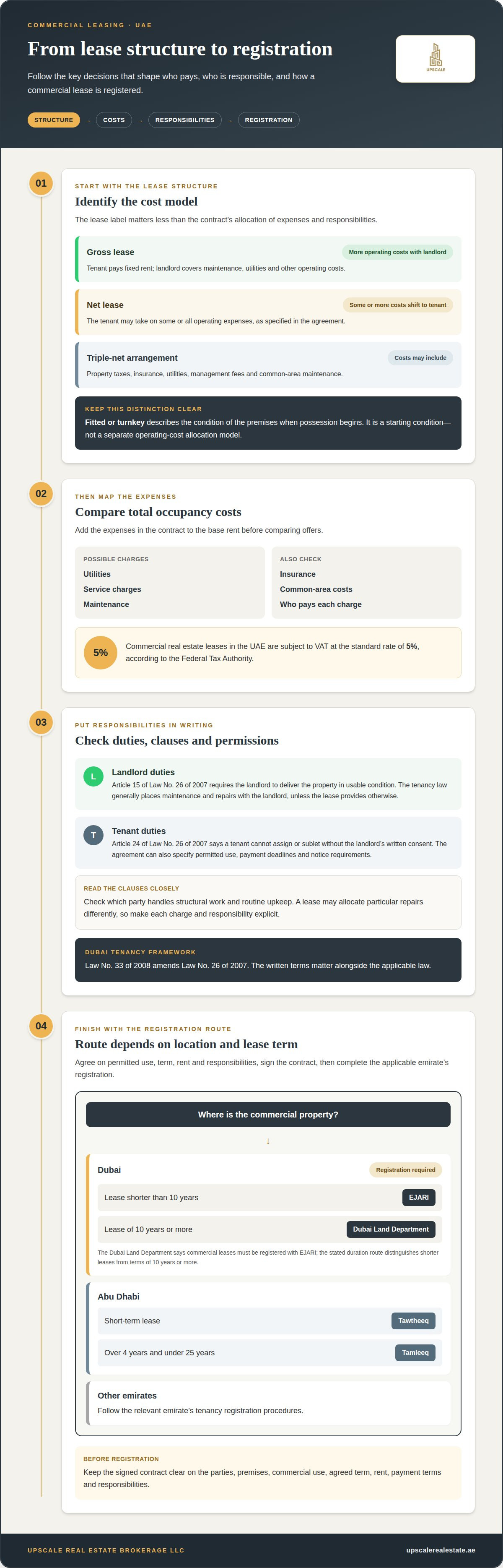
A commercial lease allocates financial and practical obligations between the landlord and tenant. In a gross lease, the tenant pays fixed rent while the landlord covers maintenance, utilities and other operating costs. A net lease shifts some or all operating expenses to the tenant. Under a triple-net arrangement, those costs may include property taxes, insurance, utilities, management fees and common-area maintenance. The agreement should identify each charge and the party responsible for paying it.
Dubai’s tenancy framework includes Law No. 33 of 2008, which amends Law No. 26 of 2007. Article 15 requires the landlord to deliver the property in usable condition. The tenancy law generally makes the landlord responsible for maintenance and repairs, unless the lease provides otherwise. That exception matters: a clause can allocate particular repairs differently, so the wording should distinguish structural work from routine upkeep. Clear responsibilities can reduce disputes about damage, access and operational interruptions.
Tenants also have duties under the agreement and applicable law. Under Article 24 of Law No. 26 of 2007, a tenant cannot assign or sublet the lease without the landlord’s written consent. Lease clauses can also set permitted use, payment deadlines and notice requirements. These terms should align with how the business will occupy the commercial property.
Priorities shape negotiations. A landlord may seek a security deposit equal to three months’ rent, while a tenant-priority example uses one month. A tenant may also seek a break clause after year 2, with three months’ notice and a two-month penalty, alongside return of the deposit within 30 days. These are negotiation examples, not automatic legal requirements. For businesses assessing premises and lease terms, commercial leasing support can help connect occupancy needs with the agreement’s responsibilities.
Short-term and long-term lease forms and registration
Registration requirements differ by emirate and lease duration. According to the Dubai Land Department, all commercial leases in Dubai must be registered with EJARI. In Abu Dhabi, short-term leases use Tawtheeq, while long-term leases over four years and under 25 years use Tamleeq. Other emirates have their own tenancy registration procedures.
To lease commercial premises, agree on the permitted use, lease term, rent and responsibilities, then sign the contract and complete the applicable emirate’s registration. The process depends on the property’s location and, in some cases, the lease duration.
In Dubai, leases shorter than ten years are registered on the EJARI register. Leases with a term of ten years or more require registration with the Dubai Land Department. Some leases may need to use a prescribed contract template for registration. These thresholds can help businesses weigh a shorter occupancy commitment against a longer-term property arrangement.
For EJARI registration, the signed tenancy contract records the parties, premises and agreed term. It should clearly state the commercial use, rent, payment terms and responsibilities. Clear terms help keep the registered record consistent with the agreement.
Abu Dhabi’s systems distinguish between short- and long-term lease forms: Tawtheeq covers short-term leases, while Tamleeq applies to the specified long-term range. For free-zone or industrial property—such as workspaces acquired during a RAKEZ business setup—the contract should still reflect the premises and its use. Registration does not replace clear lease terms. Identify the appropriate register before signing so the contract, term and registration record follow the correct process.
Dubai laws governing commercial leases
Dubai commercial tenancy rules combine statutory obligations with the parties’ written lease agreement. Law No. 33 of 2008 amends Law No. 26 of 2007, the emirate’s tenancy law. The agreement records rental terms and operating responsibilities, while the law sets rules for matters such as renewal, rent changes and eviction. A registered contract should therefore be read alongside the applicable legislation, not treated as the only source of obligations.
Renewal timing is a practical priority. Under Law No. 33 of 2008, a tenant wishing to renew must notify the landlord at least 90 days before expiry. Article 13 of the same law allows the parties to renegotiate rent before the lease expires. This provides a defined point to discuss revised terms, rather than assuming the existing rental amount or conditions will automatically continue.
Dubai’s rules also set procedures for eviction. A landlord may seek eviction for unpaid rent if the tenant fails to pay within 30 days of receiving a payment notice, unless the parties agreed otherwise. For specified grounds, including demolition, reconstruction or personal use, the landlord must give 12 months’ notice through a notary public or registered mail. These notice periods make the reason for eviction and the method of delivery important parts of the process.
Disputes have a designated forum: Dubai’s Rental Disputes Centre was established under Decree No. 26 of 2013 to adjudicate landlord-tenant disputes. For operating businesses, the takeaway is to align the lease agreement’s renewal dates, notices and rent clauses with Dubai’s statutory framework. Clear drafting can help parties understand their obligations before a disagreement escalates. For guidance on commercial lease arrangements, discuss your commercial leasing requirements.
Upscale Real Estate Brokerage LLC: Commercial Leasing
Upscale Real Estate Brokerage LLC provides commercial leasing support for businesses assessing premises, lease structures and occupancy needs. Its Property Leasing service helps match your operating requirements with suitable commercial property and clarify how proposed terms fit your plans.
Consider commercial leasing support when comparing premises, reviewing lease conditions or preparing to occupy business space. Before signing, assess the permitted use, payment structure, responsibilities and registration requirements. The right property depends on how well the space supports your operations and whether the contract’s obligations work for your business.
For support with your commercial property requirements, contact Upscale Real Estate Brokerage LLC.
Choose premises that support your next move
The right commercial space should serve more than your immediate occupancy needs. Consider how the premises fit your operating model, future plans and wider property strategy. Understanding the types of commercial leases in the UAE helps frame the decision; the next step is matching a specific property and agreement to your business priorities.
Upscale Real Estate supports commercial leasing decisions alongside ready property sales, off-plan project sales and residential leasing. This broader perspective can help when your property needs extend beyond a single business premises or form part of a portfolio plan.
Share your commercial property requirements and contact Upscale Real Estate Brokerage LLC to discuss the next step. A well-matched property can give your business a clearer foundation for what comes next.
Frequently Asked Questions
Are lease provisions regulated or freely negotiable?
Commercial lease terms can be negotiated within the applicable legal framework. Discuss rent payment schedules, permitted use, repair responsibilities, insurance and renewal options, then record the agreed terms in the contract. For example, a tenant planning significant operational changes may want express consent provisions. Negotiated terms cannot override mandatory legal requirements, so review each clause against the rules that apply to the property’s emirate or free zone.
Are there instances where tenants may demand an extension of the lease?
A tenant may request an extension, but an automatic right depends on the contract and applicable tenancy rules. An express renewal option can specify when and how to exercise it; without one, the parties may need to agree on an extension. If your business expects to stay longer, negotiate a renewal mechanism before signing, including the notice process and how revised terms will be handled.
What are the usual forms of leases?
Commercial lease forms commonly describe either how expenses are shared or the condition in which the premises are delivered. Gross and net arrangements allocate expenses differently, and net leases vary according to which costs the tenant pays. Fitted or turnkey describes space prepared for occupation. These labels can overlap: a fitted office may also have a gross or net cost structure, so the contract defines the actual arrangement.
Who is usually responsible for insuring the leased premises?
The lease agreement determines how insurance costs and responsibilities are allocated. Under double-net and triple-net arrangements, the tenant may be responsible for property insurance premiums; other structures may allocate these costs differently. Distinguish building insurance from cover for the tenant’s equipment, stock or business operations. The contract should state who arranges each policy, what risks it covers and how the costs are treated.
What types of commercial leases are available in the UAE?
Common commercial lease arrangements include gross, single-net, double-net, triple-net and modified gross leases. They mainly differ in how the landlord and tenant share operating expenses. Fitted or turnkey leases describe the premises’ readiness for occupation, not a separate expense-allocation model. For example, a warehouse lease could combine prepared premises with a net cost structure. Read the clauses, not just the label, to understand each party’s obligations.
What are the typical terms and duration of commercial leases in the UAE?
Commercial leases in the UAE typically run between one and five years, while Dubai commercial lease terms commonly range from three to ten years. The suitable duration depends on your occupancy plans, setup requirements and tolerance for renewal risk. A shorter commitment may suit a business that needs flexibility; a longer one may better fit a location-specific operation. Compare the expiry, renewal and early-termination clauses before agreeing to the term.