
What if the most expensive aspect of your next lease isn't the monthly rate, but the specific clauses you failed to negotiate? Securing a high-quality apartment for rent in 2026 requires a shift from passive searching to a professional, advisory-led strategy. It's common to feel frustrated by opaque contract terms, fluctuating market dynamics, and the looming threat of hidden maintenance costs that disrupt your financial planning. You deserve a residential experience defined by stability and clear communication rather than administrative friction.
We agree that a residential lease should be a transparent, secure asset rather than a source of constant uncertainty. This guide provides a professional framework to help you evaluate, secure, and manage your next home with the precision of a strategic investor. You'll learn how to identify responsive property management, model your predictable living costs, and ensure your tenancy agreement is grounded in regulatory compliance. We'll move through the essential steps of market analysis, technical evaluation, and contract verification to protect your long-term interests and ensure a well-managed unit.
Key Takeaways
- Learn how to navigate the 2026 rental landscape by utilizing professional market modeling to ensure long-term residential stability.
- Understand the legal requirements of standardized tenancy contracts and the critical role of national registration in protecting your tenant rights.
- Identify the most cost-effective apartment for rent by evaluating floor plan efficiency and calculating the true impact of utility arrangements.
- Implement a professional viewing checklist to look beyond aesthetics and verify the technical integrity of a property before signing.
- Recognize the strategic advantage of leasing managed properties to ensure predictable maintenance standards and transparent communication.
The Evolving Landscape of Residential Leasing in 2026
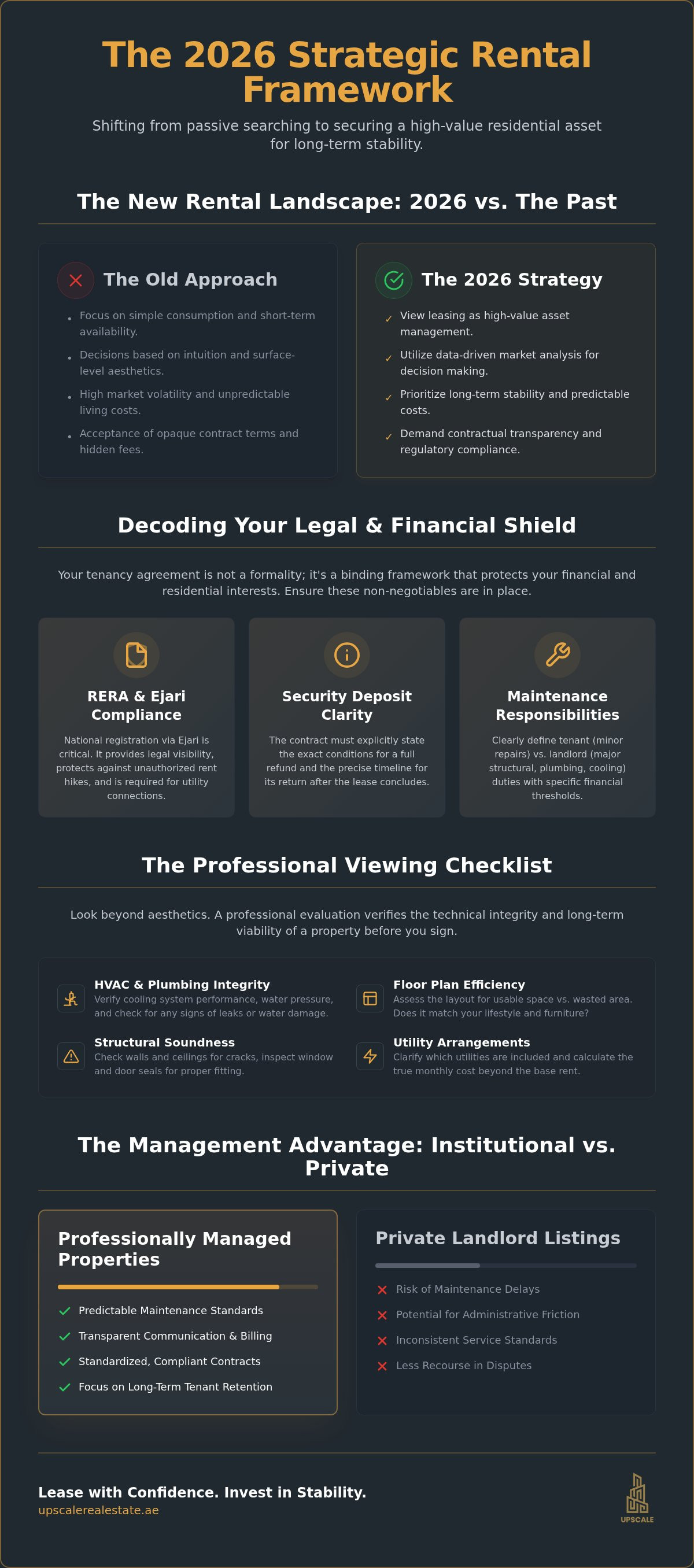
The residential market in 2026 has transitioned from a period of high volatility to one characterized by strategic, long-term stability. For those seeking an apartment for rent, the decision-making process now mirrors high-value asset management rather than simple consumption. This shift is driven by a sophisticated understanding of market cycles and a collective desire for predictable living costs. Tenants are no longer just looking for a roof; they're looking for a residential asset that offers visibility into future costs and service standards. It's a mature environment where data takes precedence over intuition.
New residential supply entering the market is fundamentally altering rental yield modeling. As more stock becomes available, the focus has shifted from mere availability to the quality of the management and the surrounding infrastructure. Professional expats are increasingly prioritizing managed units over private landlord listings to avoid the administrative friction and maintenance delays often associated with individual owners. This trend highlights a broader move toward accountability and professional standards. Securing an apartment for rent in this environment requires a grounded approach that accounts for both current market price and the long-term reputation of the property management firm.
National Supply and Demand Dynamics
Emerging residential districts are redefining what constitutes value in the national market. As infrastructure development connects previously peripheral areas to central business hubs, we see a direct correlation with rental appreciation. Identifying these "value pockets" requires an advisory-led approach that looks beyond current listing prices to the long-term potential of the district. Data-driven insights allow tenants to time their lease agreements to capture the best possible value before infrastructure projects reach full maturity. This strategic timing is essential for maintaining predictable living costs in a fluctuating market.
The Rise of Institutional Leasing
The market is seeing a significant transition from individual landlords to corporate-managed residential portfolios. This institutional shift provides tenants with standardized maintenance protocols and transparent billing systems. Institutional leasing removes the guesswork from the tenant experience, offering a grounded and reliable partnership. Upscale management is setting a new benchmark for luxury rentals by integrating end-to-end property management. These managed portfolios prioritize tenant retention through consistent service delivery, ensuring that the resident's long-term goals are aligned with the property's operational standards.
Decoding the Legal Framework of Tenancy Agreements
Securing a high-quality apartment for rent in 2026 is a transaction that must be grounded in legal precision. When you identify a suitable apartment for rent, the tenancy agreement becomes the most important document in your portfolio. It's not a mere formality. It's a binding framework that defines your financial and operational relationship with the property owner. In the UAE market, the integrity of this relationship depends on strict adherence to the standards set by the Real Estate Regulatory Agency (RERA). Every professional lease should clearly outline the duration, rent payment schedules, and specific maintenance responsibilities to prevent future friction.
Ejari registration remains the primary mechanism for ensuring your contract has legal visibility. Without this national registration, your rights as a tenant are significantly diminished in the eyes of the law. It acts as a shield against unauthorized rent increases and provides the necessary documentation for utility connections and residency requirements. For those seeking long-term stability, verifying that your brokerage facilitates this process is a critical step in your due diligence. Transparency in security deposit protocols is equally vital. You must ensure that the contract specifies the exact conditions for a refund and the timeline for its return after the lease concludes.
Maintenance responsibilities are a frequent point of contention that requires clear documentation. Standard law typically differentiates between minor and major repairs. Minor repairs, often defined by a specific financial threshold, are usually the tenant's responsibility. Major structural issues or systemic failures in plumbing and cooling systems belong to the landlord. Clear visibility regarding these thresholds in the contract ensures that your living costs remain predictable and manageable throughout the year.
Standardized Contract Clauses
Every tenant must verify mandatory clauses before signing any document. Look for specific language regarding renewal terms and the required notice periods, which are traditionally 90 days in the national market. Be cautious of non-compliant addendums that attempt to override your statutory rights. A professional residential leasing advisory can help you identify these traps before they become financial liabilities.
Dispute Resolution and Regulatory Compliance
If a lease agreement is contested, the Rental Dispute Center (RDC) serves as the formal mediating body. Working with a RERA-licensed brokerage, such as Upscale (ORN 23084), ensures that your transaction follows the highest professional standards. This regulatory oversight provides a layer of accountability that private, unmanaged listings often lack. By prioritizing compliance over convenience, you secure a tenancy that is both stable and legally sound.
Essential Criteria for Choosing the Right Apartment
Selecting the ideal apartment for rent requires a shift from aesthetic preference to structural and financial due diligence. In a mature market like 2026, the value of a residential unit is defined by its operational efficiency and its integration into wider commercial hubs. You must look beyond the initial visual appeal to assess how the property functions as a long-term living environment. This involves a meticulous evaluation of both the physical fit-out and the building's maintenance history, which serves as a lead indicator of your future quality of life.
Floor plan efficiency is often more critical than total square footage. A poorly designed large unit can feel restrictive, while a well-modeled smaller space offers superior utility and lower cooling costs. When evaluating a potential apartment for rent, prioritize units with logical flow and ample natural light. These features contribute to a sustainable living environment and can reduce your reliance on artificial lighting and climate control. High-quality fit-outs, characterized by durable materials and modern appliances, further protect you from the inconvenience of frequent maintenance interventions.
The 'Chiller-Free' debate remains a central point of the financial evaluation. In buildings where cooling costs are included in the rent, your monthly outgoings are more predictable. However, units with independent metering allow for greater control over consumption. You should request historical utility data to model these costs accurately. Other essential amenities that drive long-term value include:
- Secure Parking: Dedicated, covered spaces with easy access to elevators.
- Wellness Facilities: Well-maintained gyms and pools that reduce the need for external memberships.
- Security Standards: 24/7 onsite personnel and integrated CCTV systems for peace of mind.
- Logistical Proximity: Access to major transport links and proximity to your primary workplace.
Quantitative Property Evaluation
Analyzing the fiscal impact of a lease requires a grounded approach to budgeting. Total Cost of Occupancy is a critical metric for evaluating the true fiscal impact of a residential lease beyond the headline rent. This calculation must include base rent, utility estimates, and any mandatory service or registration fees. Comparing furnished versus unfurnished units is also a strategic decision. While furnished units offer convenience, unfurnished apartments often provide better long-term savings for tenancies exceeding 24 months, as you avoid the premium associated with provided assets.
Qualitative Lifestyle Factors
Community management standards are the backbone of a successful tenancy. Master developments that prioritize green spaces and pedestrian-friendly infrastructure offer a higher quality of life and better long-term appreciation of the living experience. Sustainability features, such as green-certified building standards and energy-efficient water systems, are no longer optional luxuries. These features directly reduce tenant overheads and reflect a commitment to modern, responsible property management. Prioritizing buildings with a proactive concierge and responsive management team ensures that your daily logistics remain seamless and transparent.
The Step-by-Step Guide to Securing Your Rental Property
Securing an apartment for rent involves a high-stakes transition from market research to legal execution. While the search phase is often driven by visual appeal, the securing phase must be driven by data and verification. A strategic viewing is your first line of defense. You should inspect the technical integrity of the unit, checking water pressure, AC functionality, and electrical outlets. These are the functional elements that determine your daily comfort. Looking beyond the fresh paint allows you to identify potential maintenance issues before they become your responsibility.
Once you've identified the right unit, the negotiation phase begins. This is where professional brokerage support is invaluable. A skilled advisor ensures that your offer reflects current market modeling while protecting your interests regarding maintenance clauses and renewal terms. Payment culture is also evolving. While post-dated cheques remain a staple, 2026 sees an increase in digital payment alternatives and direct debit systems that offer better visibility and security for both parties. Finalizing a payment schedule that aligns with your cash flow is a key part of a sustainable tenancy.
The Documentation and Verification Phase
Accuracy during the documentation phase prevents delays and legal complications. For national and expatriate tenants, the required portfolio typically includes a valid passport, residency visa, and Emirates ID. You must also provide proof of income, such as a salary certificate or recent bank statements, to satisfy the landlord's due diligence requirements. It's essential to verify the landlord's ownership by requesting a copy of the Title Deed and the owner's passport. To ensure a secure and grounded transaction, you should always utilize professional residential leasing services that process payments through RERA-compliant accounts.
Move-in Logistics and Utility Setup
Transitioning into your new home requires coordinating with multiple entities. Activating electricity, water, and cooling services should happen at least 48 hours before your move-in date to ensure the unit is functional. Building management often requires a move-in permit, which may necessitate elevator bookings and the submission of your Ejari certificate. Performing a detailed move-in inspection report is your final protective measure. Document any existing snags or cosmetic defects with high-resolution photos and share this report with the property manager. This record is the only way to safeguard your security deposit when the lease eventually concludes.
How Professional Property Management Enhances the Tenant Experience
Professional property management serves as the operational backbone of a high-quality tenancy. When you select an apartment for rent that is managed by a licensed firm, you're opting for a systematic approach to residential living. Managed properties offer significantly higher reliability because they operate under standardized service-level agreements. Unlike private landlord listings, where maintenance can be delayed by individual schedules or liquidity issues, managed units benefit from dedicated teams and pre-approved vendor networks. This ensures that technical snags are addressed with speed and precision.
A professional manager also acts as a neutral intermediary. In the event of a dispute regarding contract terms or maintenance responsibilities, the manager provides a grounded perspective based on RERA regulations rather than emotional responses. This objectivity protects both the tenant and the owner, fostering a sense of long-term partnership. Most modern management firms now utilize digital portals to enhance visibility. These platforms allow you to manage your tenancy, process payments, and track maintenance requests in a single, transparent environment. Upscale Real Estate Brokerage LLC bridges the gap between owners and tenants by ensuring every interaction is professional, accountable, and documented.
The Value of an Advisory-Led Rental Search
Strategic leasing is about moving from the simple act of "finding a flat" to optimizing a residential asset. By applying principles of real estate portfolio management dubai, tenants can evaluate their lease as a component of their broader financial health. A long-term partnership with a professional brokerage provides you with market modeling data that informs better decision-making. This advisory-led approach ensures that your next apartment for rent aligns with your lifestyle requirements and your long-term fiscal goals.
Securing Future ROI through Strategic Leasing
Leasing is often the first step toward property acquisition. By navigating the rental market with a professional framework, you build the local mastery required to eventually transition from tenant to owner. Understanding building quality and management standards today prepares you for future investment. For those looking ahead, our Strategic Guide to Ready Property Sales offers insights into the next stage of the residential journey. When you're ready to secure a stable and well-managed home, Consult with Upscale for a transparent and professional leasing experience.
Strategic Management for Your Next Tenancy
Mastering the 2026 rental market requires a move away from passive searching toward an advisory-led residential strategy. Success is found in the details of the contract, the efficiency of the floor plan, and the reliability of the property management firm. By focusing on these core elements, you secure a tenancy that offers both financial predictability and operational excellence. You're not just finding a place to live; you're establishing a grounded foundation in a mature and transparent market.
When you're ready to identify your next apartment for rent, partnering with a RERA-licensed expert ensures your interests are protected at every stage. Upscale Real Estate Brokerage LLC (ORN 23084) delivers the visibility and accountability you need for a secure residential experience. Secure your next apartment with Upscale Real Estate Brokerage to benefit from our transparent, advisory-led approach and comprehensive management services. We look forward to guiding you toward a stable and well-managed home.
Frequently Asked Questions
What documents are required to rent an apartment in 2026?
To secure a residential lease in 2026, you must provide a valid passport, residency visa, and Emirates ID. Landlords also require a salary certificate or recent bank statements to verify your financial stability. These documents ensure the transaction is grounded in regulatory compliance and satisfies the due diligence requirements of the brokerage.
How is the security deposit calculated for residential apartments?
Security deposits are typically calculated as 5% of the annual rent for unfurnished units and 10% for furnished units. This percentage is a national standard intended to cover potential damages beyond normal wear and tear. You should ensure the exact amount and refund conditions are clearly stated in your tenancy agreement to maintain fiscal transparency.
What is the difference between a managed and a non-managed property?
A managed property is overseen by a professional firm that handles maintenance and administration, while a non-managed property is handled directly by the individual owner. Managed units often offer higher reliability and faster response times because they utilize standardized vendor networks. This professional oversight reduces the administrative friction often associated with private landlord interactions.
Can I negotiate the number of cheques for my rental payment?
You can negotiate the number of cheques with the landlord or property manager during the offer phase. While a single-cheque payment often results in a lower annual rate, multiple cheques allow for better cash flow management. When searching for an apartment for rent, discussing these payment terms early helps align the lease with your long-term financial modeling.
Who is responsible for maintenance costs in a standard tenancy agreement?
Maintenance responsibilities are divided between the landlord and the tenant based on the cost and nature of the repair. Landlords are generally responsible for major structural issues and systemic failures in cooling or plumbing. Tenants typically cover minor repairs, often defined as those costing less than a specific threshold, such as 500 or 1,000 AED, depending on the contract.
What is Ejari and why is it mandatory for all rental contracts?
Ejari is the national registration system that gives legal visibility to your tenancy contract. It's mandatory because it protects your rights as a tenant and serves as the official record for any future dispute resolution. Without an Ejari certificate, you cannot legally connect utilities or access the regulatory protections provided by the Rental Dispute Center.
What happens if I need to terminate my lease agreement early?
Early termination typically requires you to provide a specific notice period and pay a penalty, which is often equivalent to two months of rent. You must review the termination clause in your contract before signing to understand these financial implications. Clear visibility on these terms ensures that your exit strategy remains professional and legally sound.
Are utilities typically included in the rent for apartments?
Utilities such as electricity, water, and cooling are usually not included in the base rent unless the unit is marketed as "inclusive" or "chiller-free." When evaluating an apartment for rent, you should calculate these additional costs to determine the total cost of occupancy. Requesting historical utility data provides a more accurate model of your monthly living expenses.