

A strong investment story doesn’t always make a district the right place to live. A master-planned residential district may look promising on paper, but daily access, nearby amenities, ongoing costs, and verified property details matter just as much as projected demand.
Before you buy, lease, or invest, you need clear answers about the area and the specific property. Information about community life and ownership costs can be fragmented, and marketing claims may not show the full picture. Start by separating what you can verify from what still needs checking.
This guide provides a practical framework for assessing lifestyle fit, property fundamentals, recurring costs, and investment risks in the UAE, brought to you by Upscale Real Estate Brokerage LLC. You’ll learn what to verify, how to compare a property with your priorities, and how to build a shortlist for a purchase, lease, or investment discussion. The aim is not to predict returns, but to help you assess each option with greater clarity.
Key Takeaways
- Start with your purpose: daily living, leasing or investment. The right criteria depend on your priorities and time horizon.
- Assess a dubai south residential district using verifiable evidence about access, amenities and property fundamentals, not marketing claims alone.
- Compare options in one table, separating upfront purchase or rental obligations from recurring service charges and other ongoing costs.
- Complete due diligence at both levels: research the wider district, then inspect the specific unit and review its documents and contract terms.
- Build a clear shortlist by defining practical criteria and identifying which details still need confirmation.
What Makes a Residential District Suitable for Living or Investment?
A residential district is an area where people live, rent homes or hold property. Whether it is suitable depends on a person’s living needs or investment objectives. For someone considering a dubai south residential district, the label alone won’t tell you whether a particular area or property fits. Assess it against your intended use, and treat promotional descriptions as claims to verify, not proof of convenience or investment potential.
A district overview can help explain how a master-planned area is organised. For background, consult the Dubai South master plan, then verify current facilities, access and project status through relevant official or primary sources. A planned amenity may not yet be built, open or available to residents.
Which factors shape everyday residential suitability?
Start with your routine, not a brochure’s feature list. Write down the services your household uses, such as shops, education, healthcare and recreation. Check their locations, operating status and practical accessibility using current sources. Consider your likely journeys and compare travel options at the times you would actually make them.
Distinguish completed, operational amenities from facilities described as planned or under development. For claims that could affect your decision, seek confirmation from the responsible provider or an official source. If possible, visit the area and test the journey yourself. Travel times and convenience can vary by route, time and mode of transport.
How do residents and investors define a good fit differently?
Residents tend to judge suitability through day-to-day experience. Household size, access to essential services, commute patterns and expected length of stay all influence whether a home works in practice. Rank your needs before comparing properties, since a feature that matters to one household may be irrelevant to another.
Investors need a different assessment. Consider who might rent the property, what evidence supports tenant demand and how long you intend to hold the asset. Test assumptions against verifiable information rather than relying on projected growth or broad claims about future appeal. Expected costs and the time it may take to secure a tenant or sell can also affect whether an investment fits your plans.
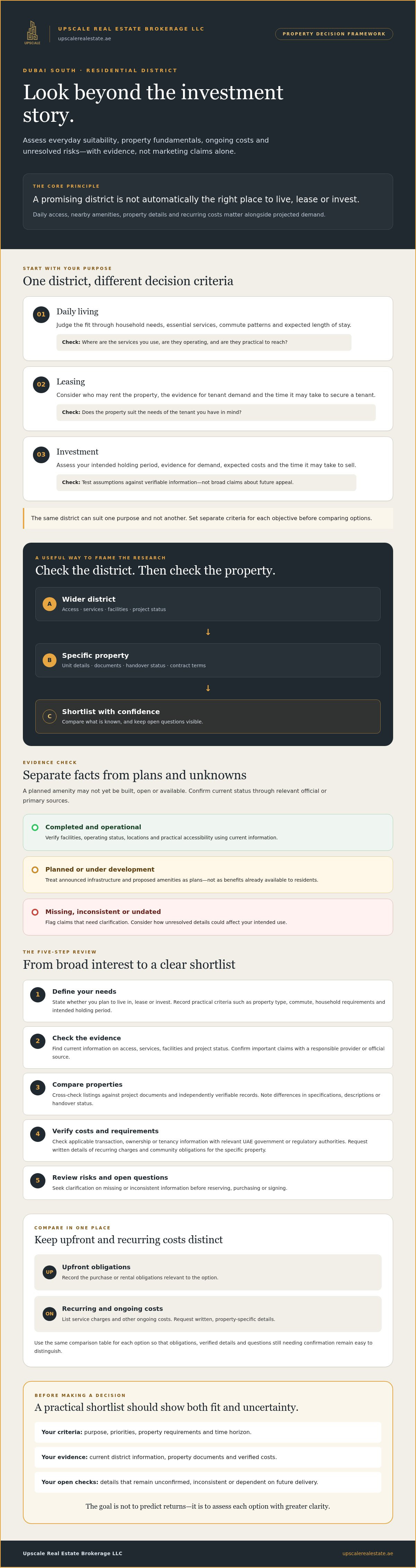
The same district may meet a resident’s daily needs but not suit an investor’s target tenant or holding horizon, and the reverse may also be true. Set separate criteria for each objective. This makes your research more focused and helps put marketing claims in perspective.
How to Assess Residential District Fundamentals Before Shortlisting
Use a consistent process to move from broad interest to evidence you can compare. For a property decision in the UAE, separate confirmed facts from assumptions. Before acting, verify applicable ownership, registration and tenancy requirements against current official sources.
Current checks against primary sources help distinguish documented property features from claims that may be outdated, incomplete or not yet delivered.
- 1. Define your needs. Record whether you plan to live in, lease or invest in a property. Set practical criteria such as property type, commute, household requirements and intended holding period.
- 2. Check the evidence. Find current information on access, services, facilities and project status. Treat announced or proposed infrastructure as a plan, not an operational benefit.
- 3. Compare properties. Cross-check listings against available project documents and independently verifiable records. Note any differences in specifications, handover status or descriptions, and ask for clarification.
- 4. Verify costs and requirements. Confirm transaction, ownership or tenancy information with the relevant UAE government or regulatory authority. Request written details of recurring charges and community obligations for the specific property.
- 5. Review risks. Flag missing, inconsistent or undated claims. Consider how unresolved questions could affect your intended use, and seek clarification before reserving, purchasing or signing.
Which sources should readers check?
Use relevant government and regulatory sources for current legal, registration and transaction information. For property-specific claims, request project documents and compare them with records available through appropriate official channels. Listings can help you find options, but they don’t replace verification of the underlying details.
Keep a simple evidence log with each claim, its source, the date checked and whether it is confirmed. This is useful for market information, transport links and amenities, where older material may not reflect current conditions. If a facility is described as available, confirm that it is completed, open and accessible to residents.
How can readers validate community and property claims?
Where possible, confirm access and operating status directly with the relevant provider or responsible authority. Ask for written confirmation of unit specifications, completion or handover status, and applicable community obligations. A general promise of future convenience is not the same as a verified service today.
A due diligence checklist from Thompson Coburn LLP discusses review areas for commercial acquisitions. It can prompt useful questions, but it isn’t UAE-specific residential guidance. Confirm local requirements through official sources. For help turning purchase, leasing or investment criteria into a property shortlist, consider property sales and leasing guidance.
How to Compare Residential Options, Costs and Investment Potential
Once you have a shortlist, compare each option using the same criteria. Assess a dubai south residential district property against verified details and your intended use, not just its advertised features or projected demand. Keep evidence and assumptions separate so the comparison remains useful when information changes.
What should a residential comparison table include?
Include only property types that fit your needs, such as an apartment, villa or townhouse. For each option, record the detail, its source and the date you checked it. This makes information gaps visible and helps prevent an estimate from being mistaken for a confirmed fact.
- Property and intended use: Type, unit specifications, whether you plan to occupy, lease or hold it, and its current occupancy or handover status.
- Access and amenities: Practical routes and relevant facilities, distinguishing operational services from planned ones.
- Upfront obligations: For a purchase, list applicable transaction costs. For a lease, record rent and any other obligations stated in the agreement. Verify amounts and terms for the specific property.
- Ongoing costs: Note applicable service charges, maintenance responsibilities and any property management arrangements or costs to confirm.
- Evidence trail: Add a source and verification date beside each material claim, including tenure and project information.
Keep upfront and recurring amounts in separate columns. A lower initial commitment may still come with different ongoing costs, and a tenant’s obligations differ from an owner’s. Use written, property-specific information rather than applying a general estimate to every option.
How should investors assess potential returns and risk?
Model potential rental income using current, comparable evidence for the property type and intended tenant profile. Gross rental yield is annual rental income divided by the property’s purchase price, expressed as a percentage. Net yield accounts for relevant expenses, such as applicable service charges, maintenance, management and periods without rental income. State the assumptions behind each figure, and don’t present either measure as a guaranteed return.
Stress-test the model by allowing for a vacancy period, unexpected maintenance and the time or cost involved in managing the property. Assess exit flexibility against your intended holding period without assuming future appreciation. For off-plan options, include the stated delivery timeline and payment terms in your analysis, then compare them with ready properties. A ready-versus-off-plan comparison can clarify how the timing of the asset affects your decision.
Use the comparison to identify what is confirmed, what remains an estimate and which unanswered questions could materially change your decision. This distinction supports a more grounded discussion of suitability and risk.
What Due Diligence Should Buyers and Tenants Complete?
District research helps you assess the wider setting, but it can’t confirm the condition, legal position or obligations attached to a specific home. Before reserving, purchasing or signing a lease, separate area-level checks from unit-level inspection and document review. For a property in the UAE, verify applicable requirements through current official sources and seek qualified professional advice where needed.
What should buyers verify before committing?
Review ownership and title information, transaction documents and project status with appropriate professional support. For an off-plan property, clarify the documented completion and handover details. For a ready home, confirm that the unit and its current status match the documents provided. A listing or verbal assurance alone won’t resolve discrepancies.
Ask for written details of applicable service charges, maintenance responsibilities and community rules. Inspect the property and compare its condition and specifications with what was agreed. If the floor plan, included features or handover condition differ from the description, pause and request a written explanation before proceeding. A ready-property purchase checklist can help structure unit-level checks before a commitment.
What should tenants confirm before signing?
Read the proposed tenancy agreement closely. Confirm rent payment terms, the responsibilities assigned to landlord and tenant, any maintenance provisions and the contract’s other conditions. If a clause is unclear or differs from what was discussed, ask for clarification in writing.
Inspect the unit before handover and record its condition through an agreed process. Note existing damage, check that the main fixtures and facilities match the agreed description, and keep copies of inspection records and communications. Confirm current registration and tenancy requirements through the relevant UAE authority. Procedures can depend on the applicable jurisdiction and may change.
- Area-level: Recheck access, operational amenities and other factors that affect your intended use.
- Unit-level: Inspect condition, specifications, occupancy or handover status, and supporting documents.
- Contract-level: Review costs, responsibilities, conditions and applicable requirements before signing or paying.
Keep a record of what you’ve reviewed and what remains unresolved. If a material detail is missing or inconsistent, request clarification before taking the next step. For help assessing available property options or transaction details, discuss your property requirements with a real estate advisor.
How an Advisor Can Turn Research into a Clear Property Decision
Research is most useful when it leads to clear search criteria. If you’re considering a dubai south residential district, an advisor can help turn your priorities into questions to apply consistently across property options. A location’s reputation alone doesn’t prove that a home suits your needs.
Prepare a short brief before an advisory discussion. Include:
- Intended use: Will you live in the property, lease it or hold it as an investment?
- Practical preferences: Note the property type, household requirements, access needs and preferred occupancy or handover timing.
- Decision priorities: Identify which factors matter most and which are flexible.
- Investment objectives: If relevant, outline your intended holding horizon, income objectives and tolerance for risks such as vacancy or ongoing costs.
- Evidence and questions: Bring the documents you’ve gathered, note their source and date, and list details that remain unclear.
This brief helps focus the discussion and makes it easier to distinguish confirmed property information from assumptions that still need verification.
What can a brokerage or property manager help clarify?
A brokerage can explain available property sale or lease options and outline relevant transaction steps within its service scope. This can help you compare alternatives against your brief, but it doesn’t replace independent document review or professional advice on legal matters.
Property management is a separate service focused on property operations and tenant relations for owners. Investment advisory addresses the broader investment decision, including how an option relates to an investor’s objectives, assumptions and risk considerations. These services have different roles, and none can guarantee rental income, appreciation or a particular outcome.
For a transparent discussion, ask what information supports each recommendation, which obligations apply to the specific property and what remains unverified. A considered conversation should make assumptions visible, not pressure you to decide before your questions are answered.
Upscale Real Estate Brokerage LLC advises on ready and off-plan property sales, residential leasing, property management and investment strategy. If you’re turning research into practical next steps, discuss your property requirements and clarify which criteria matter most to your decision.
Make Your Next Property Decision with Greater Clarity
A sound residential decision starts with your objective, whether you’re choosing a home, planning a lease or assessing an investment. Compare options against consistent criteria, verify community and property details using current evidence, and keep upfront commitments separate from ongoing costs. Before reserving, purchasing or signing, resolve gaps in the documents and confirm relevant requirements with appropriate professionals.
A shortlist doesn’t need to eliminate every uncertainty. It should show what’s verified, what remains an assumption and which questions need answers before you proceed. That clarity can help you have a focused discussion about property options and transaction details.
Upscale Real Estate advises on residential sales, leasing, property management and investment strategy. The business is a RERA-licensed brokerage; verify current registration details independently before relying on them. To turn your priorities into practical search criteria, discuss your property requirements with Upscale Real Estate.
Frequently Asked Questions
What should I look for when choosing a residential district?
Choose a district that fits your daily routine or investment purpose, then verify the details that influence that fit. Consider access to work, education, healthcare, recreation and transport, along with available property types and operational services. For a dubai south residential district, as for any residential area, distinguish completed amenities from proposed plans and confirm important claims through current, reliable sources.
How can I compare residential districts for living versus investment?
For living, compare household needs, commute, everyday convenience and how long you expect to stay. For investment, examine evidence of tenant demand, likely tenant profiles, recurring expenses, vacancy assumptions and your intended holding period. Use the same comparison criteria for each option, but weight them differently depending on your goal. A district that works well for a resident may not match an investor’s income objectives or risk tolerance.
What costs should I check before buying or renting a property?
Separate upfront obligations from recurring costs, and confirm which apply to the specific property. Buyers should check transaction and registration charges, any applicable agent commission, service charges and maintenance responsibilities. Renters should review rent payment terms, any stated tenancy-related charges and their maintenance obligations. Ask for costs in AED, request written details, and verify relevant fees and requirements through official sources or the contract before committing.
How do I verify whether nearby amenities and infrastructure are operational?
Confirm operational status with the relevant provider, responsible authority or current project documentation. Check whether a facility is completed, open and accessible, rather than relying on a listing or promotional statement. For transport or infrastructure, seek current information from the responsible operator or official source. Record the source and date checked, and treat announced, proposed or under-construction plans separately from services available to residents today.
Can a residential property investment guarantee rental income or appreciation?
No. Rental income and property appreciation aren’t guaranteed, and actual results can differ from forecasts. Assess potential income using current, comparable evidence and model expenses, vacancy, maintenance and management assumptions. Gross yield compares annual rent with purchase price; net yield accounts for relevant expenses. Review how sensitive your expectations are to changes in rent, occupancy or costs, and don’t rely on promotional projections as assurances of performance.
What documents should I review before buying a property?
Review ownership and title information, sale and transaction documents, property specifications and, where relevant, project and handover records. Compare the documents with the property’s actual condition and the representations made to you. Confirm applicable registration and ownership requirements through current official UAE sources, and seek qualified professional advice if anything is unclear or inconsistent. The documents needed can vary by property and transaction, so request a complete, relevant set before committing.
How can a property advisor help me assess residential options?
A property advisor can help turn your priorities into practical criteria, explain available sale or lease options, and clarify transaction details within the advisor’s service scope. Upscale Real Estate Brokerage LLC provides residential sales and leasing, property management and investment advisory. An advisor can help you compare options and identify questions to verify, but can’t guarantee rental income, appreciation or a particular outcome. Keep independent document checks and professional advice part of your decision process.