

The most spacious villa on your shortlist may be the wrong home for your household. A villa for rent can look ideal in a listing, yet daily comfort and affordability depend on details photos rarely show: room layout, maintenance condition, utility arrangements, and what the lease makes your responsibility.
Assess more than bedroom count and annual rent before deciding. Even when you know what your household needs, comparing listings and understanding the paperwork can feel uncertain. This guide explains how to set practical shortlist criteria, inspect a villa during a viewing, estimate the overall cost, and review key lease terms before you commit.
You’ll also learn what documents and registration steps to ask about, and which questions to clarify with the landlord or agent. Requirements and procedures can vary by emirate. With a clear process, you can compare options on consistent grounds, set expectations, and choose a home that fits your household and budget.
Key Takeaways
- Set household priorities before comparing a villa for rent, including room use, layout, outdoor space, parking, and storage.
- Compare listings against the same criteria so attractive photos or extra features don’t distract from practical fit.
- Use a consistent viewing checklist to inspect the exterior, rooms, fixtures, utilities, and visible defects.
- Before committing, check that the written lease clearly reflects the agreed rent, duration, deposit, inclusions, repair responsibilities, and exit terms.
- Keep the process organized from shortlisting through handover, and clarify unanswered questions before you sign.
Villa for Rent: What to Know Before You Start Comparing Listings
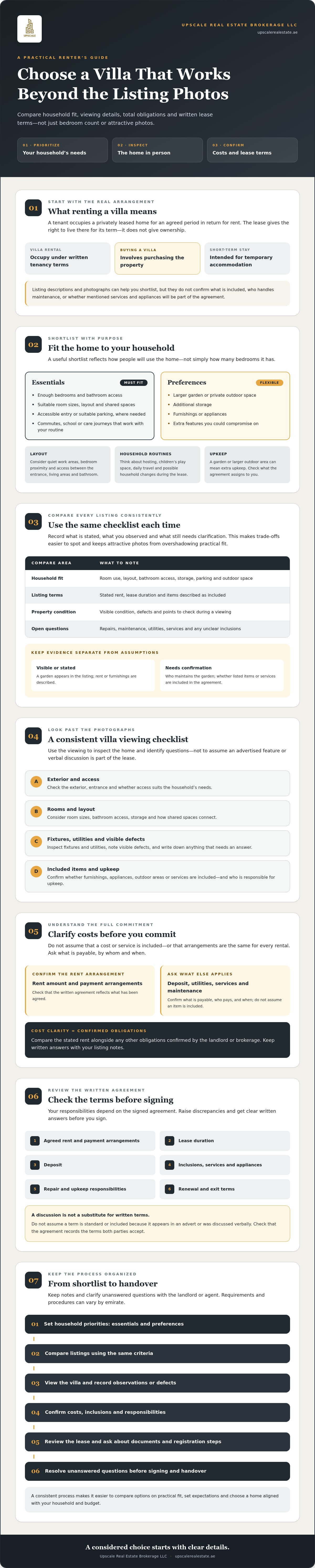
A villa rental is an arrangement in which a tenant occupies a privately leased residential house for an agreed period in return for rent, under written tenancy terms. It gives you the right to live in the property for the lease term, but not ownership. This differs from buying a villa, which involves purchasing the property, and from short-term accommodation, which is intended for temporary stays rather than an ongoing home.
Keep that distinction in mind when reviewing a villa for rent. Listing descriptions and photographs can help you identify properties to explore, but they don’t confirm the final arrangement. Check what is included, who is responsible for maintenance, and whether services or appliances mentioned in the listing will form part of the agreement.
What does renting a villa usually involve?
The tenant agrees to occupy the home, the landlord grants that right, and a brokerage may help coordinate enquiries or leasing discussions. The written tenancy agreement records the terms both parties accept. Regulatory frameworks and procedures can vary across the UAE. For background on the role of a real estate regulator, see the Real Estate Regulatory Agency (RERA).
Before committing, confirm the rent and payment arrangements, lease duration, deposit, inclusions, and any services offered with the property. Clarify who handles repairs and upkeep, and what the agreement says about renewal or ending the tenancy. Don’t assume a term is standard or included because it appears in an advert or was discussed verbally. Your responsibilities depend on the signed agreement, so raise discrepancies and get clear written answers before signing.
Is a villa the right fit for your household?
A villa may suit households that value more room, separation between living areas, or private outdoor space. These features can support different routines, such as working from home, hosting family, or giving children space to play. They can also bring extra upkeep. Consider whether you’re comfortable managing the garden, outdoor areas, or other property features, and check what maintenance the agreement assigns to you.
Think beyond the floor plan. Map regular commutes, school or care journeys, and access needs against your household’s schedule. A home that looks spacious may still be impractical if its layout, entrance, or daily travel doesn’t work for everyone.
- Essentials: Decide which features are non-negotiable, such as enough bedrooms, accessible entry, or suitable parking.
- Preferences: List desirable extras, such as a larger garden or additional storage, that you could compromise on.
Separating essentials from preferences gives you a consistent basis for comparing listings and keeps the search aligned with your household and budget.
How to Choose a Villa for Rent That Fits Your Needs
A useful shortlist reflects how your household will use the home, not just how many bedrooms it has. Think about who needs a quiet workspace, whether bedrooms should be close together or separated, and whether anyone needs easier access between the entrance, living areas, and bathroom. Consider likely household changes during the lease as well as your current routine.
Which villa features should you compare first?
Start with the features that affect daily life, then assess the extras. Bedroom count alone doesn’t show whether the layout works. Check bathroom access, room sizes, storage, and how shared spaces connect. Compare the outdoor area, parking, furnishings, and appliances, and confirm whether each is included, excluded, or simply shown in the listing.
Separate what you can see from what you need clarified. A garden may be visible, but responsibility for its upkeep may not be. Record questions about repairs, maintenance, and included services, then seek written confirmation instead of treating an advertisement as a complete statement of the agreement.
How can you compare rental listings fairly?
Use the same checklist for every property. This makes trade-offs easier to spot and keeps attractive photos from overshadowing practical differences. Record the stated rent and lease duration, included items, property condition, and points that still need an answer. For broader context when reviewing tenancy obligations, consult this analysis of UAE rental laws, then confirm the terms that apply to your own agreement.
Budget for the stated rent and any other obligations confirmed by the landlord or brokerage. Don’t assume a deposit, service, utility, or maintenance cost is included, or that the same arrangement applies to every rental. Ask what is payable, by whom, and when, then keep the answers with your comparison notes.
Reusable shortlist checklist
- Household fit: bedroom and bathroom needs, room use, accessibility, and preferred layout.
- Property features: indoor space, outdoor area, parking, storage, furnishings, and appliances.
- Terms and condition: stated rent, lease duration, inclusions, visible condition, and maintenance questions.
- Budget and follow-up: confirmed obligations, unanswered questions, and differences between the listing and documents.
Before progressing, compare the final details with what you were shown and told. You can use villa rental listings as a starting point, then apply the same criteria to each option.
Villa Viewings: Checks That Reveal More Than Listing Photos
A viewing is your chance to compare the property as it is with the impression created by its listing. Follow the same route each time: start outside, move through every room, test accessible fixtures, ask about utilities and maintenance, then consider the surrounding conditions. For a villa for rent, this orderly check can help you identify practical concerns before reviewing the lease.
What should you inspect inside and outside the villa?
Begin with the exterior. Look at the entrance, boundary features, parking access, outdoor areas, and visible signs of deferred maintenance. Then inspect each room in daylight where possible. Check that doors and windows open and close, taps run and drain, ventilation and lighting work, and appliances presented as included appear usable. Test fixtures only with the owner’s or representative’s permission.
Note what you observe without trying to diagnose the cause. A damp mark, for example, is a visible condition to record, not proof of a specific plumbing fault. If an issue appears serious or its cause is unclear, ask whether it can be assessed by a suitably qualified professional before deciding.
Photograph or list existing damage with permission, including its location and a brief description. Ask how agreed defects will be recorded before move-in, and keep a copy of any written condition notes or handover record. This creates a clearer reference point if questions arise later.
What questions should you ask during a viewing?
Use the visit to clarify details a listing may leave open. Ask what the rent includes, which utilities or services are separate, and whether furnishings or appliances shown will remain. Confirm the proposed start date, lease duration, deposit arrangements, and payment process. Don’t rely on an informal answer about a point that affects your costs or responsibilities. Request confirmation in writing.
Discuss maintenance directly, too. Ask who handles repairs, how to submit a maintenance request, and how requests are tracked. If the answer depends on the type of repair, ask where that distinction is explained in the proposed agreement.
Key viewing checks: inspect the exterior, access and parking; test permitted doors, windows, taps, lights, ventilation, and appliances; note visible damage and maintenance concerns; clarify utilities, inclusions, payment and deposit arrangements; and confirm the repair process and how the property’s condition will be documented.
Keep two records after the visit: immediate observations, such as a window that sticks, and unresolved questions that need written clarification or professional assessment. This helps you compare the villa fairly without mistaking a quick viewing for a technical inspection.
Lease Review and Move-In: Steps Before Committing to a Villa
Before signing for a villa, compare the final written agreement with the listing, viewing notes, and any terms discussed with the landlord or brokerage. Resolve differences before committing. A detail that seemed clear during a conversation, such as an included appliance or who handles a repair, should be accurately recorded in writing if it forms part of the agreement.
Which lease terms deserve careful review?
Check that the tenant and landlord details, property description, rent, lease dates, and payment terms match what you agreed. Review how the deposit is handled, which items or services are included, and how maintenance responsibilities are divided. Ask for clear wording on renewal, ending the tenancy, and applicable notice requirements. Terms and procedures can depend on the emirate and governing documents, so confirm current requirements with a qualified professional or relevant authority rather than assuming one clause applies everywhere.
Before signing, use a simple comparison:
- Agreement: Parties, property details, rent, dates, payment schedule, and included items.
- Responsibilities: Deposit arrangements, repairs, maintenance, utilities, and services.
- Changes and exit: Renewal conditions, notice terms, and the process for ending the tenancy.
Keep a copy of the signed agreement and related written confirmations. If a term is unclear, request an explanation before signing and consider independent advice where needed.
How should tenants prepare for handover?
Arrange a written condition record with the landlord or representative. Note existing damage and incomplete work, and retain dated photographs or other evidence. Record meter readings where applicable, confirm the number of keys and access items received, and list any furnishings or appliances included. Keep the completed record with your tenancy documents so both parties can refer to the same handover details.
Clarify who is responsible for utility arrangements and how maintenance requests should be submitted. For a reference on tracking upkeep items, review this property maintenance checklist. It can help you frame questions, but your own agreement should establish the responsibilities that apply to the home.
If you’re considering a villa for rent, review residential leasing options and clarify the next steps before committing.
Find a Villa for Rent With Clear, Professional Leasing Support
A clear rental process moves from priorities to handover in deliberate steps: define what your household needs, shortlist suitable properties, arrange viewings, verify the proposed terms, then document the home’s condition and items received. Keeping notes at each stage makes it easier to compare options and identify questions before they become last-minute decisions.
Residential leasing support can help coordinate enquiries and clarify the next steps in a search. It doesn’t remove the need to assess a property or review its agreement yourself, and no listing should be treated as confirmed until its availability and terms have been verified. Ask for important details in writing, especially where they affect costs, responsibilities, or move-in arrangements.
What information should you prepare before enquiring?
Make your initial enquiry more useful by setting out your preferred move-in timing, household requirements, budget parameters, and essential features. For example, note how many bedrooms you need, whether accessibility or outdoor space is a priority, and which features are preferences rather than requirements. A focused brief helps keep conversations aligned with your actual needs.
Prepare questions about rent inclusions, utilities, maintenance responsibilities, and lease terms. Share identification or other personal documents only when requested through a process you’ve verified, and confirm why the documents are needed and how they should be submitted. Requirements can vary, so avoid sending sensitive information through unverified channels.
How can a brokerage support your rental search?
A brokerage providing residential leasing can help coordinate property enquiries and support shortlisting against your stated criteria. Clear communication should help you understand which details are confirmed and which still need checking. Ask about unresolved points before arranging next steps, and compare any written information with what you learn during a viewing.
Keep control of your decision. Confirm the property’s availability, proposed terms, inclusions, and responsibilities through the verified process, then review the final agreement before committing. A structured approach helps you move from an initial enquiry toward an informed choice without relying on assumptions about what a listing includes.
If you’re looking for a villa for rent, you can discuss your villa rental requirements, including your preferred timing, budget parameters, and essential features.
Move Forward With a Clear Rental Plan
A successful villa search starts with household priorities, then tests each option against practical criteria. Compare listings consistently, use viewings to assess condition and clarify unanswered questions, and make sure the written agreement reflects the terms you’ve discussed. A careful handover record gives both parties a clear reference as the tenancy begins.
Upscale Real Estate Brokerage LLC provides residential leasing, property management, and investment advisory services. Its brokerage services include support for tenants and clear communication about next steps. A brokerage can help coordinate enquiries, but you should still verify important details and review the agreement before committing.
With a well-defined brief and a measured review process, you can move ahead with greater clarity and confidence. Your next home should fit both your household and your expectations.
Frequently Asked Questions
What should I check before renting a villa?
Check whether the home suits your household, its visible condition, and the proposed lease terms. During a viewing, look at doors, windows, taps, ventilation, lighting, appliances, outdoor areas, and parking access. Ask what rent includes, who handles maintenance, and how utilities are arranged. Before signing, compare the written agreement with the listing and any details confirmed during the viewing, and get important clarifications in writing.
How do I compare villas for rent fairly?
Use one checklist for every property instead of relying on photographs or memory. Record the stated rent, lease duration, bedroom and bathroom count, layout, outdoor space, parking, storage, furnishings, appliances, and visible condition. Note which details are confirmed and which need follow-up. Compare each option against your household’s essential requirements and budget, then resolve differences between the advertisement and proposed agreement before committing.
What documents may be needed to rent a villa in the UAE?
Document requirements can vary by emirate, landlord, and tenancy process, so request the current checklist from the landlord or brokerage handling the rental. You may be asked for identification and documents needed to prepare or register the tenancy, but don’t assume one list applies across the UAE. Confirm how to submit documents through a verified process, and share personal information only when requested and for a clear purpose.
What costs should I clarify before signing a villa lease?
Ask for a complete written breakdown of the amounts you’ll need to pay and when. Clarify rent and payment arrangements, any deposit, brokerage commission if applicable, tenancy registration charges, utilities, and services or maintenance costs assigned to you. Confirm which items are included in the rent and whether any amount is refundable. Costs and procedures can vary, so verify the details for the property and emirate rather than relying on assumptions.
Can I negotiate the terms of a villa rental agreement?
You can raise proposed changes with the landlord or their representative before signing, such as the lease dates, payment schedule, included appliances, or a repair commitment. Whether a change is accepted depends on the parties and applicable rules. Don’t rely on verbal assurances: ask for agreed changes to appear in the final written agreement or a signed addendum. Review the complete document and clarify any unresolved wording before you commit.
Who is responsible for repairs in a rented villa?
Repair responsibility depends on the signed tenancy agreement and the rules that apply to the tenancy. Review the clauses on maintenance, distinguish routine upkeep from other repairs, and ask how to report and track an issue. If the agreement is unclear, request written clarification before signing. Don’t assume responsibility based only on a verbal explanation or listing description; confirm who handles each type of repair and any related costs.
What should I document when moving into a rented villa?
Prepare a written handover record with the landlord or representative. Note the condition of each room and any existing damage, and keep dated photographs where appropriate. Record meter readings if applicable, the keys and access items received, and any included appliances or furnishings. List incomplete work and agree how it will be addressed. Retain copies of the condition record and related messages with your tenancy documents for future reference.