

The shortest property management agreement isn’t necessarily the clearest. In the UAE, this legal contract authorizes a company to act for an owner within agreed limits. Knowing what to look for in a property management agreement means understanding the services covered, the manager’s authority, the contract term and how either party can end or renew it.
The agreement should explain who handles day-to-day tasks and which decisions remain yours. Pay close attention to renewal and termination terms, including how notice must be given and what happens when the agreement ends.
This guide explains the clauses that shape the working relationship, including service scope, spending approvals, reporting and contract changes. It also distinguishes property management from asset management and advisory arrangements, helping you choose an arrangement that matches the involvement and oversight you want.
Key Takeaways
- Separate the agency’s standard terms from negotiated clauses so you can see which provisions define your specific arrangement.
- Map each service to clear decision-making authority, including spending limits, maintenance approvals and reporting expectations.
- Distinguish operational property management from strategic asset oversight and project-based advisory support.
- Account for the UAE’s 5% VAT on property management fees when reviewing the agreement’s fee terms, as stated by the Federal Tax Authority.
What Is a Management Agreement?
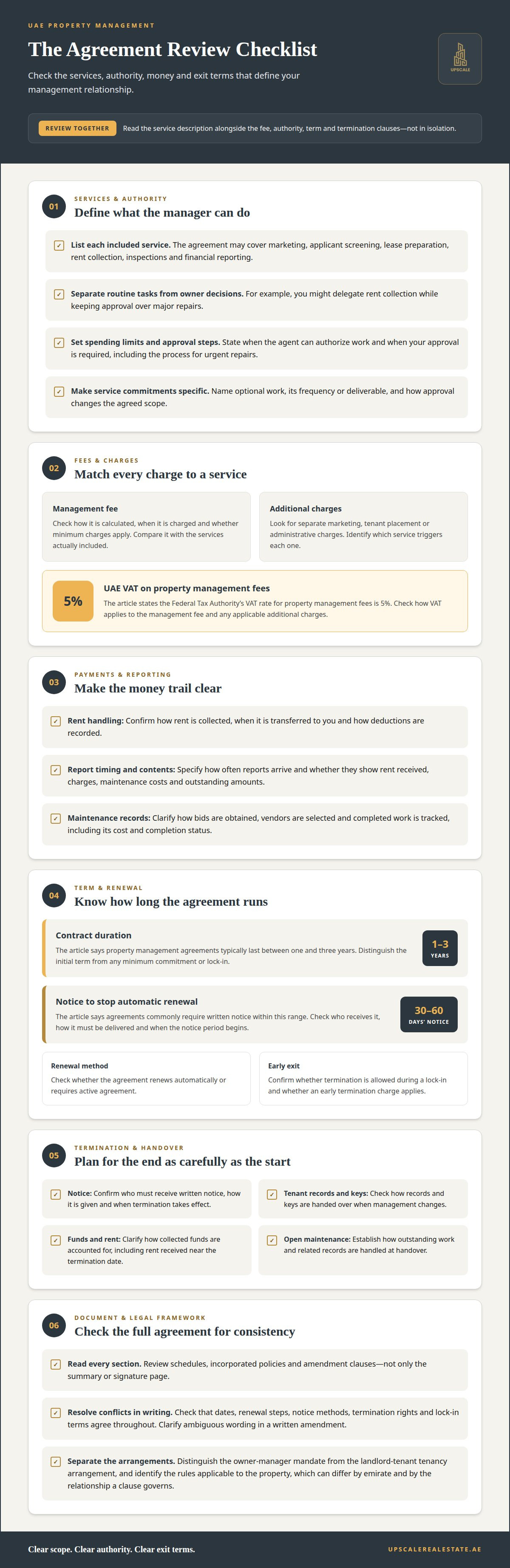
A property management agreement is a legal contract authorizing a company to act for an owner within agreed limits. It should distinguish routine decisions from those that require your approval. For example, you might delegate rent collection while retaining approval over major repairs.
Read the fee section alongside the service description. It should explain how the management fee is calculated, when it is charged and whether minimum charges apply. It should also identify any separate marketing, tenant placement or administrative charges and specify which service triggers each one.
UAE requirements can differ by emirate and by the relationship a clause governs. The contract should distinguish the owner-manager mandate from the landlord-tenant tenancy arrangement and identify the rules applicable to the property. This helps clarify which terms concern management authority and which relate to the tenancy.
In the payment section, check how rent is collected, when it is transferred to you and how deductions are recorded. The agreement should specify how often you receive reports and what they include, such as rent received, charges, maintenance costs and outstanding amounts. Clear terms make payment timing and account reconciliation easier to track.
According to the Federal Tax Authority, the UAE VAT rate stated for property management fees is 5%. The agreement should show how VAT is handled on the management fee and any applicable additional charges, so the owner can distinguish service charges from tax.
Termination terms matter both during the initial term and at renewal. The agreement should state the written notice period for ending the arrangement or preventing automatic renewal. Check who must receive notice, when termination takes effect and whether an early termination charge applies.
Check how the notice period affects tenant records, keys, funds and outstanding maintenance. For example, the agreement can explain how rent collected near the termination date is accounted for and when records are handed over. Clear handover terms reduce uncertainty when management responsibilities change.
What Should You Check in the Term and Renewal Clause?
The term and renewal clauses determine how long the management relationship continues and how either party can end it. Read the duration, renewal process and exit conditions together, since wording in one clause may affect another.
Contract Duration and Lock-In Periods
The contract term sets how long the agreement remains in force; a lock-in restricts when either party can end it. Property management agreements typically last between one and three years, so distinguish the initial term from any minimum commitment. A longer term may suit complex operations, while a shorter commitment may offer more flexibility. Check when the term begins and whether early termination is allowed during a lock-in.
Renewal and Termination Terms
Renewal terms explain whether the contract continues automatically or requires active agreement, while termination terms describe how the relationship can end. Property management agreements commonly require 30 to 60 days’ written notice to stop an automatic renewal. Identify which party must receive notice, how it must be delivered, and when the notice period begins. The clause should make clear whether timely notice prevents another term or starts termination after renewal.
Reviewing and Clarifying Contract Terms
Property-specific sections set out terms tailored to the property and working relationship, while standard sections provide the general framework. Read both carefully, including schedules, incorporated policies and amendment clauses. A service schedule may define the agreed term, while a standard clause explains how changes become binding. Check for conflicts. If a clause refers to a different renewal date or notice method, clarify the wording before signing.
Review the complete document, not just the signature page or summary. Confirm that dates, renewal steps, termination rights and any lock-in terms are consistent throughout. A clear written amendment can resolve ambiguity and maintain a shared understanding of the management arrangement.
What Should the Scope of Services Clause Cover?
The scope clause should name each service, define its limits and clarify who makes related decisions. For a residential property, distinguish routine tenant administration from decisions requiring the landlord’s approval.
Services and Managing Agent Authority
A management company’s authority defines which tasks it may perform for you and which decisions remain yours. List services such as marketing, applicant screening, lease preparation, rent collection, inspections and financial reporting. Then specify spending limits, approval steps and compliance responsibilities. For example, the agent might coordinate routine work while you approve repairs above an agreed limit. Connecting any management fee to a defined scope clarifies what it covers.
Service Scope and Tiers
Service tiers distinguish core management from additional tasks, making gaps and overlaps easier to spot. One agreement might include tenant communication and rent collection, while another also covers marketing, inspections and financial statements. Name each included service and describe its frequency or deliverable, such as a monthly account statement. If you choose optional work, record how approval is given and how it changes the scope. This prevents a service label from replacing a specific commitment.
Maintenance, Repairs, and Contractor Rules
Maintenance terms should explain how tenants submit requests, who assesses them and when your approval is required. Specify the spending limit for work the agent can authorize and the process for urgent repairs when delay could worsen damage. The agreement should also explain how bids are obtained, vendors selected and completed work tracked. For example, require a report on approved work, its cost and completion status.
For energy services or decarbonisation work, define whether the agent collects tenants’ energy-use data and gives you access to it. In a green lease, this makes data collection and reporting an explicit responsibility rather than an assumed task. Specify how the information is delivered, who can use it and any agreed reporting schedule.
Property management agreement types
Agreement types differ by the work delegated and the owner’s desired involvement. In the UAE, choose the structure that matches the property’s operating needs and the parties’ preferred level of control.
Full-service management combines ongoing operational responsibilities under one agreement. It may suit an owner who wants one agent to coordinate the rental relationship rather than manage separate tasks directly. For example, full-service real estate agencies like Cornerstone assist owners with tenant placement, rent collection, and ongoing property care under a unified mandate. The contract should still define the agent’s authority and the decisions reserved for the owner. A service label alone doesn’t establish what the agent must deliver.
Limited-scope or leasing-focused management assigns a defined part of the rental process, such as tenant placement, while leaving ongoing responsibilities to the owner. This can suit an owner who wants help finding a tenant but plans to manage the relationship and property decisions afterward. Before signing, distinguish one-time placement from ongoing management, including who handles renewals and tenant communications.
Asset management agreements focus on strategic and financial oversight rather than daily operations. They may suit owners or boards that manage operational decisions themselves but want a broader view of performance, planning or portfolio priorities. Clarify what analysis or decisions are included, and keep operational authority separate from strategic advice.
Consulting or advisory agreements provide advice, analysis or project-based support rather than ongoing day-to-day management. For example, an owner could engage an adviser for a defined review while retaining responsibility for rent collection and tenant communication. The agreement should identify the project, expected outputs and end point.
The appropriate structure depends on how hands-on the owner or board wants to be. Compare each type by responsibility, authority, collection duties and duration, then select the arrangement that closes the actual management gap. Explore property management support if ongoing operational oversight is the fit you need.
Upscale Real Estate Brokerage: Property Management
Upscale Real Estate Brokerage LLC provides property management for owners who want support with ongoing property operations. This can be a practical next step when you want delegated services, decision-making authority, reporting and maintenance responsibilities clearly connected in the agreement.
Before management begins, define the property’s needs and the responsibilities you expect the agreement to cover. Clear terms help both parties understand which tasks are delegated and which decisions remain yours. If your real estate plans change, the firm also offers ready property sales, off-plan project sales and residential leasing.
If you’re considering property management for your property, contact Upscale Real Estate Brokerage LLC to discuss your requirements.
Put Your Property Plans on Clear Terms
Knowing what to look for in a property management agreement helps you build a working relationship around your priorities, not assumptions. Before signing, consider how involved you want to be in day-to-day decisions and what information you need about the property’s performance. These preferences can guide the agreement’s structure and align responsibilities with your broader investment plans.
Next, connect the contract wording to how you want your property managed. A focused discussion can clarify the management approach that suits your objectives and whether your plans also involve leasing or a future sale. Clear expectations provide a practical foundation for the relationship.
Discuss your property requirements with Upscale Real Estate Brokerage and take the next step with greater clarity.
Frequently Asked Questions
How Should the Agreement Spell Out Fees?
The agreement should define how fees are calculated, what triggers billing, when payment is due and which deductions apply. For example, distinguish charges calculated on rent collected from charges billed for a completed task. It should also explain how fee changes are communicated and documented. This lets you reconcile each statement against the contract without confusing a service charge with a reimbursement or adjustment.
What Are the Owner’s Obligations in the Agreement?
Owner obligations commonly include funding agreed repairs, maintaining insurance required by the contract and providing accurate property information. Set out how repair funds are provided and how changes to property details are reported. For example, if you update access instructions or insurance details, ensure the manager receives the current information. Clear responsibilities help the manager act on reliable instructions and keep property records accurate.
What Does the Liability and Indemnification Clause Protect?
These clauses allocate responsibility if a loss, claim or dispute arises and may limit each party’s exposure. A liability cap should reflect potential losses, the agreement’s value, available insurance and which party controls the relevant risk. For example, the contract can distinguish loss arising from your instructions from loss linked to the manager’s actions. The wording should make responsibility clear rather than leave it to implication.
What Happens in the Termination and Cancellation Clause?
The clause sets out how to end the arrangement and close outstanding matters. Beyond the notice procedure, check how collected rent, pending invoices, tenant communications and property records are handled during handover. For example, it can explain how funds are reconciled and access information transferred. A clear close-out process helps prevent unresolved items from carrying into the next management arrangement.
What Should You Check Before You Sign?
Compare the main contract with every schedule, attachment and incorporated policy, then resolve inconsistent names, dates or obligations in writing. When deciding what to look for in a property management agreement, confirm that the final version includes agreed amendments and signature blocks for the parties. Keep a complete copy of the signed document; the article’s guidance is to receive it within 30 days of signing.
What Services Should a Property Management Agreement Include?
The agreement should cover the services the property needs throughout its operating cycle, with clear outputs for each responsibility. For example, specify whether tenant handover records, move-out documentation, arrears updates or renewal coordination are included. Define how you receive those records and how unresolved matters are escalated. This detail makes the agreed service measurable without assuming every property needs the same package.