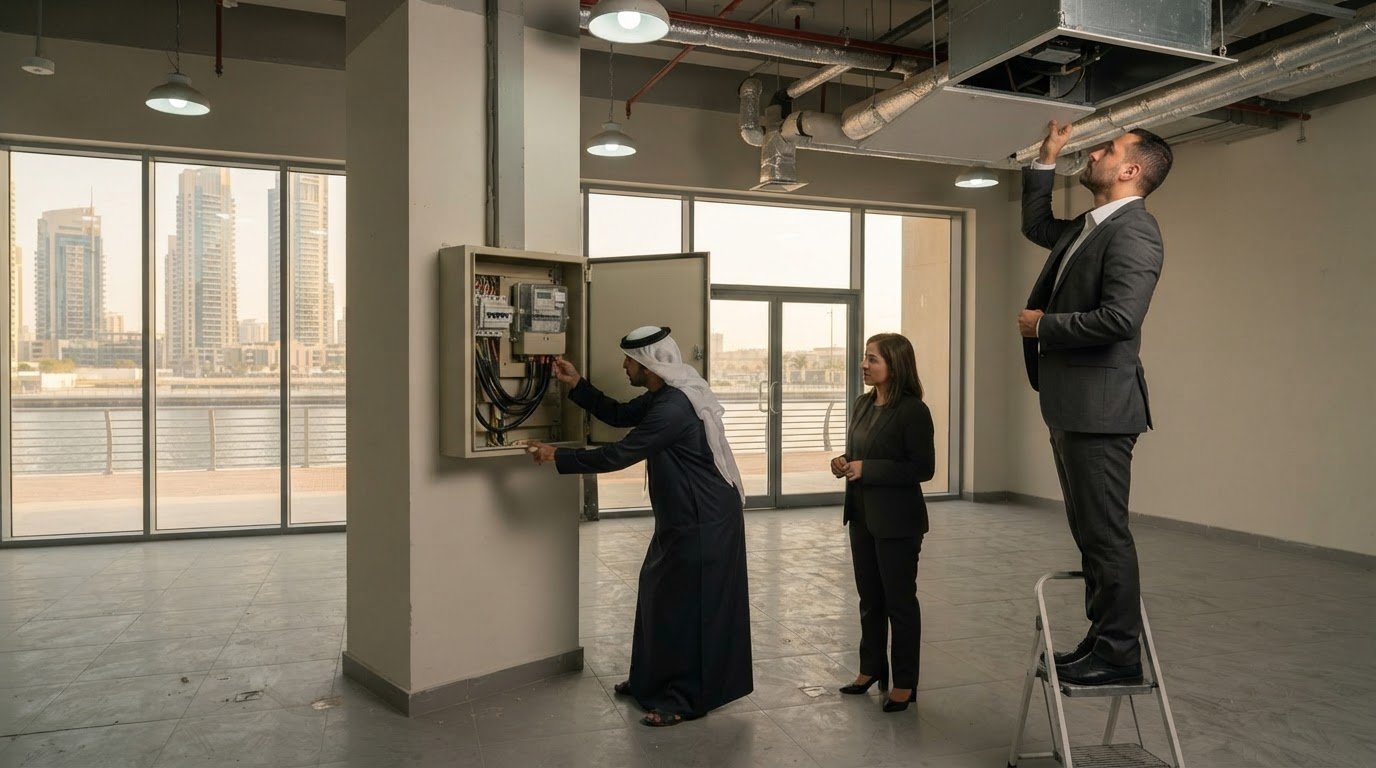

DIY property management can suit an owner with one rental and time to handle the work. Hiring a company may suit overseas owners, larger portfolios, or landlords who want a more hands-off approach. In the UAE, the choice comes down to who handles tenant screening, leasing, rent collection, maintenance, and day-to-day communication.
Managing a rental yourself gives you direct control, but makes you the main point of contact for tenants and property issues. Professional management can take on operational tasks. The right approach depends on your availability, location, and investment priorities.
This comparison explains what property management involves across the UAE and how DIY and professional management differ in tenant screening, retention, and ongoing responsibilities. Use the criteria to decide whether professional support could make rental operations easier to manage.
Key Takeaways
- Match your management approach to your location, available time, and the number of properties you oversee.
- Understand how leasing, renewals, inspections, and maintenance may be handled before assessing a management arrangement.
- Look beyond tenant placement: screening, clear communication, and timely follow-up can shape the rental experience and tenancy continuity.
- Consider professional management when coordinating tenants and property operations yourself becomes difficult, especially from overseas or across a growing portfolio.
What is Property Management in Dubai?
Across the UAE, property management covers the operational work involved in rental income, tenant matters, and property upkeep. With DIY management, these responsibilities stay with the owner. A management company can coordinate agreed tasks and records.
Maintenance Coordination and Inspections
Move-in and move-out inspections record a property’s condition, while maintenance coordination follows reported issues through to repair. A self-managing owner arranges access, keeps condition records, and follows up with vendors. A manager may coordinate these steps and maintain documentation. Responsibility for maintenance depends on the lease and the cause of damage; the landlord handles defects affecting intended use unless the parties agree otherwise.
Emergency Response and Contractor Networks
Emergency response addresses urgent issues, while contractor coordination covers assigning work, explaining the task, and recording completion. A self-managing landlord remains the tenant’s main contact, including outside regular working hours. A property manager may coordinate repairs through service-provider networks. The management agreement should set out included tasks, additional charges, and whether emergency coordination is covered.
Self-Management and Licensing
Self-management gives owners direct control over tenant communication, inspections, and repair decisions, but also makes them responsible for follow-up and tenancy procedures. Owners remain responsible for understanding applicable rental rules and notice procedures. DLD’s Trakheesi service can help verify a property manager’s relevant real estate activity; it concerns manager activity rather than establishing a landlord permit requirement.
Tenancy Contracts and Rent Registration
Rental contracts and registration processes vary across the UAE. In Dubai, Ejari is used for tenancy registration, while Abu Dhabi uses Tawtheeq. Owners managing rentals themselves handle the relevant contract and registration steps; a manager may coordinate them. Leasing, renewal, and registration may be separate tasks, so check which responsibilities are included and which may incur additional charges.
| Option | Inspections and maintenance | Contracts and registration | Additional charges |
|---|---|---|---|
| DIY | Owner coordinates vendors and records | Owner handles applicable steps | Direct costs depend on work arranged |
| Management company | May coordinate inspections and repairs | May handle contract and registration tasks | Leasing, renewals, and other tasks may be separate |
Choose the approach based on the tasks you can handle consistently and the responsibilities covered by the agreement.
Professional property management services
Professional management can combine tenant administration, rental marketing, rent collection, repairs, and financial reporting. The contract defines which tasks are included and how owners receive updates. While long-term rentals follow standard leasing cycles, short-term and holiday properties often require dedicated hospitality operations, with full-service firms such as Crucial Hospitality managing everything from guest services to maintenance across boutique apartments and villas.
Pricing and Service Charges
Management pricing may be a fixed fee or a share of rental income, but the amount alone does not show the service scope. A package may cover rent collection but exclude tenant placement, renewals, or inspections. Additional work may carry separate charges. Compare the tasks, reporting, and exclusions together. A clear breakdown helps owners weigh operational costs against the time and demands of managing a portfolio themselves.
Repairs and Vacancy Costs
Repairs and vacancy affect rental returns in different ways. Maintenance records can reveal recurring issues, while leasing records show gaps between tenancies. A property manager may coordinate maintenance, market the rental, and track income. These tasks can support timely follow-up, but they do not eliminate repair costs or guarantee continuous occupancy. Assess how the service handles approvals, contractor coordination, and updates to understand its operational value alongside direct property expenses.
Comparing Company Contracts
Compare companies by checking each agreement against the same tasks: marketing, tenant acquisition, rent collection, maintenance, renewals, and financial reporting. Assess what is included, what triggers an additional charge, and how often updates are provided. Fees are commercial terms, not a standard statutory percentage. A written comparison makes exclusions visible and helps owners decide whether professional management suits their property or wider portfolio.
| Service area | Questions to compare |
|---|---|
| Leasing | Does the scope include marketing and tenant placement? |
| Repairs | Who coordinates vendors and communicates progress? |
| Reporting | Are income, maintenance, and lease records provided? |
| Additional work | Which renewals, inspections, or tasks incur separate charges? |
Compare the full service scope, not just the headline fee, to understand how an agreement may affect rental operations.

Tenant screening and retention
Tenant selection affects rental income, property condition, and vacancy between leases. DIY landlords make each decision directly, while professional management may coordinate marketing, screening, and leasing. Neither approach removes the need for consistent criteria and clear records.
Use the same screening sequence for every applicant. Review the application, confirm relevant identity and tenancy details, assess affordability against the proposed rent, and record the decision. Poor screening may lead to missed payments, property damage, or legal complications. Consistent steps help owners base decisions on documented information rather than impressions from a viewing.
Marketing also shapes the applicant pool. Clear property details, organized viewings, and timely follow-up help interested tenants understand the unit and its terms. Efficient marketing and faster tenant processing can reduce the time a rental remains vacant between leases. DIY landlords coordinate enquiries and viewing schedules themselves; a management company may handle those tasks alongside tenant acquisition.
Rent collection needs a reliable tracking process. Record due dates, payments received, outstanding amounts, and follow-up communications for each tenancy. For example, a landlord managing several units can use a property-by-property ledger to distinguish a late payment from a recording delay. A professional manager may track rental income and provide financial reporting, depending on the agreed service scope.
Retention depends on more than the initial tenant choice. Prompt communication, clear maintenance reporting, and orderly renewal discussions can support a stable tenancy. Assess how a management company markets properties, screens tenants, and supports long-term retention. Ask how owners receive updates and how tenant concerns are recorded; these processes show whether the service continues after tenant placement.
Compare the approaches by responsibility and continuity. Self-management suits owners who can consistently handle enquiries, screening, payment follow-up, and tenant communication. Professional support can centralize these operational steps, which may help overseas owners or those with a growing portfolio. The decision is not just who signs the lease, but who reliably manages each stage of the tenancy.
Benefits of hiring a property management company in Dubai
Professional management can reduce an owner’s operational workload while coordinating rental tasks across the UAE. For overseas owners, local handling can simplify maintenance, tenant communication, and property updates. Owners with multiple units can centralize records instead of tracking each rental separately. This may support a more stable tenancy, but management fees still need to be weighed against the agreed service scope.
Market-aware pricing and organized marketing can help limit avoidable vacancy. A manager can position a rental, coordinate viewings, and track enquiries through leasing. UAE rental operations may involve RERA, Ejari, and the Smart Rental Index. Managers may also negotiate annual rent changes based on the market index. These steps connect leasing decisions with relevant local processes and the property’s income performance.
Consistent handling matters after a tenant moves in. Rent collection, payment follow-up, renewal tracking, maintenance records, and tenant communication can follow one operating process. For example, a documented repair request can show when an issue was reported, assigned, and completed. This helps owners assess recurring repairs and understand how operations affect rental income. Delayed maintenance or missed payment follow-up can contribute to dissatisfaction, vacancy, or administrative strain.
- Overseas owners: Local coordination can reduce the need to arrange every inspection or repair remotely.
- Portfolio owners: Centralized lease, payment, and maintenance records can simplify oversight across properties.
- Time-constrained landlords: Delegating routine handling can leave more time for investment decisions.
Professional management doesn’t automatically maximize returns. Assess the agreed scope, reporting, and management fees against your time, location, portfolio, and need for oversight. It may be less suitable for a local owner with one rental property and enough time to manage operations directly. For a grounded assessment of rental operations across the UAE, discuss your property management needs with Upscale Real Estate Brokerage LLC.
Upscale Real Estate Brokerage: Property Management
Upscale Real Estate Brokerage provides property management for owners who want help coordinating rental operations. Its service can be useful when tenant communication, maintenance follow-up, and ongoing oversight become difficult to manage directly, particularly for overseas owners or landlords with multiple properties.
For investors considering a change in strategy, Upscale also handles residential leasing, ready property sales, and off-plan project sales. These services can support decisions at different stages of ownership, from leasing a unit to reassessing a portfolio. The right next step depends on your property and investment priorities.
Contact Upscale Real Estate Brokerage to discuss your property management needs.
Make Your Next Property Decision Deliberately
Your management approach should support how you want to own and grow property, not simply reduce today’s workload. Consider how much direct involvement you can sustain, how consistently you can oversee operations, and whether your priorities may change as your portfolio develops. A clear decision can align day-to-day management with your longer-term investment strategy.
The choice between DIY property management and hiring a company in the UAE comes down to the balance you want between control and delegated responsibility. If you’re weighing professional support for your UAE rental property, discuss your priorities and next steps with Upscale Real Estate Brokerage LLC.
Contact Upscale Real Estate Brokerage LLC to start a considered conversation about your property plans. A well-matched approach can give you a clearer path forward as your investment goals evolve.
Frequently Asked Questions
What Is Self-Management?
Self-management means the owner oversees the rental directly rather than delegating day-to-day tasks. The owner handles tenant enquiries, arranges viewings, tracks payments, coordinates repairs, and manages lease paperwork. This offers closer control over decisions but requires reliable record-keeping and time for follow-up. Owners living abroad may also need a trusted local representative for physical tasks.
Which Costs Are Not the Same as the Management Fee?
Management fees are separate from property expenses such as repairs, building service charges, utilities, official service fees, leasing costs, deposits, and vacancy-related costs. For example, a fee covering rent administration may not cover a replacement appliance or a vacant period. Keep these categories distinct in your rental calculations, then check the management agreement for operational tasks that carry additional charges.
Which Model Is Better for an Overseas Dubai Landlord?
Professional management may suit an overseas landlord who cannot attend inspections, meet tenants, or coordinate repairs locally. Consider whether you have a dependable way to manage physical tasks and time-sensitive communication. Self-management can still work with a trusted local representative, but remote oversight needs clear records, delegated responsibilities, and a reliable process for sharing property updates.
Which Option Is Better for Overseas Investors?
For overseas investors, the choice depends on portfolio size, available time, and desired involvement. An investor with several properties may value centralized rent records and coordinated tenant communication. Someone with a single unit and a trusted local contact may prefer direct control. Before choosing an operating model, consider how decisions, property updates, and maintenance approvals will be handled across every holding, or explore market guidance from Dubai real estate firms like goldenbricks.ae.
What are typical property management company fees in the UAE?
Property management fees may be structured as a fixed fee or a share of rental income; there is no single standard package. The price depends on the property, service scope, and included tasks, such as leasing, renewals, inspections, or maintenance coordination. Treat the fee as a contract term and compare the full scope and additional charges. A quote sets out the specific cost.
What tasks are included in UAE property management services?
Services can include rental marketing, tenant sourcing and screening, lease document preparation, rent collection, maintenance coordination, renewals, and financial reporting. The exact scope depends on the management agreement. For instance, one arrangement may include tenant placement, while another treats leasing as a separate task. Review the listed responsibilities to see who handles each step and how owners receive updates.