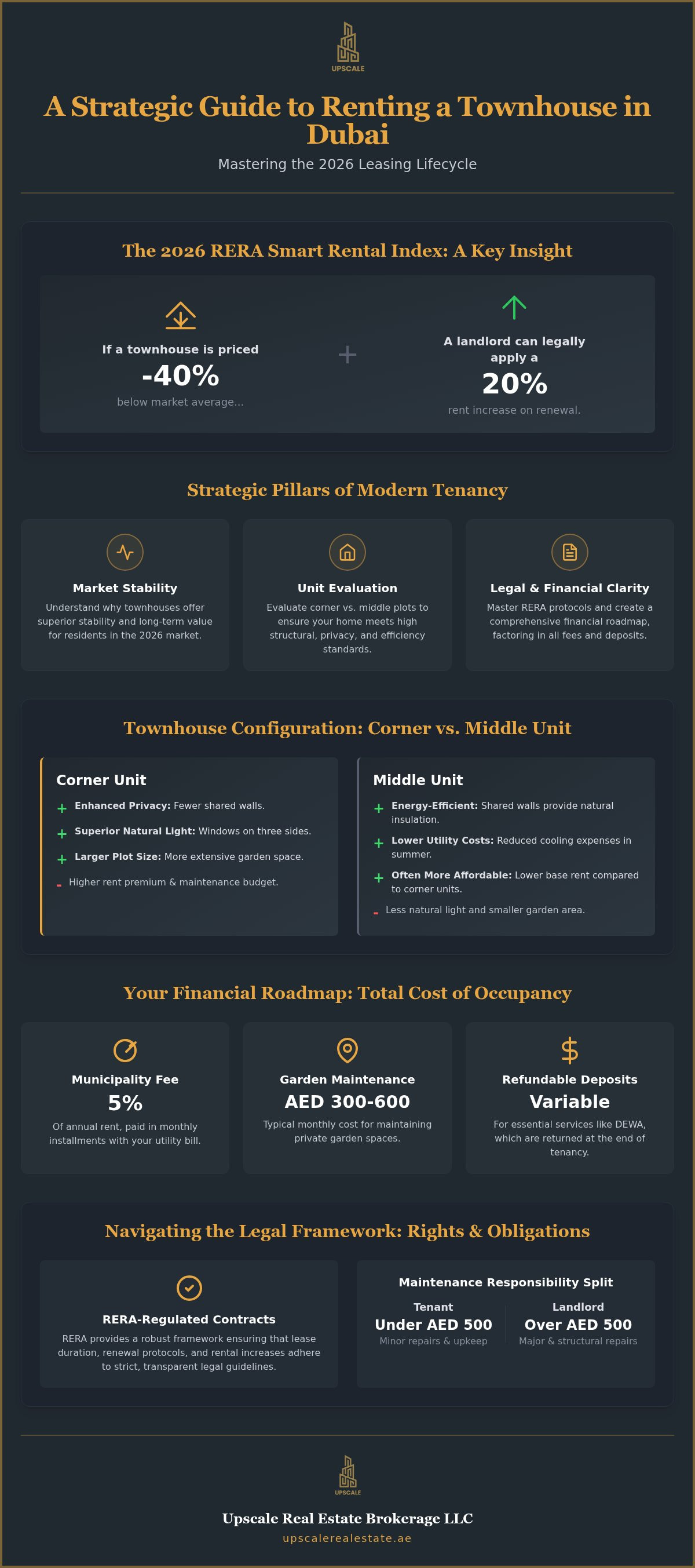
Did you know that under the 2026 RERA Smart Rental Index, a townhouse priced 40% below the market average can legally incur a 20% rent increase upon renewal? Securing a townhouse for rent in the United Arab Emirates shouldn't feel like a gamble against hidden fees and opaque contract clauses. You're likely looking for more than just a roof; you're seeking a stable family environment where your legal rights are protected and maintenance is handled without a struggle. It's understandable to feel uncertain about shifting regulations or the true cost of suburban living when landscaping and essential utility deposits add up quickly.
This strategic guide from Upscale Real Estate Brokerage LLC provides a professional roadmap to mastering the leasing lifecycle. You'll learn how to model your total cost of occupancy, including applicable municipality fees and refundable service connection deposits, while ensuring your tenancy remains fully compliant with the latest regulatory protocols. We'll examine the financial mechanics of the 'Flexi Rent' scheme, clarify maintenance responsibilities for repairs over AED 500, and help you select a residence that aligns with your long-term lifestyle goals through data-driven advisory.
Key Takeaways
- Gain clarity on the 2026 residential market to understand why townhouses offer superior stability and long-term value for residents.
- Learn to evaluate specific unit configurations, such as corner versus middle plots, to ensure your home meets high structural and privacy standards.
- Navigate the legal complexities of UAE leasing by mastering the standard tenancy contract and RERA-regulated rental increase protocols.
- Create a comprehensive financial roadmap for your townhouse for rent in Dubai, factoring in the 5% municipality fee and refundable security deposits.
- Shift from a transactional mindset to a strategic one by leveraging professional advisory services that bridge the gap between leasing and future property acquisition.
The 2026 Residential Leasing Landscape: A Strategic Overview
The 2026 rental market has matured into a stable, transparent environment where data-driven decisions outweigh speculative trends. High demand for suburban living continues to drive a shift toward professional, advisory-led transactions. Selecting a townhouse for rent in Dubai is now viewed as a strategic lifestyle investment rather than a temporary housing solution. This transition from a short-term mindset to long-term residential planning requires a sophisticated understanding of market mechanics and regulatory safeguards. Modern tenants prioritize security and predictability; they seek homes that offer the privacy of a villa with the community integration of a master-planned development.
The Shift Toward Institutional Leasing Standards
Market maturity has significantly elevated tenant protections and professional expectations across the emirate. Working with a licensed brokerage isn't just a formality; it's a prerequisite for financial security. The Dubai Real Estate Regulatory Agency (RERA) provides the framework that ensures lease durations, renewal protocols, and rental increases follow strict legal guidelines. This regulatory visibility allows families to plan their residency with confidence. Professional firms now act as strategic consultants, managing high-value lease negotiations to ensure that every contract clause is transparent and enforceable.
Economic Considerations of Townhouse Living
Prospective tenants must look past the headline rental figure to model the true total cost of occupancy. While the landlord is legally responsible for paying annual community service charges, residents must budget for the 5% municipality fee, which is divided into monthly installments via utility bills. A strategic approach involves analyzing these secondary costs alongside the base rent to determine the actual yield of a lifestyle choice. In the current landscape, many residents are finding that leasing a townhouse for rent in Dubai provides the perfect middle ground between apartment living and full property ownership. It allows for high-quality living standards and access to premium facilities without the immediate capital requirements of a purchase.
Successful leasing in 2026 relies on a grounded, investor-centric approach. By treating your tenancy as a managed asset, you ensure that your residence remains a source of stability rather than a cause of financial friction. This involves meticulous documentation, professional management of the leasing lifecycle, and a clear understanding of your rights regarding maintenance and renewals.
Evaluating Townhouse Configurations and Structural Standards
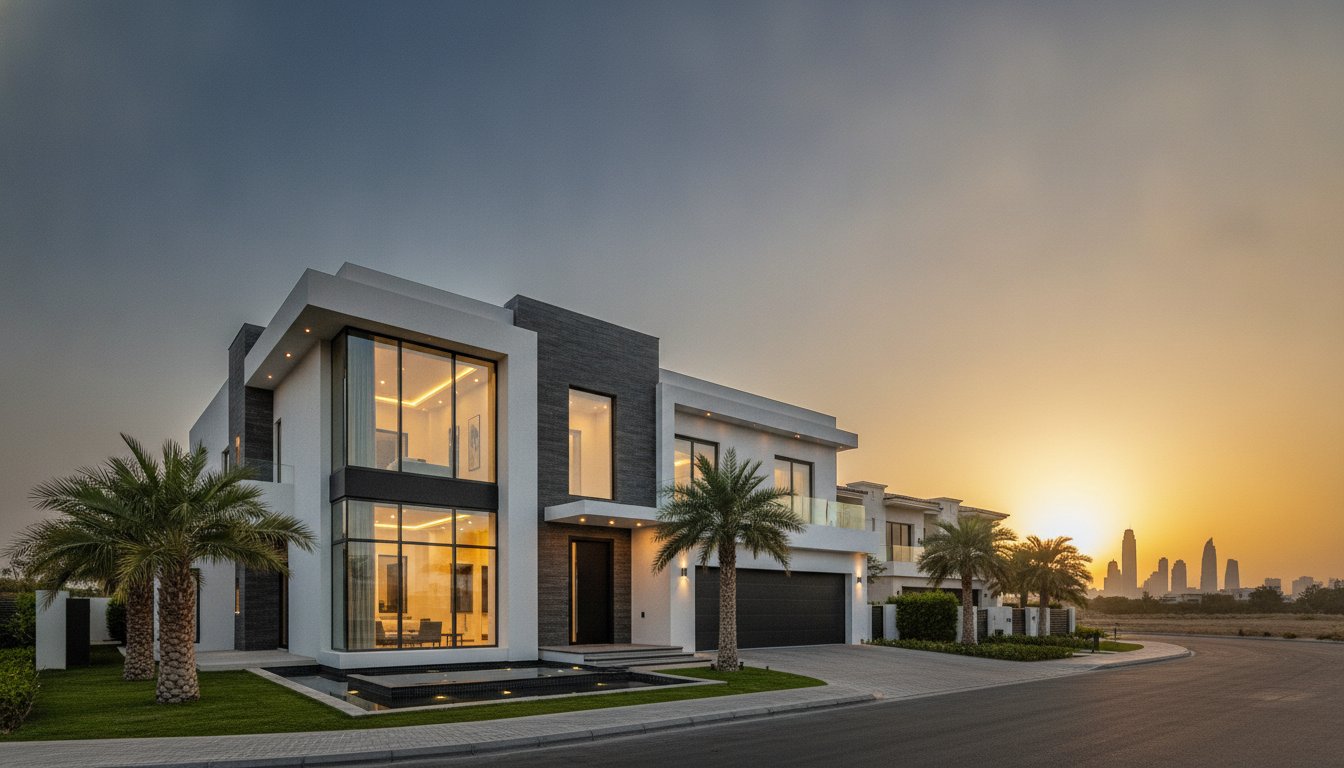
Selecting a townhouse for rent in Dubai requires a technical assessment of the property's position and structural integrity. The choice between a corner unit and a middle unit significantly impacts your daily living experience. Corner units typically command a premium due to their three open sides, which facilitate superior natural light and offer larger plot sizes. These units often provide enhanced privacy and more extensive garden space, though they require a higher maintenance budget. Middle units are often more energy-efficient because the shared lateral walls provide natural insulation against the heat. This structural layout can lead to lower utility costs during the peak summer months.
Plot sizes and landscaped areas vary across upscale residential clusters. It's standard for modern townhouses to feature private gardens, but the level of maturity in the landscaping can differ. Tenants should budget for garden maintenance, which typically ranges between AED 300 and AED 600 per month. In the 2026 market, there's a visible shift toward energy-efficient homes. Many newer developments incorporate solar water heating and high-grade thermal insulation, reflecting a growing demand for sustainable living standards that reduce the total cost of occupancy.
Layout Optimization for Modern Families
Modern family requirements have evolved beyond simple bedroom counts. Open-plan layouts are preferred for their flow and social connectivity, while traditional layouts offer distinct zones for formal and informal activities. High-value rentals now prioritize flex-spaces that can serve as home offices or playrooms. Essential configurations include dedicated maids rooms with independent access and multi-car parking infrastructure. Our team provides strategic residential advisory to help you identify units that balance aesthetic appeal with these critical functional requirements. When inspecting a property, evaluate the quality of finishes and ensure that built-in appliance standards meet your expectations for a high-quality residence.
Infrastructure and Community Amenities
The value of a residence is deeply connected to its surrounding infrastructure. Professional management and gated security are non-negotiable for maintaining a safe and high-quality environment. Beyond the private walls, assess the quality of shared facilities such as temperature-controlled pools, gyms, and community parks. Proximity to essential services and connectivity to major transport links across the national landscape are vital for long-term stability. A well-managed community ensures that public areas are maintained to a high standard, protecting the lifestyle quality you expect from a premium townhouse cluster. Strategic tenants prioritize locations where professional property management is already in place to ensure a seamless residential experience.
The Legal Framework of High-Value Leasing: Rights and Obligations
The legal landscape for a townhouse for rent in Dubai is governed by a robust framework designed to protect both parties through transparency. Central to this is the Ejari system, which provides a digital record of the tenancy and ensures contract visibility. When you sign a standard tenancy contract, you're entering into a legally binding agreement that outlines your specific rights. Security deposits are a critical component; for townhouses, these involve a refundable AED 4,000 DEWA deposit alongside a percentage of the annual rent held by the landlord. Professional standards dictate that these funds are returned in full, provided the property is vacated in its original condition, minus fair wear and tear.
Rental increases are not arbitrary. They're strictly regulated by the RERA Smart Rental Index. If your current rent is up to 10% below the market average, no increase is permitted. Increases are capped at specific tiers: 5% if the rent is 11-20% below average, 10% if it is 21-30% below, 15% if it is 31-40% below, and a maximum of 20% for units priced more than 40% below the market rate. Understanding these tiers allows for precise financial modeling when planning for lease renewals.
Maintenance Responsibilities: Defining the Threshold
Clarity on maintenance prevents disputes. Most contracts follow a threshold, often AED 500, where the tenant covers minor repairs and the landlord handles major structural or HVAC issues. Reviewing a landlord property maintenance checklist helps define these boundaries before you move in. Utilizing professional real estate portfolio management simplifies this process, as dedicated managers oversee repairs and ensure the property meets high standards. Always document the property's condition with high-resolution photos during the handover to secure your deposit.
Contract Renewal and Termination Protocols
Stability in your residence depends on adhering to mandatory notice periods. Under UAE law, any modification to contract terms or a notice of non-renewal must be communicated in writing at least 90 days before the lease expiry. This window allows for professional negotiation or a managed transition. If disputes arise regarding renewals or illegal evictions, the Dubai Land Department provides a structured framework for mediation and resolution. Maintaining a paper trail of all communications is essential for legal compliance and protecting your long-term residency interests.
Professional Framework for Renting a Townhouse in Dubai
Securing a townhouse for rent in Dubai requires a structured approach that prioritizes risk mitigation and long-term stability. A professional framework moves beyond scrolling through listings; it begins with rigorous financial modeling. This involves calculating the full lease term costs, including the AED 220 Ejari fee and the 5% monthly housing fee. Once the budget is established, the focus shifts to identifying ready property assets that maintain high maintenance standards. This ensures that the residence you select is not just aesthetically pleasing but structurally sound and professionally managed.
Due diligence on the landlord is an often overlooked but critical step. Verifying the property ownership status through official Title Deeds prevents fraudulent transactions and ensures your security deposit is handled by a legitimate entity. Executing the lease must always culminate in registering the contract via the Ejari system. This official registration provides the legal visibility required for utility connections and residency permits, anchoring your tenancy in the UAE’s regulatory framework. Following this methodical process transforms a simple transaction into a secure lifestyle acquisition.
Professional Viewing Checklist
A walkthrough is more than a visual inspection; it’s a technical assessment of the asset. During the viewing, prioritize the following checkpoints to ensure the property meets your requirements:
- HVAC Integrity: Test the cooling capacity and check for service records to avoid unexpected failures during peak summer months.
- Plumbing and Electrical: Inspect for water pressure consistency and check the integrity of the electrical panel for any visible wear.
- Cluster Dynamics: Evaluate noise levels during different times of the day and assess the privacy of the garden area relative to neighboring units.
- Master-Rule Compliance: Ensure the property adheres to homeowner association standards to avoid future community disputes or maintenance fines.
The Role of the Broker in Negotiations
The right broker acts as a strategic consultant rather than a middleman. Experienced agents leverage market data to secure better terms, such as flexible payment plans through multiple cheques or even the 'Flexi Rent' scheme where applicable. They ensure every side-agreement, from maintenance thresholds to pet policies, is documented within the legal contract to prevent future ambiguity. Verifying a broker’s RERA credentials is the first step in ensuring transaction security. Our team provides expert residential leasing services to guide you through these high-value negotiations with absolute transparency. Working with a licensed entity protects your financial interests and guarantees that your leasing experience is grounded in professional integrity.
Strategic Advisory: Transitioning from Residential Leasing to Property Investment
A lease agreement is more than a year-long commitment; it's a strategic entry point into the UAE's real estate ecosystem. When you secure a townhouse for rent in Dubai through a professional advisory firm, you gain more than a residence. You're building a partnership with a consultant who understands the long-term mechanics of high-value assets. This relationship provides end-to-end support, ensuring your tenancy is seamless while offering visibility into the broader market. For high-net-worth individuals, this period of residency serves as a practical assessment of property quality, community management standards, and the efficiency of local infrastructure.
Professional residential leasing prepares you for the complexities of the local market by grounding your experience in regulatory compliance and financial transparency. Accessing an exclusive portfolio of high-value residential assets allows you to compare different developer standards and community layouts without the immediate capital pressure of a purchase. This methodical approach ensures that when you choose to expand your footprint, you do so with a sophisticated understanding of what constitutes a high-performing asset.
From Tenant to Investor: A Strategic Transition
Transitioning from a resident to an owner requires a shift in perspective from lifestyle enjoyment to asset modeling. Living in a community allows you to witness firsthand the factors that drive tenant retention and property appreciation. You see the direct impact of professional maintenance and the value of a well-governed homeowner association on daily life. This lived experience is invaluable when evaluating ready property sales for your own investment portfolio. We help you bridge this gap by providing data-driven insights into market yields and historical appreciation trends, using your current residential experience to inform future acquisition strategies.
Commitment to Transparency and Accountability
Our approach is grounded in local mastery and absolute accountability. We reject the high-pressure, hyperbolic tactics common in sales-driven industries, opting instead for a steady hand that prioritizes your long-term goals. By working with a RERA-licensed brokerage that specializes in ready property portfolio management, you ensure that your current residence and future investments are handled with the same level of integrity. We provide the clarity and visibility required to navigate a complex and evolving landscape with confidence. If you're ready to secure a high-quality home that aligns with your lifestyle and financial strategy, explore our curated portfolio of townhouses for rent today. This is the first step in a long-term partnership designed to protect and grow your residential interests.
Securing Your Residential Future through Strategic Advisory
Mastering the leasing process in 2026 requires more than a simple search; it demands a technical understanding of the regulatory landscape and a commitment to data-driven decision-making. By prioritizing RERA-compliant contracts and conducting thorough structural assessments, you ensure your residence remains a stable foundation for your family's growth. Whether you're evaluating maintenance thresholds or modeling the total cost of occupancy, a grounded approach mitigates risk and enhances your quality of life. This methodical framework transforms a standard lease into a strategic lifestyle acquisition.
Selecting a townhouse for rent in Dubai is a significant milestone that benefits from authoritative oversight. As a RERA Licensed Brokerage (ORN 23084), we provide specialized expertise in ready property portfolio management through a transparent, advisory-led leasing process. We're dedicated to ensuring your tenancy is legally secure, professionally managed, and perfectly aligned with your long-term residential requirements. Consult with our residential leasing experts at Upscale Real Estate Brokerage LLC today to navigate the market with confidence and secure a home that serves as a springboard for your future success.
Frequently Asked Questions
What is the standard security deposit for a townhouse for rent?
The standard security deposit for an unfurnished townhouse for rent in Dubai is typically 5% of the annual rental value; furnished properties usually require 10%. This amount is held by the landlord to cover potential damages beyond fair wear and tear. Additionally, tenants must provide a refundable AED 4,000 deposit to DEWA for utility connection. Professional advisory ensures these funds are documented clearly to facilitate a seamless refund process upon lease termination.
Who is responsible for major maintenance in a rental townhouse?
Landlords are legally responsible for major maintenance and structural repairs unless the contract states otherwise. This includes HVAC system failures, plumbing leaks within walls, and electrical grid issues. Most tenancy agreements in Dubai set a maintenance threshold, often AED 500, where the tenant handles minor wear and tear while the landlord covers costs exceeding this amount. Professional property management helps streamline these requests, ensuring high residential standards are maintained throughout the lease term.
Can a landlord increase the rent at any time during the lease?
A landlord cannot increase the rent during the active term of a lease. Any proposed adjustments can only take effect at the time of renewal and must adhere to the RERA Smart Rental Index. The landlord is required to provide a formal written notice at least 90 days before the contract expires if they intend to modify the rental price. This notice period allows tenants to model their financial commitments or negotiate terms through professional advisory.
What is the legal process for registering a tenancy contract?
The legal process involves registering the contract through the Ejari system, which is a mandatory requirement by the Dubai Land Department. Tenants or their representatives must provide the original signed contract, Title Deed, and copies of the landlord’s and tenant’s Emirates IDs or passports. The registration fee is AED 220. This process provides a transparent legal record of the tenancy; it's essential for securing utility connections and protecting your rights in any future disputes.
How much notice must a tenant give before vacating a townhouse?
Tenants are generally required to provide a minimum of 90 days' notice before the contract expiration if they don't intend to renew the lease. This period is standard for most residential agreements and ensures both parties have sufficient time for transition planning. If you need to vacate before the lease ends, check for an early termination clause, which typically requires a penalty of one to two months' rent as compensation to the landlord.
Are utilities typically included in the rental price of a townhouse?
Utilities are rarely included in the rental price for a townhouse for rent in Dubai. Tenants are responsible for DEWA, cooling charges where applicable, and internet services. Additionally, a housing fee equivalent to 5% of the annual rent is collected by the municipality through monthly utility bills. Budgeting for these monthly outgoings is a critical step in financial modeling to understand the true total cost of occupancy for your residence.
What documents are required to secure a residential lease in 2026?
To secure a residential lease, you must provide a valid passport copy, a residence visa, and your Emirates ID. Landlords also require a salary certificate or recent bank statements to verify financial stability and ensure the tenant can meet the payment obligations. Post-dated cheques remain the standard method for rental payments, although some institutional landlords now participate in the 'Flexi Rent' scheme. Professional brokers verify all documentation to ensure compliance with current regulatory standards.
What happens if a dispute arises between a tenant and a landlord?
If a dispute arises that can't be resolved through direct negotiation, either party can file a case with the Rental Dispute Center at the Dubai Land Department. This specialized judicial body provides a structured framework for mediation and resolution based on UAE rental laws. Common disputes involve illegal rent increases, maintenance negligence, or security deposit withholding. Maintaining a clear paper trail of all communications and professional advisory help strengthen your position during these formal proceedings.