

A landlord’s wish to end a tenancy is not enough, by itself, to establish that eviction is lawful. Whether eviction may proceed depends on the reason and the applicable legal process. This guide explains tenant eviction laws in the UAE in practical terms, so tenants and landlords can understand what to consider before a tenancy ends.
The reason given for eviction matters, but it is only part of the picture. Notice and procedural requirements also affect whether the process is valid. Understanding how these elements fit together can help you assess the situation and identify what steps may follow.
This guide covers grounds a landlord may rely on to seek eviction, the role of notice and procedure, and why the tenancy details matter. It offers a practical overview without assuming that every eviction situation follows the same rules.
Key Takeaways
- Understand why the stated reason for ending a tenancy matters, and why it may not be the only factor.
- Learn which tenancy and notice details can shape the next steps in an eviction matter.
- See why a landlord’s intention to end a tenancy and the process for doing so are distinct considerations.
- Find out how residential leasing and property management can support clearer tenancy decisions.
Tenant eviction laws in UAE explained
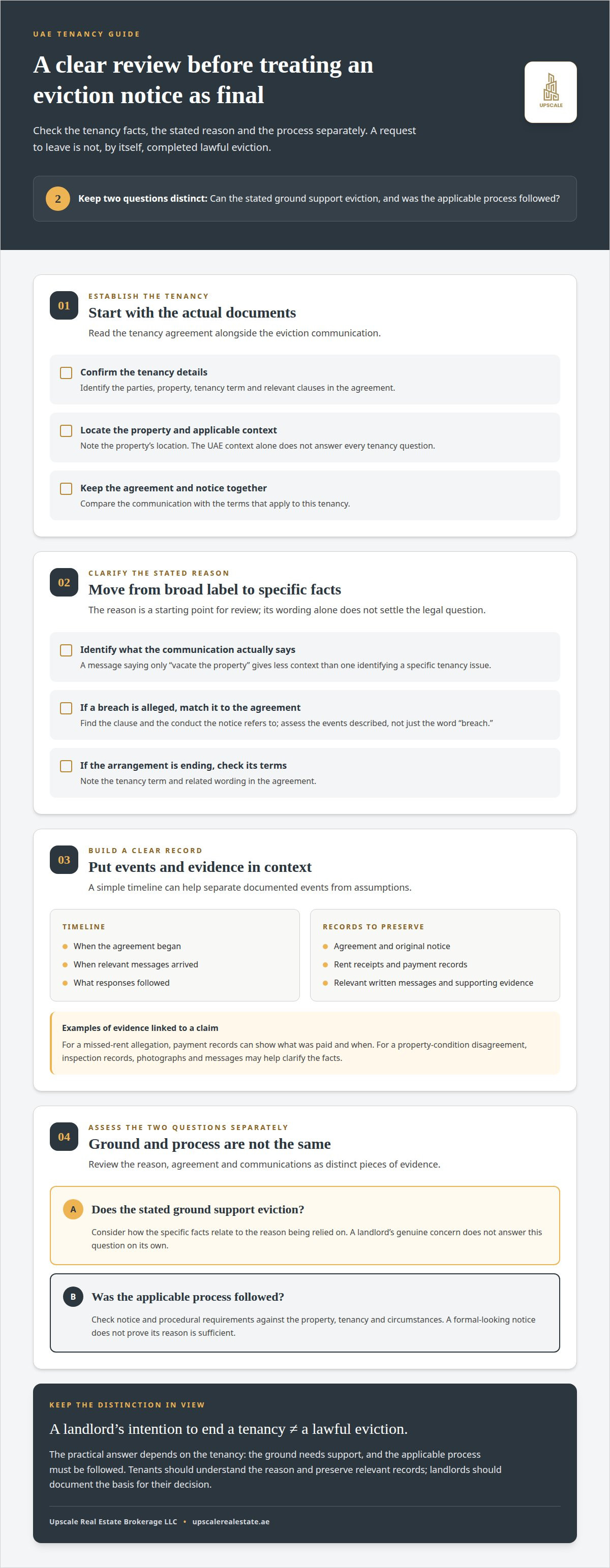
A landlord’s decision to end a tenancy does not, by itself, mean eviction is permitted. In the UAE, the reason, tenancy agreement and applicable legal process all matter. Grounds and notice requirements can differ depending on the property and tenancy. Before treating an eviction notice as final, review the actual documents and circumstances.
Start with the reason given. A notice or written communication should explain why the landlord wants the tenant to leave. That reason is the starting point for assessing whether the proposed eviction has a valid basis. A message saying only “vacate the property” provides less context than one identifying a specific tenancy issue. The wording does not settle the legal question, but it helps clarify what needs review.
Review the tenancy documents
Read the tenancy agreement alongside the eviction communication. The agreement identifies the parties, property, tenancy term and relevant clauses. Compare the stated reason with the terms that apply. If the notice alleges a breach, identify the clause and conduct it refers to. If the reason concerns ending the arrangement, note the tenancy term and related wording. Keep the agreement and notice together.
Create a timeline from the tenancy records. Note when the agreement began, when relevant messages arrived and what responses followed. Rent receipts, payment records and written messages can clarify disagreements about payment or compliance. For example, if a notice alleges missed rent, payment records can show what was paid and when. A timeline separates documented events from assumptions while preserving the context of each communication.
Assess the ground and process separately
Assess two questions separately: whether the stated ground can support eviction, and whether the process followed is appropriate. A landlord may have a genuine concern, but that alone does not answer either question. A formal-looking notice does not prove that its reason is sufficient. Review the reason, agreement and communications as distinct pieces of evidence. This avoids treating a landlord’s intention, a notice and a lawful eviction as the same thing.
Consider how the facts relate to the stated ground. A disagreement about damage, for example, may depend on inspection records, photographs and messages about the property’s condition. A dispute over a tenancy obligation may turn on the specific clause and the events described. These examples do not establish automatic grounds for eviction. They show why the details behind a landlord’s claim matter more than a broad label such as “breach.”
Keep communication factual and easy to trace. Save the original notice, agreement, receipts and relevant messages together. A tenant’s written reply can address the stated reason and correct factual errors without introducing unrelated disputes. A landlord can also retain records explaining the basis for the request. Clear documentation helps both parties identify what is agreed, what is disputed and which facts still need assessment.
Before acting on an eviction notice, identify the property’s location, the parties to the agreement, the stated ground and the documents supporting it. Then assess the applicable rule and any procedural requirements against those facts. The UAE context alone doesn’t answer every tenancy question; the actual property and agreement are central to the review. A tenant should not assume every notice requires immediate departure, and a landlord should not treat a request to leave as completed eviction.
The practical answer depends on the tenancy: a landlord needs a supportable ground and must follow the applicable process. The notice, agreement and evidence help establish whether those conditions are met. Tenants should understand the reason being relied on and preserve relevant records. Landlords should document the basis for their decision and follow the required process.
Upscale Real Estate Brokerage
Upscale Real Estate Brokerage LLC supports landlords and tenants with property decisions following a tenancy change. Residential leasing and property management help landlords plan for a rental property and its ongoing tenancy. For tenants, residential leasing can support the search for a suitable home. The right service depends on the decision, whether you are planning a new tenancy or considering another property. These real estate services do not determine the legal basis or process for an eviction, which depends on the specific tenancy and circumstances. To discuss your property plans, contact Upscale Real Estate Brokerage LLC.
Plan your next property decision with clarity
With tenant eviction laws in the UAE explained, approach your next property decision with clear priorities. An eviction concern and a move to another home are different matters, but both can affect housing plans. Keep the legal question grounded in the tenancy facts, then consider what you need from your next property arrangement.
For landlords, the next step may be planning the property’s future use. For tenants, it may be finding a rental home or considering a purchase. Upscale Real Estate Brokerage LLC offers residential leasing, Ready Property Sales and Off-Plan Project Sales to support these real estate decisions. These services do not replace legal guidance on a specific dispute, but can help with the property decision that follows.
When you’re ready to discuss your property plans, contact Upscale Real Estate Brokerage LLC. A considered next step can bring greater clarity to what comes after the tenancy.