To deal with difficult tenants in UAE, start with the signed tenancy contract, keep clear records of rent and communication, and try to resolve issues amicably. In Dubai, a landlord may seek eviction for rent arrears if the tenant hasn’t paid within thirty (30) days after receiving notice to pay, according to the Dubai Land Department. The right response depends on the issue and the applicable notice requirements.
Late rent can disrupt cash flow, but a clear, documented process helps you respond calmly and protect your property. This guide explains practical steps for preventing disputes, managing overdue payments, and addressing eviction for demolition or major refurbishment. You’ll also learn how communication, property records, and clear lease terms can support sound decisions before a disagreement escalates.
Key Takeaways
- Keep communication timely and documented so repair concerns and tenancy issues are less likely to escalate.
- Record the property’s condition, lease obligations, payments, and maintenance history to support clear decisions if a dispute arises.
- For demolition or major refurbishment, understand the legal conditions that apply before taking steps to end a tenancy.
- Use a consistent process for late rent, from clear reminders and written records to considering appropriate resolution options.
Preventing disputes through regular communication
Use clear, documented communication to address concerns before they become formal disputes. In Dubai, lease terms and the applicable eviction grounds should guide each response.
-
Set a regular communication routine
Agree how the landlord and tenant will share repair updates, payment questions, and property concerns. When a tenant reports a fault, acknowledge it, state the next action, and send an update if the timing changes. Keep messages factual and professional, and retain emails or letters. For example, record the report date, repair action, and tenant response in one communication log.
-
Discuss rent and eviction concerns
Address proposed rent changes or eviction concerns early, using the signed lease and applicable rules as your reference. In Dubai, rent increases for older tenancy contracts are subject to caps under the RERA rental index. Don’t present a proposed increase as settled before reviewing the relevant terms. For eviction, identify the legal grounds and follow the notice requirements that apply.
- Keep the conversation professional. Respond to the issue, not the tenant’s tone. Summarise agreed actions in writing, avoid threats, and keep records of unanswered calls, emails, and letters. If direct discussions stall, consider an amicable resolution or mediation before escalating. In Dubai, rental disputes can be referred to the Rental Disputes Centre under the applicable procedures.
- Use the correct legal framework. Rules depend on where the property is located. In Dubai, Dubai tenancy law governs leased real property, and alleged misconduct should be assessed against the lease and valid eviction grounds. Keep the contract, notices, and relevant communications together if a complaint reaches the Rental Disputes Centre.
- Follow formal notice and access procedures. Notice requirements depend on the eviction ground. A landlord seeking possession for personal occupation should check the applicable notice requirements before proceeding. Don’t change locks, disconnect utilities, or remove belongings to force a tenant out; use the formal dispute process instead.
What is the best method to protect your property against difficult tenants?
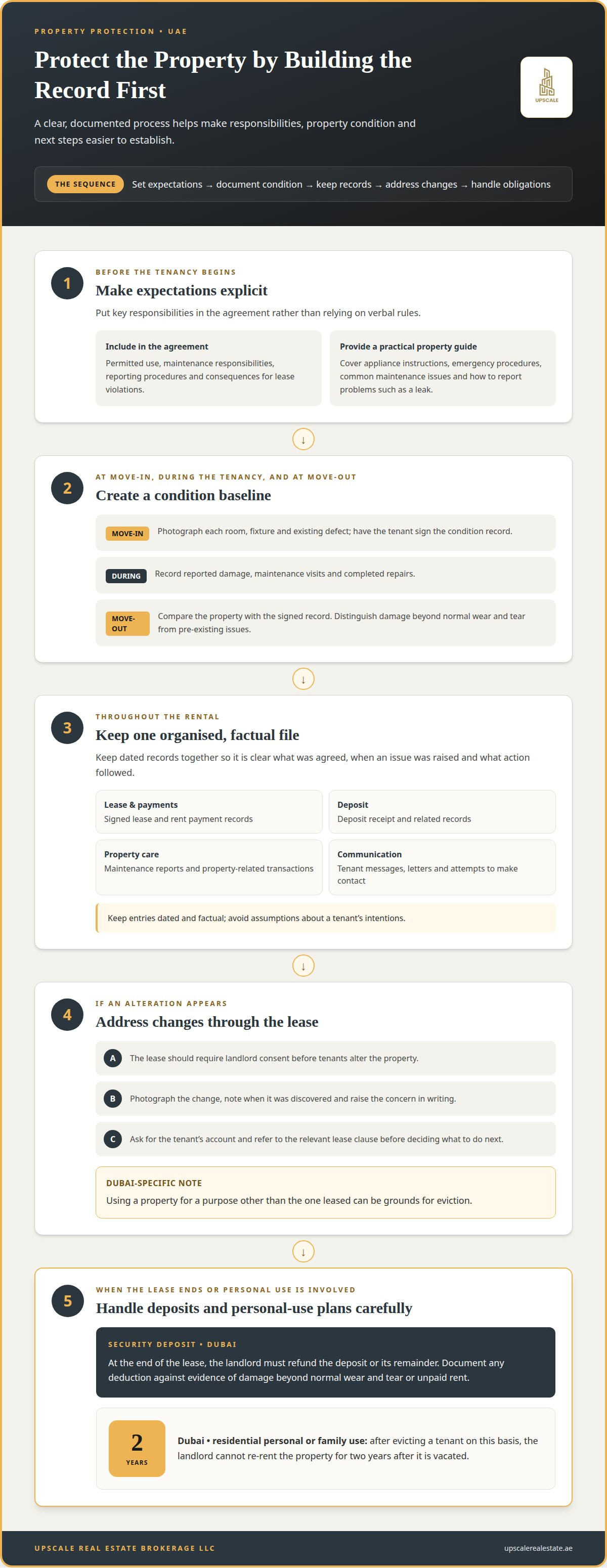
Build a clear record from the start of the rental, then use the lease and documented evidence to address damage or breaches. Written expectations make responsibilities easier to explain when a disagreement arises.
-
Explain property rules and expectations
Set out permitted use, maintenance responsibilities, reporting procedures, and consequences for lease violations in the agreement. Give the tenant a practical property guide covering appliance instructions, emergency procedures, and common maintenance issues. Explain how to report a leak and where to send the details. Clear instructions reduce misunderstandings. Avoid relying on verbal rules that may be difficult to establish later.
-
Document property condition and damage
Photograph each room, fixture, and existing defect before move-in, then have the tenant sign the condition record. Keep the images with the lease so both parties can refer to the same baseline. During the tenancy, record reported damage, maintenance visits, and completed repairs. At move-out, compare the property with the signed record and distinguish damage beyond normal wear and tear from pre-existing issues.
-
Keep tenant and property records
Maintain one organised file for the signed lease, rent payments, deposit receipt, maintenance reports, and property-related transactions. Save tenant messages and copies of letters, including attempts to reach an unresponsive tenant. These records help establish what was agreed, when a concern was raised, and what action followed. Keep entries dated and factual, rather than making assumptions about a tenant’s intentions.
-
Address unauthorized modifications
State in the lease that tenants must obtain the landlord’s consent before altering the rental property. If an unauthorised change appears, photograph it, note when you discovered it, and communicate the concern in writing. Ask for the tenant’s account and refer to the relevant lease clause before deciding what to do next. In Dubai, using a property for a purpose other than the one leased can be grounds for eviction.
- Handle deposits and personal-use plans carefully. In Dubai, a landlord may take a security deposit to help ensure the property is maintained and must refund it, or its remainder, when the lease contract expires. Document any deduction against evidence of damage beyond normal wear and tear or unpaid rent. In the UAE, a landlord who evicts a residential tenant for personal or family use cannot re-rent the property for two years after it is vacated.
Eviction for demolition or major refurbishment
In the UAE, major refurbishment can support eviction only when the work is extensive, formally approved by the relevant authorities, and genuinely requires the property to be vacant. Treat these as conditions to establish, not assumptions based on a planned upgrade.
- Define the work precisely. Prepare a clear scope describing what will be demolished or refurbished, which areas are affected, and why tenants cannot remain during construction. For example, explain whether the plan involves structural work or a full internal reconstruction. A general intention to modernise the property does not, by itself, show that it must be vacant.
- Secure formal approvals. Obtain approvals from the relevant authorities for the proposed work before relying on refurbishment as an eviction ground. Keep each approval with the plans and supporting documents. The approval should correspond to the actual project, not a different or earlier proposal. A documented link between the permission and the work helps show that the project is genuine.
- Show why the property must be vacant. Explain how the approved scope affects the tenant’s ability to occupy the premises during construction. Connect the work plan to the need for vacant possession, rather than relying only on inconvenience or preference. If the property can remain occupied while limited work proceeds, that may not establish a genuine need for vacancy.
- Follow the applicable notice procedure. Identify the rules for the emirate where the property is located, then prepare and serve notice in the required form. Keep a copy of the notice and evidence of how it was delivered. Don’t treat an informal conversation or a proposed construction start date as a substitute for the legal notice process.
- Keep tenant communication factual. Explain the approved project, the basis for seeking possession, and the next procedural step in writing. Save replies, delivery records, plans, and authority approvals together. If the tenant disputes the grounds, consider an amicable resolution before escalating, while maintaining the formal record.
- Use the stated ground honestly. Don’t describe a routine upgrade as major refurbishment if it does not meet the required conditions. Misusing eviction grounds can expose a landlord to a tenant’s compensation claim, including moving expenses, rent differences, and other damages. Keep project evidence consistent from the notice through the work itself.
Managing late rent payments
A consistent process helps landlords decide how to deal with difficult tenants in UAE when rent is overdue. In Dubai, rent is payable on dates mutually agreed with the landlord.
- Check the lease and payment record. Compare the agreed due date with bank records and the tenant ledger before contacting the tenant. Confirm the overdue amount, any payments already received, and the lease terms covering late fees. This first step in how to deal with difficult tenants in UAE helps prevent reminders from overstating balances or applying charges the agreement doesn’t support.
- Send a precise written reminder. State the missed due date, overdue amount, applicable lease-based late fee, and a clear payment deadline. Keep the language factual and retain a copy. If the tenant explains a temporary financial difficulty, discuss a payment schedule or adjusted due date, then record any agreed arrangement in writing.
- Use recorded delivery for formal correspondence. If rent remains unpaid, send important notices using recorded delivery and keep proof of dispatch. In Dubai, a landlord may seek eviction for rent arrears if the tenant has not paid within thirty (30) days after receiving notice to pay, according to the Dubai Land Department. Track the notice date and payment status carefully.
- Consider resolution before formal action. Review the signed tenancy contract to establish whether its terms have been breached. A payment plan or mediation may resolve arrears without escalation, particularly when the tenant communicates and follows an agreed schedule. If the arrangement fails, preserve reminders, payment records, notices, and replies in a chronological case file.
- Escalate through the proper process. If the dispute continues, Dubai landlords and tenants can file rental dispute cases online through the Dubai Land Department website or in person at the Rental Disputes Centre. Keep the lease and payment evidence organised for filing. For structured support with tenancy administration and rent records, explore property management support.
Upscale Real Estate Brokerage: Ready Property Sales
Upscale Real Estate Brokerage LLC provides Property Management for owners who need professional support with the ongoing responsibilities of a rental property. It can be a practical next step when tenant communication, property oversight, and lease administration require consistent attention alongside your investment priorities.
If your plans change from holding a property to selling it, Ready Property Sales can help you consider that transition. The right option depends on your property strategy: continued ownership may call for ongoing management, while a sale may better fit a revised portfolio decision. Consider both choices in light of your asset’s role and long-term objectives.
For support with property management or ready property sales, contact Upscale Real Estate Brokerage LLC.
Make your next property decision with clarity
A practical approach to dealing with difficult tenants in the UAE can protect more than a single tenancy. It can help you decide how each property fits your wider portfolio, whether you continue leasing, adjust your investment direction, or prepare for a sale. Clear records and considered decisions give you a stronger foundation for those choices.
Upscale Real Estate Brokerage LLC offers Residential Leasing, Ready Property Sales, and Off-Plan Project Sales. These options can support different property goals, from leasing a home to considering a future purchase or sale. Choose the direction that aligns with your priorities, then discuss the next step with a property professional.
For a conversation about your property plans, contact Upscale Real Estate Brokerage LLC. Take the next step with a clear view of your goals and the options available to you.
Frequently Asked Questions
How to Deal with Bad Tenants as a Landlord in Dubai?
Match your response to the tenant’s specific conduct, rather than treating every disagreement as grounds for eviction. For example, unpaid rent requires payment records and the relevant notice process, while an unauthorised sublet requires evidence of the subletting. Keep the tenancy agreement and supporting records organised, then use Dubai’s Rental Disputes Centre process if direct resolution fails.
What is the best way to respond to a disrespectful tenant?
Keep your reply brief, factual, and focused on the tenancy issue. For example, acknowledge a tenant’s complaint about a repair, then state the agreed next action without responding to personal remarks. Move communication to writing if a call becomes unproductive, and preserve the message history. Address threats or urgent safety concerns through the appropriate authorities rather than escalating the exchange yourself.
How can landlords legally address late or unpaid rent in the UAE?
Start by comparing the tenant’s payment history with the due dates in the signed agreement. In Dubai, repeated non-payment may be an eviction ground if it occurs for 90 non-consecutive days within the same year, unless the parties agreed otherwise. Keep a dated ledger and notices, and assess any proposed payment plan against the lease before deciding whether to pursue a formal case.
What are the legal grounds for evicting a tenant in Dubai, Abu Dhabi, and other emirates?
Eviction grounds and procedures depend on the emirate and the tenancy rules that apply there. In Dubai, grounds can include unpaid rent, unauthorised subletting, property damage, or a genuine sale. Demolition or major refurbishment requires extensive work, formal approval, and a genuine need for vacant possession. Don’t assume a Dubai ground or notice process applies unchanged in Abu Dhabi or another emirate.
How do landlords file a rental dispute with the Dubai Rental Dispute Center or other UAE authorities?
For a Dubai rental dispute, landlords can file online through the Dubai Land Department or in person at the Rental Disputes Centre. Prepare the tenancy contract, Ejari certificate, identification documents, and relevant correspondence or payment evidence. Arabic is the official court language for Dubai Rental Disputes Centre filings. In other emirates, refer the dispute to the competent authority under its applicable procedures.
What are the filing fees, timelines, and costs for UAE rental dispute cases?
Case duration depends on the dispute and the stage of proceedings. In Dubai, the Arbitration Department generally aims to resolve rental disputes within 15 days, while a ruling on a lawsuit takes approximately 30 days; decisions can take weeks to months depending on severity. Filing and execution steps may involve fees, so account for the applicable case procedure when planning.