

Could the most attractive office listing be the wrong choice for your business? A search for office space for rent can surface conventional offices and flexible workspace options, but the right fit depends on more than appearance or headline rent. Team size, daily operations, growth plans, access needs and lease obligations all shape whether a space will work in practice.
It’s easy to feel uncertain about how much room you need or how to compare lease structures. Start with your operating requirements, then assess each option against the same criteria: usable space, included services, flexibility and lease responsibilities. This guide explains how to define your workspace needs, compare conventional and flexible options, and spot details that could affect day-to-day suitability. Upscale Real Estate Brokerage LLC provides commercial leasing support to help businesses compare options against their stated requirements.
Key Takeaways
- Define how your team works, which facilities it needs and how it may grow before deciding how much office space to seek.
- Compare conventional offices, serviced offices and coworking arrangements by access, shared facilities, flexibility and lease responsibilities.
- Use the same scorecard for every shortlisted office space for rent dubai option to make trade-offs easier to assess.
- Keep a written brief and record unanswered questions as you move from requirements and viewings to lease review and a decision.
- Structured commercial leasing support can help align shortlisted options with your stated operating needs through transparent communication.
Office space for rent: define the workplace your business needs
Commercial office space is a workplace chosen to support a business’s operations and occupancy needs. A search for office space for rent dubai should begin with how the organisation works, not with a list of available properties. Headcount matters, but it doesn’t show how many people attend at the same time, whether clients visit or which activities need dedicated space.
Build your search around four connected decisions: operational fit, flexibility as the business changes, the appropriate location scope and the responsibilities attached to a lease. Keep this exercise separate from company formation and general property browsing. Choosing a workspace is about matching a physical environment and its lease obligations to business requirements. It doesn’t, by itself, establish that the company’s activities are authorised there.
How much office space does a business need?
Start with current headcount, then estimate anticipated staffing and typical attendance. For hybrid teams, plan around peak in-office days rather than assuming every employee needs a permanent desk. Map out space for meetings, focused work, reception, storage, equipment and shared areas. A simple layout sketch can help reveal whether a proposed floor plan supports these activities without relying on desk count alone.
Separate essentials from preferences before reviewing listings. For example, a private room for confidential calls may be essential, while a larger reception area may be desirable but unnecessary. This distinction helps keep an attractive feature from outweighing a genuine operational need.
Which business requirements should shape the search?
Consider how clients and staff will use the workplace each day. Note expected client visits, staff access needs, specialist equipment, privacy requirements and the flow of routine tasks. A team handling confidential discussions may prioritise enclosed rooms, while a business with frequent visitors may value a clear reception and convenient meeting facilities.
Record any operational or licensing requirements that could affect workspace suitability. Don’t assume a particular office arrangement meets an approval requirement; list the relevant detail for verification before committing. Apply the same care to lease responsibilities. Clarify which costs, maintenance duties, shared facilities and access arrangements are covered by the proposed agreement. Different commercial lease structures can allocate expenses and obligations differently, so compare the actual terms rather than relying on the lease label.
A concise written brief turns these considerations into a practical filter: required capacity, essential facilities, preferred flexibility, location scope and questions that still need answers. With those criteria established, compare office arrangements consistently instead of treating every listing as an equivalent option.
Office rental options and lease structures: understand what you are comparing
Once you’ve defined your operating needs, compare how each workspace arrangement handles access, facilities, flexibility and responsibility. An office space for rent dubai search may include dedicated premises and shared environments, but the label alone won’t show whether an arrangement suits your team. Staff access and client visits also matter, so weigh those practical needs when selecting a business location.
How do conventional, serviced, and shared offices differ?
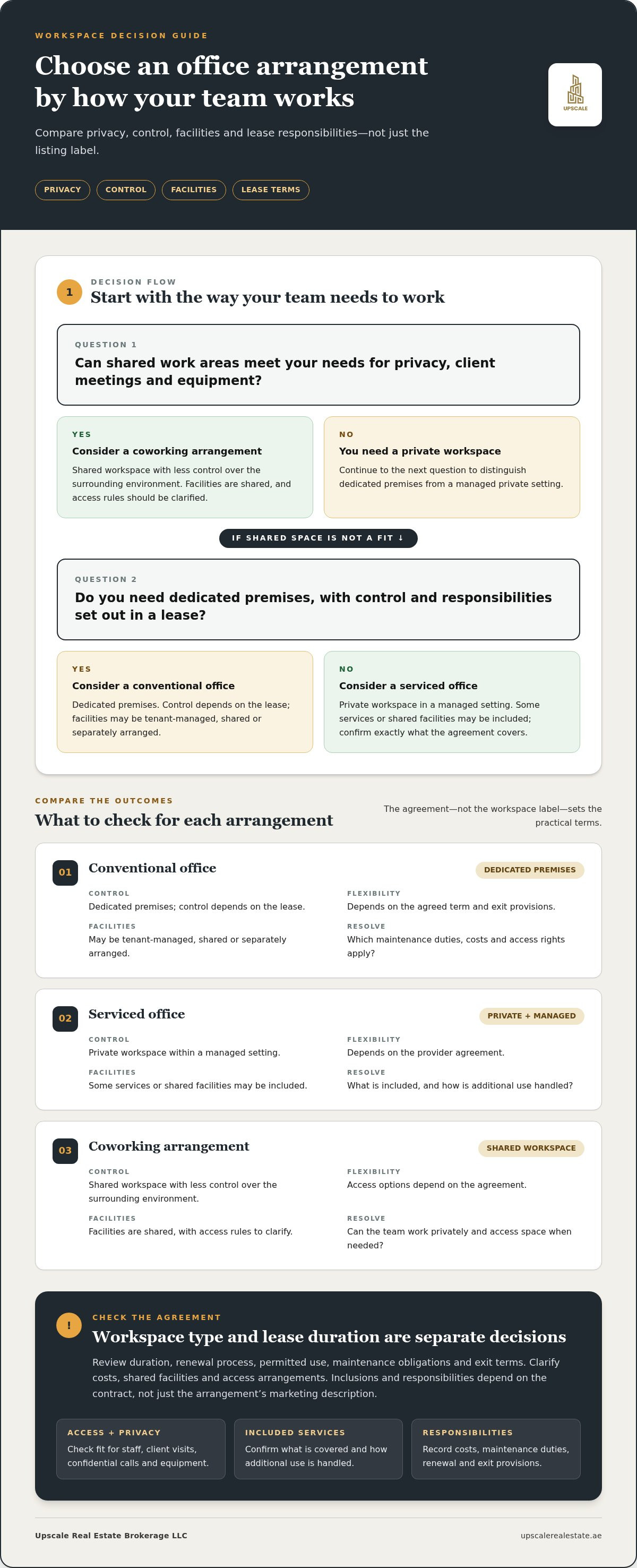
A conventional office is dedicated premises, with the tenant’s rights and responsibilities set out in the lease. A serviced office typically combines managed workspace with shared services, while coworking offers access to shared work areas. Privacy, access arrangements and facility use vary. Assess them against real tasks, such as confidential calls, client meetings and equipment use.
| Arrangement | Control | Flexibility | Facilities | Questions to resolve |
|---|---|---|---|---|
| Conventional office | Dedicated premises; control depends on the lease. | Depends on the agreed term and exit provisions. | May be tenant-managed, shared or separately arranged. | Which maintenance duties, costs and access rights apply? |
| Serviced office | Private workspace within a managed setting. | Depends on the provider agreement. | Some services or shared facilities may be included. | What exactly is included, and how is additional use handled? |
| Coworking arrangement | Shared workspace with less control over the surrounding environment. | Access options depend on the agreement. | Facilities are shared, with access rules to clarify. | Can the team work privately and access space when needed? |
What should tenants understand about lease terms?
Workspace type and lease duration are separate decisions. A dedicated office isn’t automatically a long-term commitment, and a managed workspace doesn’t automatically offer unrestricted flexibility. Review the agreement for duration, renewal process, permitted use, maintenance obligations and exit terms. Inclusions and responsibilities depend on the contract, not just the arrangement’s marketing description.
For example, a shared meeting room may be available under defined access rules, while a conventional lease may assign specific upkeep duties to the tenant. Record these differences alongside the rent and space details so you can compare each option’s operational impact. Keep legal, regulatory or workspace approval questions marked for verification against current authoritative guidance. General guidance may not apply to every business or property.
Upscale Real Estate Brokerage LLC provides commercial leasing support to help organise these comparisons into a clearer shortlist. Explore commercial leasing support based on your stated requirements.
How to compare office space for rent without overlooking the real trade-offs
A useful shortlist is more than a set of appealing listings. Compare every space against the same operational criteria, then record what the lease includes and what it leaves your business responsible for. This makes trade-offs visible before one attractive feature or headline rent skews the decision. For broader context on how to choose a business location, consider how access and the surrounding business environment support your organisation’s plans.
Which office comparison criteria matter most?
Use one scorecard for every shortlisted space. Rate each item against your written requirements, and add a note or follow-up question wherever information is incomplete:
- Layout and usable space: Can the team work comfortably, meet privately, store equipment and welcome visitors?
- Employee access: Does access suit staff travel patterns and expected attendance?
- Client experience: Is the route to reception and meeting space practical for visitors?
- Facilities and shared areas: Which facilities are included, shared or subject to access rules?
- Operational responsibilities: Which maintenance duties, services or other obligations fall to the tenant under the agreement?
- Lease flexibility: Compare duration, renewal provisions and exit terms separately from the workspace itself.
Look beyond the stated rent. A headline figure doesn’t explain which services, maintenance duties or shared-space arrangements are included. Record these items separately for each option so the comparison reflects the full set of contractual responsibilities, not an incomplete picture of costs and obligations.
How can a business balance flexibility with control?
Consider how staffing, attendance and business plans could change during the lease. If hiring is uncertain, the ability to accommodate changing occupancy may matter more than a fixed desk for every employee. If confidential work or frequent client meetings are central to daily operations, control over a dedicated environment may matter more than access to shared facilities.
There’s no single arrangement that suits every business. Shared facilities can support flexibility but may mean less control over privacy, availability or the surrounding environment. Dedicated premises provide a defined workplace, while the agreement determines the tenant’s responsibilities and options for change. Rank requirements as essential, important or desirable, then use those priorities to assess each scorecard. This keeps a long wish list from obscuring what the team genuinely needs.
Before progressing, revisit the highest-ranked options against likely operational changes and note any unanswered lease questions. Upscale Real Estate Brokerage LLC provides commercial leasing support to help businesses make these comparisons. Discuss your commercial leasing requirements.
A practical UAE office leasing process, from shortlist to decision
A clear process turns a broad search into a decision grounded in operational needs. Keep one written brief as your reference point, then update it with findings and open questions at each stage. This makes options easier to compare and gives everyone involved in approval a shared record.
What should a tenant prepare before shortlisting offices?
Before reviewing listings, document the business activity, current and anticipated headcount, preferred layout, required facilities, staff and client access needs, and desired lease flexibility. Identify any activity-specific requirements that could affect permitted use or workspace suitability. Treat these as items to verify, not assumptions. Set a decision timeline and name the people responsible for reviewing and approving the choice.
What should happen before signing a commercial lease?
Move through the process in sequence, recording decisions and unresolved points as you go:
- Define requirements. Complete the brief and separate essential needs from preferences.
- Shortlist options. Remove spaces that clearly fail core operational or access requirements.
- View each premises. Assess the layout, facilities, access and practical fit against the written brief.
- Compare consistently. Apply the same criteria to every option, noting differences in included services, shared areas and tenant responsibilities.
- Review the documents. Read the full proposed agreement, including permitted use, maintenance duties, duration, renewal provisions and exit terms. Put questions about unclear wording or responsibilities in writing.
- Verify and decide. Check relevant legal and administrative steps against current authoritative guidance, and resolve outstanding questions before making a commitment.
Don’t rely on a viewing or headline summary alone. The agreement sets out details that can shape daily operations, while business activity and applicable requirements may affect whether a space is suitable. Keep the written brief, comparison notes and answers together so the final decision can be traced back to the organisation’s needs.
Upscale Real Estate Brokerage LLC provides commercial leasing support to help businesses move from requirements to suitable options. Explore commercial leasing support.
How Upscale Real Estate supports a more considered commercial lease
Finding office space for rent dubai businesses can use effectively starts with a clear account of how the organisation operates. Upscale Real Estate Brokerage LLC provides commercial leasing support based on the tenant’s stated requirements. The process helps keep practical needs and lease considerations visible while options are reviewed.
What does a structured commercial leasing conversation cover?
A focused discussion begins with the details that shape daily use: headcount, attendance patterns, workflows, facilities, privacy, access and plans for change. These points form a working brief and help guide comparisons against the business’s priorities, rather than surface appeal alone.
Lease terms and business-specific requirements are part of that comparison. Duration, renewal and exit provisions, permitted use, maintenance responsibilities and included facilities can all affect whether a space works in practice. Clear communication helps distinguish known details from questions that still need resolution, so tenants can make a more informed assessment before progressing.
Upscale is a RERA-licensed brokerage, ORN 23084. This identifies the firm’s brokerage registration; it isn’t a guarantee of property availability, lease suitability or a particular outcome. The firm’s approach centres on transparent brokerage support and practical alignment between tenant requirements and the options under consideration.
Commercial leasing also has a landlord and investor perspective, where asset strategy and tenant requirements intersect. For related context, see the commercial real estate investment framework.
How can tenants take the next step?
Prepare a concise summary before beginning a commercial leasing discussion. Include the business activity, current and anticipated headcount, essential facilities, preferred flexibility, key priorities and decision timing. Add any unanswered questions about the premises or proposed agreement. This gives the conversation a clear starting point and keeps the search focused on operational fit.
Upscale’s commercial leasing support can help organise those requirements into a structured comparison and keep lease considerations visible as options are discussed. The assessment stays grounded in the business’s needs, without assuming that every available space or arrangement will be suitable.
To explore brokerage support for your commercial leasing requirements, visit Upscale Real Estate and begin a focused discussion.
Move from workspace priorities to a considered lease
A suitable office begins with a clear view of how your business operates, not simply a search for office space for rent dubai. Define headcount, attendance, facilities and essential access needs before comparing options. Then assess each arrangement using the same criteria, including privacy, flexibility, included services and the responsibilities set out in the lease.
Keep a written brief and review the full agreement before making a commitment. Renewal and exit provisions, permitted use and maintenance duties can all affect how well a workspace supports your business over time. Consistent comparisons help you move from shortlist to decision with greater clarity.
Upscale Real Estate Brokerage LLC provides commercial leasing and property management services. As a RERA-licensed brokerage, ORN 23084, the firm supports a structured, transparent approach based on your stated requirements, without promising a particular property or outcome.
Explore Upscale’s commercial leasing services and take the next step towards a workplace that fits your organisation’s needs.
Frequently Asked Questions
What should I consider when looking for office space for rent?
Start with the work the space needs to support, including headcount, attendance patterns, privacy, client visits, facilities and future requirements. For an office space for rent dubai search, compare shortlisted options against the same written criteria instead of relying on listing descriptions alone. Review lease duration, permitted use, maintenance responsibilities, renewal terms and exit provisions. Requirements can vary by business and premises, so verify relevant legal and administrative details using current authoritative guidance.
How do I decide how much office space my business needs?
Estimate how many people will use the office at the same time, not just the total number of employees. Then account for meeting rooms, focused work, reception, storage and operational needs. Hybrid schedules can change how much dedicated space is useful, especially when attendance peaks on particular days. Treat your estimate as a planning range, then assess actual layouts against your priorities. The floor plan should support daily work, not just fit a desk count.
What is the difference between a serviced office and a conventional office lease?
A conventional office generally provides dedicated premises under terms set out in the lease. A serviced office typically combines workspace with managed facilities or services, though inclusions vary by agreement. Compare privacy, control, flexibility, facilities and responsibilities in the specific offer. For example, clarify whether meeting rooms are shared and how access works. Neither arrangement is automatically better; the right fit depends on how your business operates and what it needs from its workplace.
What should a commercial office lease include?
A commercial office lease should clearly describe the premises, permitted use, duration, rent and payment terms, renewal and exit provisions, maintenance responsibilities, and any stated facilities or services. Read the agreement to understand each party’s obligations; don’t assume terms are standard across properties. Resolve unclear wording or responsibilities before committing. Have relevant documents reviewed appropriately, and verify legal or administrative requirements that apply to your business and the specific premises.
Can a business rent office space before finalising its setup?
Whether a business can rent office space before finalising setup depends on its activity, intended workspace arrangement and applicable licensing or administrative requirements. Don’t assume the same sequence is permitted in every situation. Identify the business activity and workspace needs, then verify current requirements through authoritative channels before committing. A commercial leasing discussion can help clarify property considerations, but it doesn’t replace checking requirements that apply to the business.
How can I compare office spaces fairly?
Use one scorecard for every shortlisted option. Compare layout, staff and client access, facilities, privacy, flexibility, permitted use and lease responsibilities against your written priorities. Separate essential requirements from preferences, and record unanswered questions instead of relying on memory. For example, note whether a meeting room is private or shared and which maintenance duties are assigned to the tenant. Consistent notes make trade-offs clearer and support a more informed lease review.
Should I choose a flexible workspace or a dedicated office?
Choose based on attendance patterns, privacy needs and the level of control your business requires. A flexible arrangement may suit changing occupancy or a preference for shared facilities. A dedicated office may better support consistent workflows, confidential discussions or regular client meetings. Compare actual access rules, inclusions and responsibilities rather than relying on labels, since arrangements differ. Rank your needs by importance, then assess which option best supports daily operations and anticipated change.