

The more appealing community isn’t automatically the better purchase. In greens & the views, the right choice depends on how a specific home fits your household, budget and investment horizon, not just its setting or outlook.
It’s easy to compare the two by lifestyle alone. The Greens is generally described as a low-rise residential setting, while The Views includes mid- and high-rise buildings. But a community’s character doesn’t tell you whether an individual unit is well maintained, fairly priced or suitable for your plans.
This guide shows you how to compare residential formats, lifestyle considerations and investment fit. It also explains what to verify before making an offer, including the unit’s condition, current service charges, ownership documentation and the seller’s No Objection Certificate. Use the checks to decide which homes are worth viewing and what questions to resolve before you proceed.
Key Takeaways
- Compare greens & the views at the building and unit level, not by community reputation alone.
- Before arranging viewings, match each home’s layout, outlook, privacy and access to your household’s daily needs.
- Confirm a listing’s property format and details against current records instead of relying on general community descriptions.
- Use a due-diligence checklist to review title, ownership, permitted use, service charges and transaction requirements with qualified professionals.
- Compare like-for-like homes against your investment horizon, and resolve outstanding questions before deciding whether to proceed.
Greens & The Views: What Buyers Should Understand About the Community
The Greens and The Views are adjoining residential communities developed by Emaar, with homes set among landscaped surroundings and shared community amenities. These broad characteristics can help shape a shortlist, but they don’t replace checks on an individual building or unit. For corporate background, see Emaar Properties, the master developer.
Community descriptions commonly mention green streetscapes, walking routes, lakes and retail. Treat these as context, not as a guarantee of what a particular home offers. Verify facilities and access details through official sources and community management. Availability, operating arrangements, access rules and maintenance conditions may differ, so confirm what applies to the building and property you’re considering.
A community overview can explain the setting; only a property-specific assessment can show whether a home suits your needs and merits an offer.
What does Greens & The Views offer prospective buyers?
Reported features such as landscaped open spaces, walking routes and everyday retail can help you consider how a home might fit your routine. If outdoor walks matter to you, check the route from the specific building. If convenience is a priority, confirm which retail options are accessible and currently operating.
These features don’t establish a unit’s condition, outlook, noise levels or maintenance history. Check facilities and access with community management, and inspect the building and home rather than relying on general descriptions.
How should buyers interpret the community’s lifestyle appeal?
Start with your routine. Think about whether you expect to use shared facilities, how you travel day to day, and whether open space or a particular outlook matters to your household. At a viewing, check the route and access arrangements, review relevant facility rules, and ask management about anything unclear.
A community description can’t confirm that a home will feel quiet, convenient or suitable. These qualities depend on the building, unit position and your preferences. Separate stated features from assumptions, and note what you’ve verified so lifestyle appeal informs your decision without replacing unit-level checks.
Compare Greens & The Views Homes by Layout, Building, and Daily Needs
Community names can help organise a search, but the useful comparison is between verified homes. The Greens is generally described as a low-rise residential setting, while The Views includes mid- and high-rise buildings. Community descriptions also mention apartments and townhouse-style homes, but confirm the formats available in current sale listings and building records before relying on them.
Use this framework to compare homes that are actually available. Don’t assume every format or feature applies across both communities.
| Property format or setting | Layout and space | Outlook and privacy | Access to assess | May suit buyers who |
|---|---|---|---|---|
| Apartment in a low-rise building | Check bedroom arrangement, storage and usable indoor space. | Compare orientation, facing and sightlines between neighbouring homes. | Confirm entrance, lift or stair access, parking and facilities. | Prefer apartment living and want to assess a lower-rise setting. |
| Apartment in a mid- or high-rise building | Assess circulation, storage and how rooms support everyday use. | Check floor, natural light, outlook and exposure to surrounding activity. | Verify building entry, lift access, parking allocation and facility rules. | Value a particular outlook or building arrangement, subject to unit checks. |
| Townhouse-style home, if confirmed | Review room layout, storage and how indoor and outdoor areas connect. | Consider privacy, neighbouring sightlines and the position of outdoor space. | Check entry, parking and any applicable shared-area rules. | Need a different arrangement from apartment living and find a suitable verified listing. |
Which home format may suit your household or ownership plan?
Start with how you expect to use the home. An owner-occupier may prioritise bedroom separation, storage and easy movement between rooms. Your household may also need practical parking or usable shared and outdoor space. An investor should assess the same features against the intended ownership plan, without assuming a particular format will attract stronger demand or deliver a specific return.
During viewings, check the actual dimensions and usability of rooms, not just the stated bedroom count. Confirm parking allocation and any details that affect how the property can be used.
Which unit-level details deserve a close comparison?
Compare orientation, floor, outlook, natural light, noise exposure and visible condition. Ask about access arrangements, building facilities and usage rules, then verify important details against listing documents and building records. In greens & the views, a unit’s position and practical features can matter as much as its community identity.
When narrowing down options, discuss your property criteria with an adviser and verify current listing details before arranging a viewing.
Does Greens & The Views Fit Your Lifestyle and Investment Criteria?
A well-known community can attract attention, but its name alone doesn’t confirm that a particular home suits your needs or makes a sound investment. In greens & the views, the decision depends on the individual property, your intended use and the risks you’re prepared to accept. Separate community appeal from property-level evidence before deciding whether to proceed.
For personal use, consider whether reported green spaces, walking routes and retail access fit your actual routine. If you expect to walk regularly or rely on nearby conveniences, visit the routes from the specific building and check which facilities are accessible, operating and suitable for your needs. Marketing descriptions provide context; they don’t establish proximity, access arrangements or current conditions for a particular unit.
When might the community’s reported features suit your priorities?
These features matter when they support how you plan to live, not simply because they sound appealing in a listing. Consider how often you’d use open space or shared facilities, and whether the available routes and nearby retail fit your schedule. Inspect them in person where possible. Ask management about access, rules and current conditions, and confirm that any stated convenience applies to the property you’re assessing.
What should investors test before treating a property as an opportunity?
Start with your investment parameters. How long do you intend to hold the property? Will it be for personal use, rental income or a combination? How much liquidity might you need, and what level of vacancy, maintenance or market risk are you willing to manage? Your answers help define suitability; they don’t predict future performance.
Assess each candidate using current, comparable evidence. Compare verified asking details with relevant transaction or rental information, and confirm ownership costs, service charges and the property’s condition. If you model rental income, make your assumptions explicit and allow for the possibility of vacancy. Keep projected gross income separate from ongoing expenses, and don’t treat either as a guaranteed return. An attractive outlook may still be less suitable if costs or maintenance needs conflict with your plan.
- Personal-use buyer: Prioritise day-to-day suitability and the facilities you’ll genuinely use.
- Longer-term investor: Assess whether the property’s costs, condition and potential use align with your holding period.
- Liquidity-conscious buyer: Consider how much capital will be committed and whether the investment fits your broader financial position.
For a wider framework on aligning property decisions with investment objectives, read this real estate portfolio management guidance. Use it to clarify your strategy, then evaluate each property using verified details rather than community reputation alone.
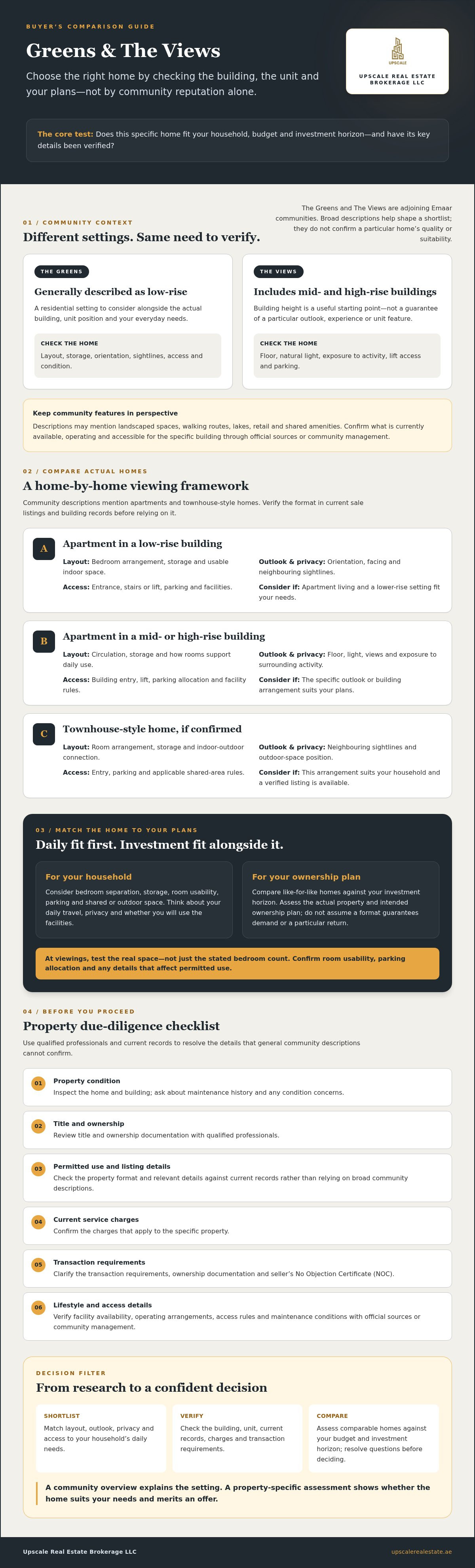
A Greens & The Views Property Due-Diligence Checklist
Use the same process for every shortlisted home. In greens & the views, community reputation can’t replace checks on the specific unit, its documents and the proposed transaction. Keep written records, request evidence for important claims, and consult qualified professionals when you need legal or technical advice.
- Define your requirements. Write down your intended use, budget, preferred format, essential features and investment horizon. This gives you a consistent basis for comparing properties.
- Verify the listing. Confirm the current asking details, property format, unit identification and stated features. Check that the information aligns with available property and building records.
- Inspect the home. Assess visible condition, ventilation, fixtures, storage, natural light and noise. Note signs that may require specialist inspection, and request clarification instead of relying on verbal assumptions.
- Check what’s included. Confirm the unit’s boundaries, fixtures and other included items against the listing documents. Verify parking allocation and access arrangements in writing.
- Review building obligations. Ask for current service-charge information, maintenance history and applicable building rules. Confirm relevant maintenance obligations and facility access with the appropriate parties.
- Review ownership and transaction documents. Request current ownership and property documentation through appropriate professional channels. Have qualified advisers verify title, ownership, permitted use, transaction requirements and payment terms before commitment.
- Assess and decide. Compare the evidence with your requirements. List unresolved questions and address them before making an offer or proceeding with the transaction.
What should you inspect during a viewing?
Look beyond the finish. Check how doors, windows and fixtures operate, whether rooms have the light and ventilation you need, and whether you notice noise or visible damage. A viewing isn’t a substitute for specialist assessment if concerns arise. Record questions as you go, then request written clarification and compare the answers with the listing documents.
Which documents and ownership costs should you verify?
Ask for evidence of current service charges and maintenance obligations, then confirm applicable figures and payment terms with qualified professionals. Have relevant advisers check ownership documents, permitted use and the steps required for the proposed transaction. Requirements can depend on the property and circumstances, so use this checklist to prepare, not as definitive legal guidance.
For broader purchase preparation, read the ready property sales acquisition guide. To discuss your criteria and due-diligence questions, speak with a property adviser.
Greens & The Views: Research to Confident Decision
A sound decision comes from a clear process, not a quick reaction to a community name or appealing listing. For greens & the views, start with your requirements, compare verified options like for like, inspect shortlisted units and validate relevant documents before deciding whether to proceed.
- Confirm your requirements. Define intended use, preferred property format, essential features, decision timeline and the ownership costs you need to understand.
- Shortlist verified listings. Confirm each property’s current details before treating it as an option.
- Compare like with like. Consider comparable formats and relevant unit attributes. Record differences in condition, outlook, access and ongoing obligations rather than letting a broad community impression drive the comparison.
- Inspect and validate. View the property, follow up on concerns and have the relevant documents and transaction requirements checked through appropriate professional channels.
- Resolve open questions. Keep a written list of unanswered points. Decide only when you understand which details are confirmed and which still need clarification.
This sequence can help you decide whether to arrange a viewing, keep comparing or pause to seek advice. It also gives you a more useful basis for discussing a property than general assumptions about the community.
What information should you prepare before speaking with an adviser?
Bring a concise outline of how you plan to use the property, your preferred format, non-negotiable requirements and decision timeline. Share shortlisted listings and note questions about condition, documentation, service charges or other ownership obligations. Ask for current, verifiable information on the specific homes you’re considering; community-level descriptions won’t answer unit-specific questions.
How can professional guidance reduce uncertainty without pressure?
An adviser can help organise comparisons, identify details that need confirmation and clarify which steps to discuss with the appropriate professionals. This support should help you assess options against your criteria, not push you toward a particular purchase. Availability, asking details and property information can change, so confirm them at the time of enquiry. No recommendation can guarantee a transaction or investment outcome.
Upscale Real Estate Brokerage LLC provides ready-property sales and investment advisory support. To discuss your requirements and questions, speak with a property adviser about your buying criteria. The conversation can help you determine what information to verify before arranging a viewing.
Make Your Next Property Decision with Clarity
Choosing between homes in greens & the views comes down to the fit of a specific property, not the reputation of its community. Compare similar homes against your space, lifestyle and ownership priorities, then verify each unit’s condition, costs and documents before deciding whether to proceed.
A disciplined process turns interest into an informed next step: confirm your requirements, review current listing details, inspect shortlisted properties and resolve outstanding questions. If the available evidence doesn’t support a decision yet, keep comparing rather than feeling pressured to act.
Upscale Real Estate Brokerage LLC is a RERA-licensed brokerage, ORN 23084, providing ready and off-plan property sales and investment advisory. Confirm availability and property details at the time of enquiry. To discuss your priorities, discuss your property requirements.
With clear criteria and careful verification, you can approach your next viewing with greater confidence.
Frequently Asked Questions
What is the difference between Greens and The Views?
The main reported difference is their residential setting: The Greens is generally described as a low-rise community, while The Views includes mid- and high-rise buildings. Both are associated with landscaped surroundings and shared amenities, but features and access can vary by building. Treat these descriptions as a starting point, then check the location, outlook, condition and facilities of the specific property you’re considering.
What types of homes are available in Greens & The Views?
Apartments are a reported residential format, and community descriptions also refer to townhouse-style homes. That doesn’t confirm what’s currently available or which formats apply to a particular building. Check current sale listings and building records before shortlisting a property. During a viewing, compare the actual layout, bedroom arrangement, storage, parking and usable indoor or outdoor space rather than relying on a general description.
Is Greens & The Views suitable for families or owner-occupiers?
It may suit families or owner-occupiers if a specific home supports their space, access and daily routine needs. Assess bedroom separation, storage, parking, noise, natural light and the route to facilities you expect to use. Visit shared areas and confirm access arrangements and rules with management. Community features alone can’t establish whether a unit is practical for your household, so assess the building and home in person.
Are Greens & The Views properties a good investment?
There’s no universal answer; investment suitability depends on the property, purchase terms and your objectives. For greens & the views, compare current, like-for-like evidence and verify asking details, service charges, maintenance needs and potential vacancy assumptions. Consider your intended holding period, liquidity needs and risk tolerance. Separate estimated gross rental income from ongoing costs, and don’t treat past market performance or a popular community name as a guarantee of future returns.
What should I check before buying a property in Greens & The Views?
Check the specific unit’s condition, boundaries, included fixtures, parking allocation and access arrangements against listing documents. Request current property and ownership documentation through appropriate professional channels, and have qualified advisers verify title, ownership, permitted use and transaction requirements. Also confirm service charges, building rules and maintenance obligations. Record unanswered questions and seek written clarification before committing; a viewing or verbal assurance alone isn’t a substitute for document review.
How do I compare apartments and townhouses in Greens & The Views?
Compare how each verified property supports your intended use. For an apartment, assess room layout, storage, floor, outlook, access and shared facilities. For a townhouse-style home, if a current listing and building records confirm that format, consider privacy, circulation and how indoor and outdoor areas work for you. Compare parking, condition and ownership obligations too. Don’t assume a format or feature is available throughout both communities.
What ongoing costs should I verify when buying in Greens & The Views?
Request current service-charge details for the specific building and unit, and confirm any maintenance obligations or other recurring ownership expenses with the relevant parties. Ask qualified advisers to identify transaction-related costs and payment terms that apply to your purchase, including any applicable registration or mortgage costs. Don’t rely on broad community estimates: amounts and requirements can vary, so verify them against current documentation before making a decision.