

What if the biggest risk in an Arjan Residence purchase is assuming the listing name tells you exactly what you’re buying? Similar names can make it difficult to identify the precise building or property, while differences in a unit’s condition, layout, ongoing charges and transaction requirements can affect whether it suits your plans. The label is a starting point, not a substitute for verifying the property’s fundamentals.
It’s reasonable to want a clear answer to one central question: is this property the right fit for your lifestyle or investment strategy? This 2026 buyer’s guide offers a practical framework for identifying the exact property, comparing unit-level details and assessing investment potential using clear assumptions and current evidence. It also outlines due diligence and purchase considerations to help you make a more informed decision. With guidance grounded in property information, you can assess each listing on its merits rather than relying on its name alone.
Key Takeaways
- Treat “arjan residence” as a search phrase, not proof of a specific development; match each listing to the building, unit and legal property description.
- Compare unit features using documented facts, and distinguish them from estimates or seller claims before assessing overall value.
- Assess each unit against your priorities: owner-occupier needs or investment assumptions such as achievable rent, vacancy, expenses and resale.
- Organize due diligence into property, ownership, financial and building-management checks so you can track key evidence before making an offer.
- Use goal-led brokerage guidance to compare relevant property evidence and approach purchase decisions with greater clarity.
Arjan Residence: Identify the Property Before Comparing Listings
“Arjan Residence” may identify a particular residence, or it may appear in listings describing properties associated with that search phrase. Don’t assume the wording alone identifies a specific development, building or available unit. Start by matching the listing to the property’s formal documentation, then assess the individual asset using evidence.
Does Arjan Residence refer to one building or a wider property search?
A listing title is a marketing label, not necessarily the official building name or legal description of the property. The building name, advertised unit number and formal property records may use different wording. A broader project overview can provide context, but it can’t establish which asset a particular listing refers to.
Compare the advertised name with the unit’s documentation and record any differences. Establish exactly which property is being offered before comparing asking terms. Otherwise, you may be treating different properties as if they were the same.
Which listing details should match across documents?
Build a simple record for each candidate unit. Compare the details below across the listing and available property records. Note whether each item is documented, estimated or presented as a seller claim:
- Identity: Building name, unit identifier and formal property description.
- Size and layout: Stated area and room arrangement, including differences in how the area is described.
- Condition: The unit’s documented state compared with descriptions such as “renovated” or “move-in ready.”
- Ownership: Ownership details shown in relevant records and transaction documents.
- Other features: Natural light, storage, parking and included fixtures, where supported by evidence.
For example, if a listing advertises one unit number but the documents show a different identifier, treat the mismatch as unresolved rather than assuming it is a minor wording difference. Request documented clarification and keep the response with your comparison notes. Apply the same approach if the listed area, layout or fixtures don’t align with supporting information.
Separate verifiable details from promotional language. A view described as “open,” a layout called “spacious” or an expected upgrade may influence your perception, but each needs evidence before it should affect your assessment. A master-project overview can add broader development context, while unit records remain the basis for identifying the property.
Once the exact arjan residence property is clear, comparisons become more meaningful. You can assess asking terms against the same type of asset instead of relying on a shared label.
Compare Arjan Residence Units by Layout, Condition, and Ownership Costs
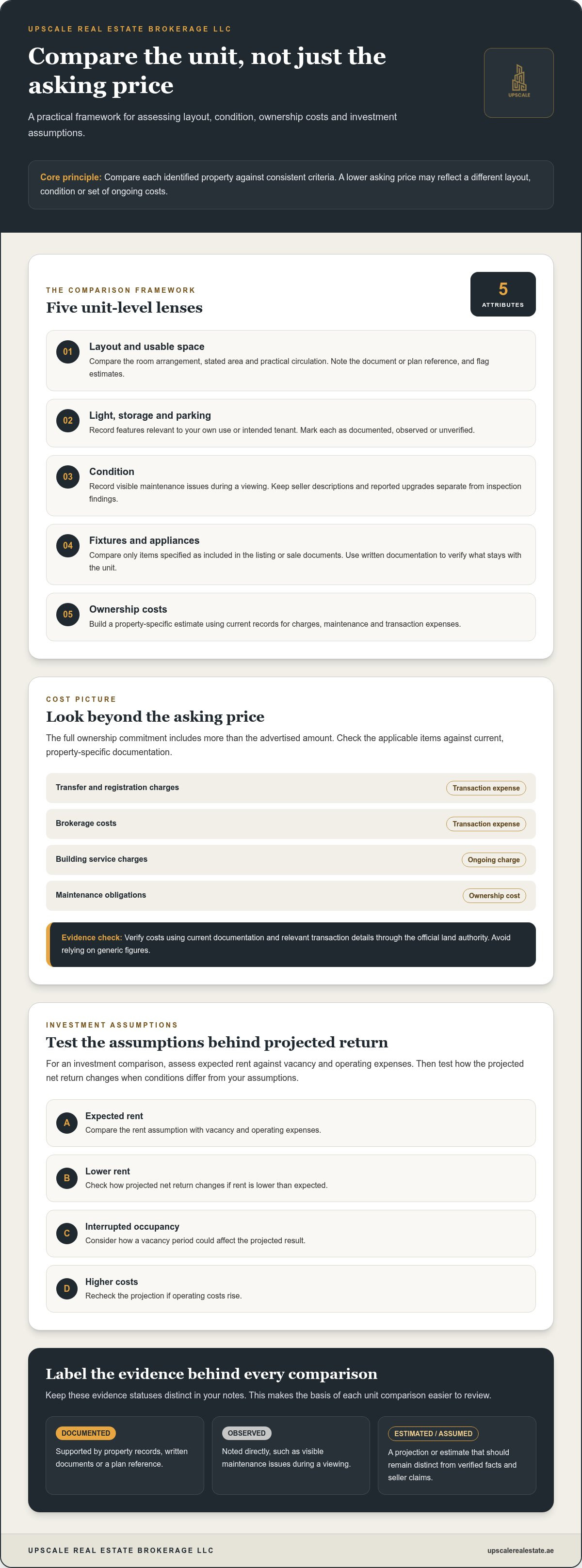
Once you’ve identified the property, compare each unit against the same criteria. A lower asking price may reflect a different layout, condition or set of ongoing costs. Separate documented facts from estimates and seller descriptions so your comparison supports a decision, not just a price ranking.
How do layout and condition affect day-to-day suitability?
Match the room configuration and usable space to how you’ll live in the unit or the tenant profile you’re targeting. Note natural light, storage and parking where documented. During a viewing, record visible maintenance issues, but keep observations such as worn finishes separate from specialist inspection findings. Compare appliances, furnishings and fixtures only when the listing or sale documents specify what is included.
| Attribute | What to compare | Evidence status |
|---|---|---|
| Layout and usable space | Room arrangement, stated area and practical circulation | Record document or plan reference; flag estimates |
| Light, storage and parking | Features relevant to your use or intended tenant | Mark as documented, observed or unverified |
| Condition | Visible wear, reported upgrades and maintenance needs | Separate seller claims from inspection findings |
| Fixtures and appliances | Items included in the proposed sale | Use written listing or transaction documentation |
| Ownership costs | Service charges, maintenance and transaction expenses | Use current, property-specific records |
Which costs should buyers model beyond the asking price?
The asking price is only one part of the cost of owning a unit. Recurring charges, maintenance and transaction expenses shape the full commitment. Build a property-specific estimate that includes applicable transfer and registration charges, brokerage costs, building service charges and maintenance obligations. Check current documentation and relevant transaction details through the official land authority, rather than relying on generic figures.
For an investment comparison, model expected rent against vacancy and operating expenses. Then test how the projected net return changes if rent is lower, occupancy is interrupted or costs rise. Label each input as documented, estimated or assumed. This sensitivity check shows which assumptions materially affect the result without treating a forecast as a guaranteed outcome.
For an arjan residence purchase, the strongest comparison assesses every unit using consistent evidence and ownership assumptions. Explore property buying guidance to compare options against your goals.
Assess Whether an Arjan Residence Property Fits Your Investment Plan
The same unit can be a good home and a weak investment, or the reverse. Set your objective first. An owner-occupier weighs day-to-day suitability and ongoing obligations; an investor tests income, costs, vacancy and resale assumptions. Evaluate an arjan residence property against the outcome you need, not a generic claim about lifestyle appeal or investment potential.
When might the property suit an owner-occupier?
For a home, compare the verified layout, usable space and condition with your household’s daily requirements. Consider whether documented access and building services work for your routine, and whether recurring obligations fit your budget. Treat amenities, nearby facilities and future improvements as unknown unless current evidence supports them. A feature matters because it serves your priorities, not simply because it appears in promotional copy.
How should an investor test the numbers?
Build the model from evidence tied to the unit. Use comparable rental information and current demand indicators to estimate achievable rent, then allow for vacancy rather than assuming continuous occupancy. Record the source and date for each input. Resale expectations also need a defensible basis; projected appreciation is an assumption, not guaranteed income.
Keep gross and net yield distinct:
- Gross yield compares expected annual rent with the purchase price, before operating expenses.
- Net yield compares income remaining after relevant costs with the investment basis. Include service charges, maintenance, management expenses, vacancy and applicable transaction costs in the model.
Test the result under different assumptions. For example, lower rent, a longer vacant period or higher maintenance expenses can reduce net yield even if the asking price stays unchanged. This sensitivity check shows which variables matter most and where better evidence could change your decision.
For broader purchase context, see the ready-property acquisition framework. If you’re assessing how one unit fits alongside other holdings, the portfolio management strategy guide adds a portfolio-level perspective. In both cases, keep verified unit information separate from estimates, and make the final comparison against your objectives and risk tolerance.
Complete Arjan Residence Due Diligence Before Making an Offer
A listing is a starting point, not a substitute for reviewing the documents behind the property. For an arjan residence purchase, organize your checks by category and record the evidence, unresolved questions and responsible person for each item. Transaction requirements and procedures can vary, so use current official guidance from the relevant land authority and the professionals involved in the transaction.
Property and ownership checks
- 1. Confirm the asset identity. Match the advertised building and unit identifiers with the formal property description and the unit being considered.
- 2. Compare unit details. Review the stated area, layout, condition and included items against available plans, sale documents and inspection information. Note discrepancies and request documented clarification.
- 3. Review ownership records. Check available title and ownership information against the specific unit, and ensure the seller details align with the proposed transaction documentation.
- 4. Review building records. Examine available building-management information, service-charge records, maintenance obligations and any relevant notices or outstanding matters affecting the unit.
Financial and transaction checks
- 5. Reconcile the numbers. Set out the asking terms alongside applicable transaction charges, recurring obligations and estimated maintenance. Keep verified amounts separate from estimates.
- 6. Identify conditions to resolve. Record outstanding obligations, document inconsistencies or conditions that need written resolution before proceeding.
- 7. Define your offer boundary. Set decision criteria and a maximum purchase amount based on your financial plan, including the wider costs of ownership.
- 8. Confirm the proposed terms. Put the agreed price, included items, responsibilities and key timelines in writing. Review the transaction documents and applicable procedures before signing or transferring funds.
Keep a simple evidence log with the document name, date reviewed, relevant detail and any follow-up required. If information changes, update the log and reassess your decision rather than relying on an earlier listing or verbal summary. This creates a clear record for discussions with the professionals involved in the transaction.
For considered purchase decisions grounded in property evidence, explore ready-property buying support from Upscale Real Estate Brokerage LLC.
Buy an Arjan Residence Property with Clear, Goal-Led Brokerage Support
A considered purchase starts with your objectives, not a shortlist of listings. Upscale Real Estate Brokerage LLC supports buyers through ready-property sales and investment advisory, using property evidence and clearly stated assumptions to inform comparisons. This helps make the decision process more transparent without promising availability, returns or a particular outcome.
What should buyers expect from an advisory-led search?
Start by defining how you intend to use the property, your investment horizon, risk tolerance and practical requirements. These criteria help distinguish essential features from preferences and keep the search focused. A home buyer may prioritize day-to-day suitability, while an investor may place more weight on rental assumptions, ongoing costs and resale considerations.
From there, compare relevant listings using documented unit details. Note where information is verified, estimated or based on a seller’s description. If a feature or financial assumption is unclear, keep it visible as an open question rather than treating it as established fact. Recommendations should reflect your stated priorities, not promotional claims or headline projections.
What are the next steps toward an informed purchase?
Prepare a shortlist, then use the same criteria to assess each property. A consistent comparison makes it easier to identify meaningful differences and information gaps before you move forward.
- Record the exact property and unit identifiers for each listing.
- Compare documented layout, condition, included items and ongoing obligations.
- Write down your financial assumptions and distinguish estimates from verified figures.
- Organize questions and transaction documents so outstanding points are clear.
As the process advances, keep proposed terms, responsibilities and timelines in written records. This creates a practical basis for reviewing decisions and discussing unresolved details. Upscale Real Estate Brokerage LLC’s advisory-led approach connects your purchase objectives with relevant property evidence, helping you consider each option on its own merits.
If you’re considering an arjan residence purchase, discuss your property purchase objectives with Upscale Real Estate Brokerage LLC and review suitable property options against your priorities.
Make Your Next Property Decision with Greater Clarity
A sound arjan residence purchase begins with identifying the exact property, then comparing unit details and ownership costs using documented evidence. The right choice also depends on your purpose: a home should suit your everyday requirements, while an investment needs realistic rent, vacancy and expense assumptions. Before making an offer, organize ownership records, financial considerations and proposed transaction terms.
Upscale Real Estate Brokerage LLC supports buyers through ready-property sales and investment advisory, with guidance shaped around your objectives and available property evidence. The brokerage is RERA-licensed and privately owned, with ORN 23084. Include current licensing and property details in your due diligence, and keep assumptions distinct from verified facts.
Bring your priorities, questions and shortlist into a considered discussion. Discuss your property purchase objectives with Upscale Real Estate and review options against the criteria that matter to you. A clear process can help you move forward with confidence and make a decision grounded in your goals.
Frequently Asked Questions
What does Arjan Residence refer to in property listings?
“Arjan Residence” may refer to a specific residence, or it may be wording used to describe properties associated with that search. Don’t assume the phrase identifies one development or a particular available unit. Listing titles can differ from formal building names and legal property descriptions, so treat the wording as a search clue. Confirm the exact asset before comparing its price, features or ownership details.
How can I verify the exact Arjan Residence building or unit?
Match the listing’s building name and unit identifier with the formal property description and available ownership documents. Compare the stated size and layout with property records or plans, and note any differences for documented clarification. The arjan residence label alone isn’t enough to establish which asset is being offered. Keep a record of the documents reviewed, unresolved inconsistencies and written responses before comparing properties or making an offer.
Is an Arjan Residence property suitable for investment?
It may suit an investment plan if the individual unit’s verified details and realistic financial assumptions align with your objectives and risk tolerance. Assess achievable rent using current comparable evidence, allow for vacancy, and include operating costs such as service charges, maintenance and management. Consider resale assumptions separately from rental income. A listing label cannot establish future performance, and projected returns should never be treated as guaranteed.
How do I compare two Arjan Residence apartments fairly?
Use the same comparison criteria for both apartments: verified unit identity, usable layout, stated area, condition, natural light, storage, parking and documented fixtures. Include recurring service charges and other ownership obligations using current property-specific information. Label each detail as documented, observed, estimated or seller-stated. This makes differences visible without treating promotional wording as fact, and helps you judge each unit against your intended use and financial plan.
What costs should I consider when buying an Arjan Residence property?
Consider the asking price alongside applicable transaction and registration charges, brokerage costs, recurring building service charges and maintenance obligations. Investors should also account for management expenses and potential vacancy when estimating income. Exact costs depend on the property and transaction, so verify current figures against relevant documentation and official guidance. Keep confirmed amounts separate from estimates, and assess the total ownership commitment rather than focusing on the asking price alone.
What documents should I review before making an offer?
Review available property identification and ownership records, the unit’s sale documentation, plans or other records supporting its stated details, and relevant building-management information. Check available service-charge and maintenance records, and identify outstanding obligations or conditions that may affect the purchase. Compare names, identifiers and details across documents. Record any gaps or inconsistencies and seek written clarification through the relevant transaction professionals before relying on the information to make an offer.
Can a buyer use rental yield to compare Arjan Residence properties?
Yes, rental yield can help compare properties, but it’s useful only when the assumptions and calculation are consistent. Gross yield compares expected annual rent with the purchase price before expenses. Net yield accounts for costs such as service charges, maintenance, management and vacancy. Use current rental evidence, state assumptions clearly and test how changes in rent or expenses affect the result. Yield is a comparison measure, not a promise of future income.