

Could a waterfront address be the wrong investment if its handover timeline, property type, or holding costs don’t match your plans? For buyers considering deira island, the appeal needs to be weighed against the realities of a community still developing. Transaction activity alone can’t show whether a particular unit suits your goals, so focus on the property, its documented terms, and your intended use.
Comparisons can be difficult because completed homes and off-plan properties involve different timelines, risks, and income prospects. A fair assessment looks beyond headline prices to ownership terms, delivery status, ongoing costs, and how you intend to use or hold the property.
This guide compares the main property options, explains what to assess when weighing off-plan against completed units, and outlines the checks to make before proceeding. You’ll also consider how your investment horizon, rental strategy, and management needs affect suitability. Use a consistent framework to decide whether a Deira Island purchase aligns with your objectives, without treating projected growth or delivery dates as guarantees.
Key Takeaways
- Define your intended use, investment horizon, budget, and preferred delivery stage before comparing properties.
- Assess deira island opportunities by property type, completion status, documented terms, and fit with your plans, not by headline appeal alone.
- Compare ready and off-plan options using the same criteria, including timeline, intended use, and evidence supporting any rental assumptions.
- Follow a due diligence sequence to review project records, ownership terms, and current transaction requirements through authoritative sources.
- Match your purchase strategy to your risk tolerance and portfolio concentration; no property type is automatically right for every buyer.
Deira Island Property: What Buyers Should Assess First
Deira Island property refers to residential opportunities within a large, phased waterfront development planned as a mixed-use community. Its scale alone doesn’t determine whether a purchase is suitable. Your intended use, investment horizon, budget, and preference for a completed home or future handover should shape your shortlist.
The core decision is whether the property fits your objectives, the timing suits your plans, and the risks are acceptable. Separate verified project information from forecasts and promotional claims. A masterplan describes an overall vision; it doesn’t establish that every amenity is complete, that a particular unit is available, or that future demand or returns are assured. Check specific claims against dated project records and relevant transaction evidence.
Is Deira Island a fit for your property objectives?
Start by deciding what role you expect the property to play. A buyer seeking a home may focus on layout, day-to-day access, completion status, and whether the surrounding community is usable now. An investor may instead model potential rental income or long-term appreciation, treating both as uncertain outcomes rather than promises.
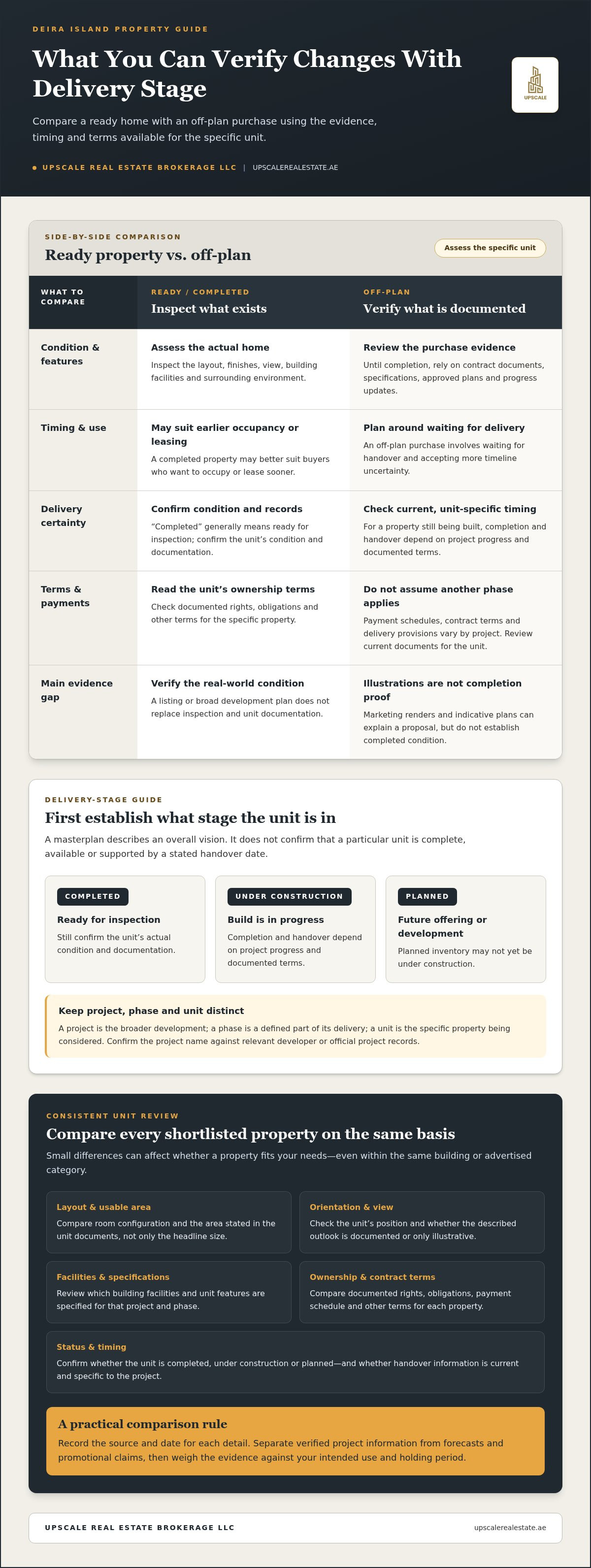
Set a holding period before comparing units. A completed property may better suit someone who wants to occupy or lease sooner, while an off-plan purchase involves waiting for delivery and accepting more timeline uncertainty. Consider how long you can hold the asset and what you would do if handover, leasing, or resale takes longer than planned.
What does the Deira Island property search include?
Search results may use different names for the development over time. The development was rebranded in August 2022; this overview of the development’s name and history provides context. When reviewing documents, confirm the project name against the relevant developer or official project record.
Be precise about what each listing describes. A project is the broader development; a phase is a defined part of its delivery; an individual unit is the specific property being considered. These terms are not interchangeable. Compare apartments, villas, or townhouses only when current project information supports that property type for the relevant phase or listing.
Record the source and date for each detail, including unit type, construction or completion status, stated handover timing, and documented terms. This gives you a sound basis for comparing options and prevents broad development plans from being mistaken for confirmed features of a specific property.
Deira Island Property Types and Delivery Stages Explained
For deira island, compare a specific unit and its delivery status rather than relying on the development’s overall vision. Residential options may include apartments and villas, but availability and details can differ by project and phase. Treat each listing as a separate proposition, and use current project documentation to establish what is being offered.
Delivery stage shapes what you can verify today, when you may use the property, and how much uncertainty remains. “Completed” generally means the unit is ready for inspection, subject to confirming its condition and documentation. “Under construction” means the property is still being built, so completion and handover depend on project progress and documented terms. “Planned” inventory refers to future development or offerings that may not yet be under construction. A masterplan or marketing image alone doesn’t make a unit completed or available.
How do ready and off-plan properties differ?
With a ready property, you can assess the actual layout, finishes, view, building facilities, and surrounding environment. Off-plan buyers may need to rely on contract documents, specifications, approved plans, and progress updates until the home is complete. That affects both the purchase timeline and the evidence available for assessing the finished property.
Payment schedules, contract terms, and delivery provisions vary by project. Review the current documents for the particular unit rather than assuming terms from another phase apply. For a broader comparison of the trade-offs, see this ready versus off-plan property guide. For transaction and registration information, consult the official land department.
Which property details should you compare?
Use the same checklist for each shortlisted unit. Small differences can affect how well a property serves your needs, even when units share a building or advertised category.
- Layout and usable area: Compare room configuration and the area stated in the unit documents, not just the headline size.
- Orientation and view: Check the unit’s position and whether the described outlook is documented or only illustrative.
- Facilities and specifications: Review which building facilities and unit features are specified for that project and phase.
- Ownership and contract terms: Compare the documented rights, obligations, payment schedule, and other terms for each property.
- Status and timing: Confirm whether the unit is completed, under construction, or planned, and whether handover information is current and specific to the project.
Marketing renders and indicative plans can help explain a proposal, but they aren’t evidence of completed condition. For a structured review of ready and off-plan options against your intended use and timeline, explore ready and off-plan property guidance.
How to Compare Deira Island Property Opportunities and Risks
A fair comparison uses the same criteria for each unit, whether it is ready or off-plan. Record the status and evidence behind every assumption. The framework below helps separate documented facts from estimates that need to be tested.
| Comparison factor | What to record | Why it matters |
|---|---|---|
| Status | Completed, under construction, or planned, with a dated source | Clarifies what can be inspected and what remains uncertain |
| Property type | Verified category, unit details, and documented specifications | Supports like-for-like comparisons |
| Intended use | Owner occupation, rental income, or longer-term holding | Connects the asset to your objective |
| Timeline | Expected use or leasing start and documented handover information | Shows whether the timing fits your plans |
| Documented terms | Purchase, payment, ownership, and ongoing obligations | Surfaces differences that marketing summaries may omit |
For every rental or market figure, note the source and date, and check that it relates to a comparable property. Distinguish evidence such as registered transactions or current comparable rents from developer projections and general market forecasts. A forecast is a scenario to test, not a promise of yield or appreciation.
How should investors assess income and appreciation assumptions?
Model gross yield separately from net yield. Gross yield compares annual rental income with the purchase price; net yield accounts for applicable recurring expenses and periods without a tenant. State your occupancy assumption and include relevant costs such as service charges, maintenance, and property management where applicable. Keep appreciation assumptions separate from rental calculations. Then test how the investment performs if rent is lower, vacancy lasts longer, or costs rise. For a wider portfolio perspective, see the Dubai property portfolio management guide.
What risks deserve attention before choosing a unit?
Assess delivery and specification risks for off-plan homes, and occupancy and resale risks for both ready and future properties. Consider concentration too: a large allocation to one development, property type, or delivery period can make a portfolio more exposed to a single set of market conditions. Resale flexibility depends on the asset, documented terms, and market conditions, so don’t treat a projected exit value as certain.
Review ownership, registration, and project documentation through current authoritative channels. For an off-plan purchase, establish which project records and registration arrangements apply to that specific unit; don’t assume Oqood or escrow details are identical across projects. The relevant land department and applicable real estate guidance are useful starting points for checking current requirements. A disciplined comparison makes uncertainty visible instead of disguising it as a guaranteed return.
Deira Island Property Due Diligence: A Practical Buyer Checklist
A disciplined review starts before you compare contracts. For deira island property, build a record of what is verified, what is an estimate, and what still needs an answer. Requirements can differ between completed and off-plan purchases, so use the rules and documents that apply to the specific transaction.
Before committing, verify the property, the transaction documents, and the assumptions behind your decision.
- Set your objective. Define whether the purchase is for your own use, rental income, or a longer-term investment. Record your intended holding period, delivery preference, and acceptable level of uncertainty.
- Create a shortlist. Select properties that match those objectives. For each one, note the project and phase, unit identifier, type, status, and the source and date of the information.
- Compare on consistent criteria. Use the same measures for every option: purpose, status, layout, documented specifications, transaction terms, expected timing, and recurring ownership obligations. Keep projected rent or appreciation separate from confirmed facts.
- Review the unit and project documents. Match the identified unit to its plans and specifications. Read the payment obligations, completion and handover provisions, and any relevant written disclosures. For off-plan purchases, pay particular attention to project-specific records and terms; for completed properties, review the documents relevant to the existing unit and ownership.
- Check current transaction and ownership guidance. Use the relevant land department and other applicable official sources to verify rules and records. The department’s investor overview provides additional context, but check transaction requirements against current authoritative guidance.
- Resolve gaps and retain records. Write down unanswered questions instead of filling gaps with assumptions. Keep dated copies of source material, contractual documents, and written disclosures so your decision can be traced back to the evidence available at the time.
What should buyers verify in project and unit documents?
Check that the documents identify the same unit you intend to buy and that its specifications, payment obligations, and completion provisions are clear. Confirm which registration and ownership records apply to the transaction using current official guidance. A project brochure or verbal description can help frame questions, but it shouldn’t replace the relevant records and contract documents.
How can you compare a shortlist consistently?
Use one comparison sheet and record open items beside the relevant property. For example, mark an unverified handover date or unclear recurring obligation as unresolved rather than treating it as fact. This makes differences visible and helps ensure your preferred option receives the same scrutiny as the alternatives.
For a purchase review grounded in your intended use and documented terms, explore property buying support.
Choose a Deira Island Purchase Strategy That Fits Your Goals
There’s no single property strategy that suits every buyer. A ready home may make more sense if you want to occupy or lease a unit sooner and can confirm its condition and ownership documents. An off-plan purchase may suit a buyer with a longer horizon who can accommodate construction and handover uncertainty. Neither route guarantees rental income or appreciation.
For a deira island purchase, weigh four factors together: intended use, acceptable risk, timing, and how much of your property portfolio you’re committing to one development. A unit can match your preferred property type yet still be a poor fit if its completion timeline, cash-flow demands, or ongoing management needs don’t align with your plans.
How do you match a property choice to your holding plan?
If you need a home in the near term, prioritise verified readiness, practical move-in considerations, and whether the unit fits your day-to-day needs. For a longer holding period, examine the basis for delivery assumptions, when capital may be required, and how the purchase affects portfolio balance. Compare those factors with your capacity to hold through delays or changes in market conditions.
What support can a buyer expect during the decision?
Upscale Real Estate Brokerage LLC supports buyers with ready and off-plan property sales, helping structure comparisons around objectives, documented terms, and transaction considerations. Where relevant to your plan, property management and investment advisory can also inform how a purchase may be held and managed. The focus is a transparent review of options, not a blanket recommendation.
Before settling on a shortlist, write a brief covering your intended use, holding period, delivery preference, risk tolerance, and management needs. This gives each option a consistent basis for evaluation and makes trade-offs clearer. To discuss a Deira Island property strategy, share your purchase brief and shortlist with Upscale Real Estate Brokerage LLC.
Make Your Deira Island Decision with Clarity
A sound deira island purchase begins with fit, not forecasts. Match the property to your intended use, holding period, budget, and comfort with delivery timing. Then compare ready and off-plan options on consistent criteria, checking unit details, documented terms, ownership requirements, and ongoing obligations.
Keep evidence separate from assumptions. Rental income and appreciation projections are scenarios, not guarantees, and should be tested against dated, comparable information. A clear shortlist and careful document review can help reveal which trade-offs suit your objectives and where uncertainty remains.
Upscale Real Estate Brokerage LLC is a RERA-licensed brokerage, ORN 23084, supporting buyers with ready and off-plan sales, property management, and investment advisory. For a considered discussion of your goals and shortlist, discuss your property requirements with Upscale Real Estate Brokerage LLC.
With a grounded strategy and the right evidence, you can move forward with greater confidence and a purchase plan shaped around your priorities.
Frequently Asked Questions
Is Deira Island a suitable place to buy property?
It may suit you if the property, timing, and level of uncertainty align with your objectives. A homebuyer may prioritise unit fit and documented readiness, while an investor may assess income potential, holding period, and portfolio balance. For deira island, compare current project and unit information with your requirements. Verify ownership terms and delivery details, and treat forecasts about demand, rent, or appreciation as scenarios rather than assurances.
What types of property can buyers find on Deira Island?
Property categories depend on the specific project, phase, and current sales stage. Buyers may find apartments, while other residential types should be considered only where current project information supports them. Check the individual listing and project documents for unit specifications, facilities, availability, and contractual terms. Don’t assume that a feature or property type described for one development applies across the wider area or to every phase.
Can international buyers purchase property on Deira Island?
International buyers may acquire property in designated freehold areas. Depending on the specific property and applicable terms, ownership arrangements may include freehold ownership, usufruct, or a long-term lease of up to 99 years. Confirm eligibility, title arrangements, registration steps, and required documents using current official guidance. Don’t assume another property’s ownership terms or transaction process will apply to your chosen unit.
Is it better to buy ready or off-plan property on Deira Island?
Neither option is automatically better; the right choice depends on your priorities and risk tolerance. A completed unit offers more visibility into its actual condition, layout, and surroundings. An off-plan purchase requires closer attention to project status, specifications, payment obligations, and delivery provisions. Compare each option against your intended use and timeline, and rely on current, project-specific documents rather than general marketing material or assumed handover dates.
How can I assess the rental yield of a Deira Island property?
Estimate yield using comparable rental evidence and clear assumptions. Gross yield compares estimated annual rent with the purchase price; net yield deducts applicable recurring expenses and allows for vacancy and management considerations. Use evidence that matches the unit type and location, and distinguish achieved rents from asking rents. Record the date and source for each figure. Treat any result as a scenario, not a guaranteed return or forecast of future performance.
What should I check before buying an off-plan property on Deira Island?
Review the project and unit identification, specifications, payment obligations, and completion and handover provisions. Check relevant project registration and transaction documentation against current official guidance, including records applicable to the specific purchase. Confirm that dates and terms relate to the correct project and phase. Keep dated copies of source material, the contract, and written disclosures. Marketing images or verbal descriptions shouldn’t substitute for formal documents.
How do I compare Deira Island properties before making an offer?
Use the same comparison criteria for every option: property type, layout, status, delivery timing, documented terms, intended use, and ongoing ownership obligations. Note the source and date for each detail, then mark assumptions and unanswered questions clearly. Consider how each property fits your holding period and risk tolerance. This structured shortlist helps reveal meaningful trade-offs without relying on a single headline figure or promotional projection.