

What if the most impressive waterfront listing isn’t the strongest fit for your needs or investment goals? A striking view and an attractive asking price can draw attention, but they don’t reveal the full ownership picture. If you’re searching for luxury waterfront properties for sale through Upscale Real Estate Brokerage LLC, compare the evidence behind each listing as carefully as its appeal.
That uncertainty is familiar: listings can be difficult to compare, recurring charges may be unclear, and title or transaction documents need careful verification. A sound decision starts with assessing each option as an asset, not simply choosing the most appealing listing.
This guide provides a transparent framework for comparing ready and off-plan properties using consistent criteria. It explains which ownership, condition, documentation and ongoing cost details to verify, and how to weigh rental potential, management needs and investment fit. The same disciplined approach can help distinguish advertised appeal from information supported by evidence.
With clear priorities and a documented shortlist, you can discuss suitable options with a qualified adviser at Upscale Real Estate Brokerage LLC and make your next decision with greater visibility.
Key Takeaways
- Separate lifestyle appeal from investment suitability by assessing how the waterfront setting affects the property’s use, demand and upkeep.
- Compare ready and off-plan options by possession timing, inspection access, delivery dependencies and payment milestones.
- Use consistent criteria to review palm jumeirah properties for sale, including usable space, condition and ongoing ownership obligations.
- Distinguish gross rental yield from net yield by accounting for recurring expenses and realistic vacancy assumptions.
- Follow a documented due diligence sequence, and identify which title, condition and transaction checks may require qualified professional advice.
What to assess before buying a premium waterfront property
Lifestyle appeal and investment suitability are separate questions. A waterfront home may offer a setting that supports a particular way of living, but that alone doesn’t establish whether it suits your financial objectives or ownership capacity. Treat it as an asset whose setting and relationship to the water can affect how you use it, the demand it may attract and the upkeep it requires.
Start with your purpose, time horizon and practical capacity. Consider how the setting shapes access, privacy and day-to-day use, then look beyond the listing to confirm the specific characteristics of the property. For broader context on how waterfront developments are planned and shaped, the development’s historical and geographical overview can illustrate why setting matters when assessing an individual property.
A listing can sell the appeal; only verified evidence can support an investment case. Advertised views and features may help you identify options, but they don’t independently confirm title, condition or building information.
Start with your intended use and investment horizon
Define the role the property needs to play before comparing options. A primary residence prioritises everyday suitability; a second home may depend on how often you expect to use it; a long-term investment calls for closer attention to income potential, holding period and management needs. Ask how long you expect to own the property and whether personal use, potential income or portfolio balance comes first. These priorities shape which trade-offs are acceptable.
Understand what a listing can and cannot confirm
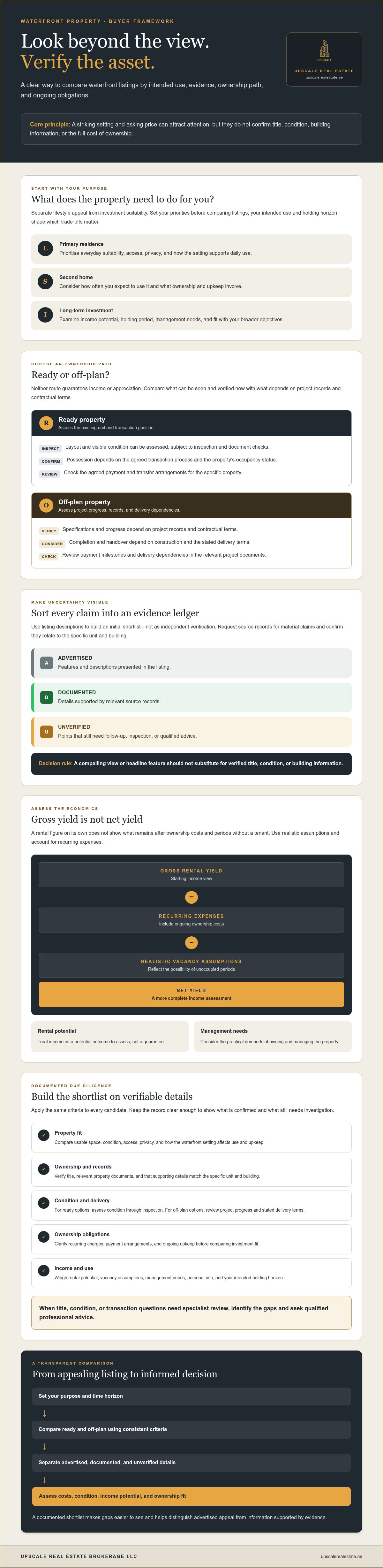
Use listing descriptions to create an initial shortlist, not as independent verification. Separate claims about views, layout or facilities from facts that require supporting records or direct assessment. Request source documents for material claims, then confirm that the information relates to the specific unit and building under consideration. A clear record helps you identify gaps early and compare candidates on evidence rather than presentation.
For each option, keep three categories distinct:
- Advertised: Features and descriptions presented in the listing.
- Documented: Details supported by relevant source records.
- Unverified: Points requiring follow-up, inspection or qualified advice.
This simple separation makes uncertainty visible. It also helps you decide what to investigate before proceeding, rather than letting a compelling view or headline feature substitute for due diligence. Your intended use and holding horizon should guide that review: a feature that matters to daily living may carry a different weight from one relevant to an investment plan.
Ready or off-plan: compare waterfront property ownership paths
Ready and off-plan purchases offer different levels of visibility. When comparing options, consider possession timing, inspection access and the records available for each property. A completed property can be assessed in its existing condition, while an off-plan purchase depends more heavily on project progress and contractual delivery terms. Neither route guarantees income or appreciation.
Waterfront settings can also reflect substantial engineering and development. The U.S. Geological Survey’s EROS overview provides context on land reclamation and development. For a specific purchase, assess the unit and project using their own documents, condition and terms. This ready-versus-off-plan property comparison offers further context for weighing the two paths.
| Factor | Ready property | Off-plan property |
|---|---|---|
| Certainty | Existing layout and visible condition can be assessed, subject to inspection and document checks. | Specifications and progress depend on project records and contractual terms. |
| Delivery dependency | Possession depends on the agreed transaction process and the property’s occupancy status. | Completion and handover depend on construction and the stated delivery terms. |
| Payment milestones | Confirm the agreed payment and transfer arrangements for the specific transaction. | Review the project’s payment schedule and each milestone in the sale agreement. |
| Immediate usability | Potentially usable after completion of the transaction, subject to condition and occupancy. | Not available for occupation until completion and handover, subject to the agreement. |
When a ready property may better fit the brief
An existing unit allows you to inspect its actual layout, finishes and visible condition rather than rely only on proposed specifications. Establish whether it’s vacant or occupied, and confirm what that means for your intended move-in or investment plan. Occupancy affects timing and practical use, but a ready property doesn’t guarantee rental income or faster appreciation. Verify relevant details before making an offer.
What to investigate before choosing off-plan
Review the sale agreement, payment schedule, specifications and delivery terms together. Check that the documents align on what is being purchased, when payments fall due and what the stated completion process involves. Verify current project and escrow information through relevant official sources, and seek qualified advice where terms or protections are unclear. Construction timelines can change, so assess the documented terms without assuming either a particular delay or guaranteed delivery timing.
Choose the path that fits your intended use, time horizon and capacity to manage uncertainty. An adviser can help you weigh ready and off-plan options against your objectives.
Compare properties using costs, condition, and investment evidence
Comparing palm jumeirah properties for sale on asking price alone can hide important differences. Build a consistent record for each candidate, separating verified details from estimates and assumptions. Review usable space rather than relying only on advertised area, and check which recurring obligations and maintenance responsibilities apply to the specific property.
Ownership obligations: Record one-time transaction items separately from recurring charges. Verify applicable fees and payment responsibilities against current documentation. For ongoing costs, check service-charge records, maintenance responsibilities and insurance terms rather than assuming they are identical across properties.
Condition: Note inspection findings, visible maintenance needs and any issues requiring further assessment. Identify what is documented, what has been inspected and what remains unconfirmed.
Usable space: Compare the layout and areas that support your intended use. Consider circulation, storage, privacy and access, not just the advertised floor area.
Investment evidence: Record rent assumptions, vacancy allowances, recurring expenses and the source period for any transaction comparisons. Keep estimates distinct from verified figures.
Model the full ownership picture
Separate acquisition obligations from ongoing expenses in your model. Recurring assumptions may include service charges, maintenance, insurance, vacancy and property management where applicable. Check each against current property-specific documents or relevant official information. Avoid generic cost ranges: use verified figures for the property under review, and record the date and source so your comparisons remain grounded.
Net yield is rental income after relevant operating costs, assessed against the investment basis. Gross rental yield does not account for those costs or periods without a tenant. Model vacancy and expense assumptions transparently, then compare the resulting scenario with your objectives. It is an estimate, not a guaranteed outcome.
Assess demand and resale considerations
Buyer fit can influence both leasing prospects and future resale interest. Compare layout, privacy, access and building condition against the likely needs of the next resident or purchaser. Where transaction evidence is available, check that it relates to comparable properties and note its period; broad market activity alone may not reflect the value of a specific unit.
For additional context on evaluating completed assets, see the ready-property sales investment guide. Use it alongside current, property-specific records, not as a substitute for verifying costs, condition and transaction evidence before making a decision.
Complete buyer due diligence before making an offer
A disciplined review connects the listing, source documents, physical condition and ongoing obligations before you commit. For each property under consideration, keep a record of what you’ve checked, the document or source used, and any point that still needs confirmation. You can organise the review yourself, but title interpretation, legal requirements and transaction procedures may call for qualified professional advice.
Verify title, transaction documents, and property details
Begin by requesting the available ownership records, sale documents and property information. Match the unit identifier, layout and other material details against the records and proposed agreement. Ask about disclosed encumbrances or restrictions, and verify ownership information, permitted use and applicable transaction steps through current official sources. Have a qualified professional assess jurisdiction-specific legal requirements and explain any terms you can’t confirm independently.
Inspect condition and recurring obligations
Arrange an appropriate inspection of the specific unit. Record visible defects, signs of wear and repair questions, then seek expert assessment where an issue needs technical evaluation. Request current service-charge information, building rules and maintenance-responsibility details. Review the relevant documents rather than relying on general descriptions. The property management and ownership strategy guide can help frame how ongoing responsibilities fit your ownership plan.
Use this sequence to keep the review practical:
- Request records: Gather available title and ownership information, sale documents, unit details, building information and applicable charge records.
- Match the details: Compare the advertised unit with source documents and the proposed transaction paperwork. Note inconsistencies or missing information.
- Check official sources: Confirm ownership information and current transaction procedures through relevant official channels. Seek qualified advice on legal interpretation, permitted use and disclosed encumbrances.
- Inspect the property: Document visible condition and repair questions. Ask an appropriate professional to assess matters beyond a visual review.
- Review ongoing obligations: Verify service charges, building rules, maintenance responsibilities and insurance terms against current documents.
- Complete a final review: Resolve open questions, confirm the documents reflect the agreed property and terms, and obtain professional guidance before proceeding where needed.
Buyers can request records, compare details and document inspection observations. Confirming legal effect, title status, encumbrances and jurisdiction-specific requirements may require a qualified adviser and current official sources. Don’t treat an unanswered question as a confirmed fact.
If you’re preparing a shortlist, discuss your property requirements with an adviser to clarify which records and property details to review before making an offer.
Turn your property shortlist into a transparent acquisition plan
A shortlist becomes more useful when every candidate is measured against the same priorities and evidence. Record what matters to you, what each property appears to offer, and what still needs confirmation. This helps an adviser compare suitable options without treating an unverified listing claim as a fact.
Prepare a brief an adviser can act on
Set out your intended use, preferred property type, decision timeline and investment priorities. Separate essential requirements from preferences you could reconsider. For example, a required layout or intended occupancy date may be non-negotiable, while a particular outlook or floor level may be flexible. Include your expected holding period and whether personal use, income potential or portfolio balance takes priority.
Then keep a simple comparison record for each shortlisted property:
- Fit: How it meets your intended use and essential criteria.
- Evidence: Which property, ownership and building details are documented, and which remain unverified.
- Assumptions: Any estimates used to assess income, recurring obligations or future resale.
- Open questions: The records, explanations or professional advice still needed before you proceed.
Ask for supporting documents behind material claims and request clear explanations of assumptions. If two options appear similar, this record can reveal whether the difference lies in condition, usable space, ongoing obligations or the strength of available evidence.
Plan beyond the purchase decision
An investment plan should account for ownership after completion. Consider how the property may be managed, what ongoing responsibilities could require attention and whether those needs align with your capacity and objectives. Review the holding period, portfolio fit and exit assumptions with qualified advice; treat future income and resale expectations as assumptions to test, not promised outcomes.
Brokerage guidance can help refine your criteria, compare ready and off-plan options, and keep the review grounded in property-specific information. Investment advisory can support consideration of the asset’s role in your wider objectives, while property management can help owners plan ongoing operations and tenant relations. Confirm current availability and details for each property rather than assuming a shortlist reflects what is currently offered.
A clear brief gives the discussion a practical starting point. Discuss your property search and acquisition priorities to review your requirements and consider appropriate next steps.
Make your next property decision with greater clarity
A waterfront purchase deserves more than a comparison of views and asking prices. Start by matching the property to your intended use and holding period, then compare ready and off-plan options using consistent criteria. Verify title, condition, transaction documents and recurring ownership obligations before making a commitment.
For palm jumeirah properties for sale, a clear shortlist should distinguish confirmed information from estimates and unanswered questions. It should also account for management needs and how the asset fits your wider investment objectives.
Upscale Real Estate Brokerage LLC is a RERA-licensed brokerage operating under ORN 23084, with services in ready and off-plan property sales, property management and investment advisory. Discussing your requirements with an adviser can help clarify your criteria and identify practical next steps, without assuming a particular property is right for you.
Discuss your property requirements with an adviser and take the next step with a well-defined plan.
Frequently Asked Questions
Can international buyers purchase property in the UAE?
Yes, international buyers may purchase property in the UAE where ownership rules allow it. Eligibility depends on the property’s location, ownership type and current regulations, so confirm the specific conditions with relevant official sources and a qualified adviser before proceeding. Check how ownership will be recorded, what documents are required, and which transaction steps apply to your purchase. Don’t assume the rules are the same for every property or buyer.
What should I check before buying a waterfront property?
Check whether the property fits your intended use, then verify its ownership records, condition and ongoing obligations. Inspect the unit where possible, confirm usable space and occupancy status, and review applicable service charges, maintenance responsibilities, building rules and insurance terms. Ask for source documents supporting material listing claims. If a title, legal term or transaction requirement is unclear, seek qualified advice and verify current requirements with official sources before committing.
Is a ready property or an off-plan property better for investors?
Neither is automatically better; the right choice depends on your investment objectives, timeline and tolerance for uncertainty. A ready property can be inspected in its existing condition, while an off-plan purchase depends on project documents, construction progress and contractual delivery terms. Compare payment milestones, possession timing, usability and the evidence available for each option. Assess expected income and costs using documented assumptions, not guarantees of rent, delivery timing or appreciation.
How much does it cost to own a waterfront property?
There isn’t one reliable total without reviewing the specific property and transaction. Separate one-time purchase and transfer obligations from recurring expenses such as service charges, maintenance, insurance and property management, if applicable. Investors should also model possible vacancy and repair costs. Request current, property-specific documents and confirm applicable fees with official sources. Avoid relying on generic estimates, since responsibilities and charges can differ between properties and ownership arrangements.
What documents should I request before making an offer?
Request available ownership and title information, the proposed sale documents, unit details, building information and current records for applicable charges and rules. For an off-plan purchase, review the sale agreement, specifications, payment schedule and delivery terms. Match each document to the specific property and record missing or inconsistent details. Confirm ownership, encumbrances and transaction procedures through current official sources; ask a qualified professional to interpret legal requirements or unclear terms.
Can a property generate rental income after purchase?
A property may generate rental income if it is suitable for leasing and there is tenant demand, but income isn’t guaranteed. Check permitted use, occupancy status, condition and ongoing costs, then model rent against vacancy, maintenance, service charges and management expenses. Distinguish gross rent from net income after relevant operating costs. Confirm applicable leasing requirements through current official sources, and consider whether the expected income and management demands fit your investment plan.