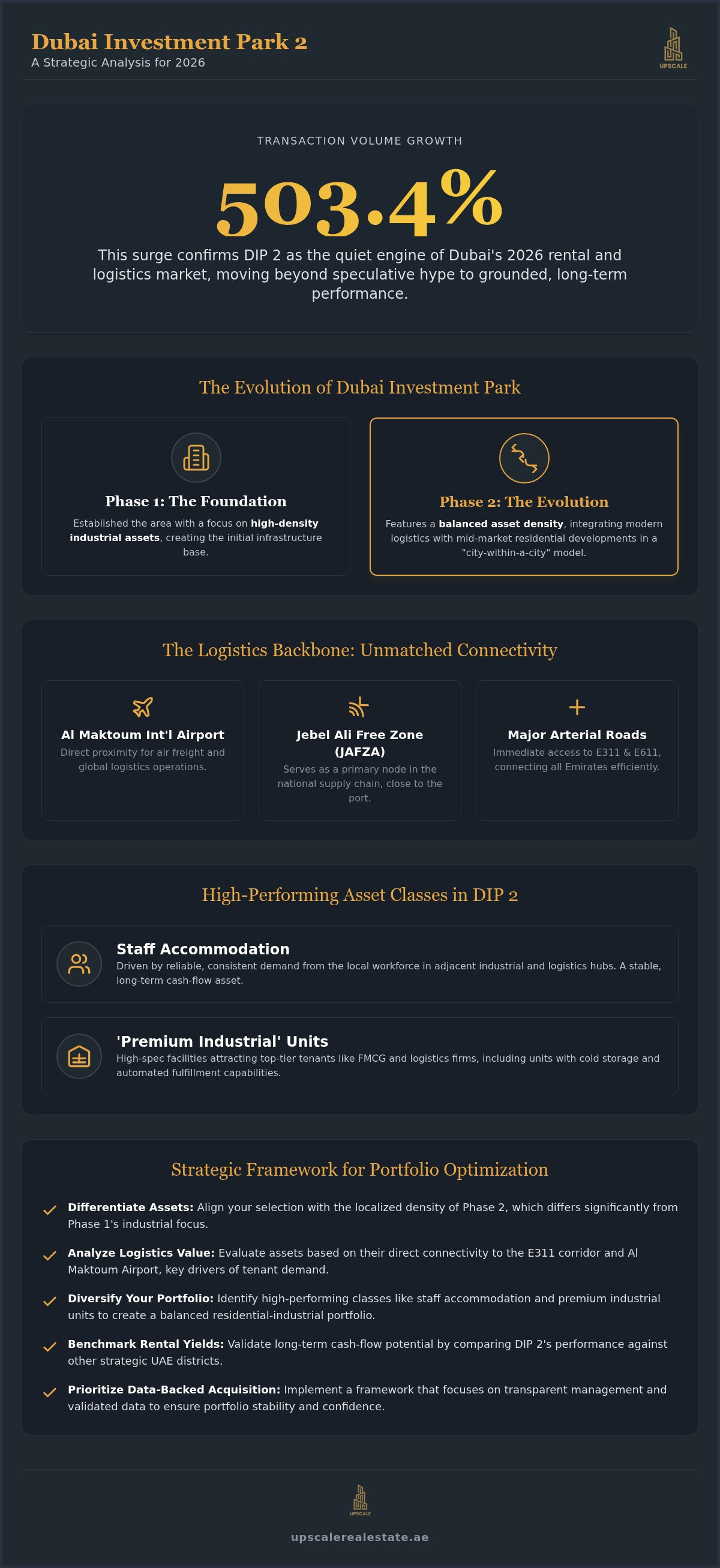
While capital appreciation often grabs the headlines, a 503.4% surge in transaction volume confirms that dubai investment park 2 is the quiet engine of the 2026 rental market. Many investors feel the pressure of market volatility and struggle with a lack of transparent yield data when evaluating industrial-residential hubs. You likely want a secure, data-backed strategy that bypasses the hype of speculative districts in favor of grounded, long-term performance. It's understandable to feel cautious when navigating complex master community regulations and shifting legal frameworks.
This guide promises to demystify the investment potential of this strategic zone by providing validated ROI benchmarks and a clear framework for asset selection. We'll explore how the proximity to Al Maktoum International Airport and Expo City creates a unique logistics-residential hybrid value that drives consistent demand. By the end of this reference, you'll have a sophisticated understanding of current price modeling, infrastructure advantages, and the regulatory visibility required to optimize your UAE real estate portfolio with confidence. We move beyond the surface to provide the advisory-led insights necessary for high-value asset management.
Key Takeaways
- Differentiate between Phase 1 and Phase 2 to ensure your asset selection aligns with localized density and specific industrial demand.
- Analyze the logistics-driven value of dubai investment park 2 through its direct connectivity to the E311 corridor and Al Maktoum International Airport.
- Identify high-performing asset classes, including staff accommodation and 'Premium Industrial' units, to diversify your residential-industrial portfolio.
- Benchmark 2026 rental yields against other UAE districts to validate the long-term cash-flow potential of ready property investments.
- Implement a strategic framework for portfolio optimization that prioritizes transparent management and data-backed asset acquisition.
Understanding Dubai Investment Park 2: A Strategic UAE Hub in 2026
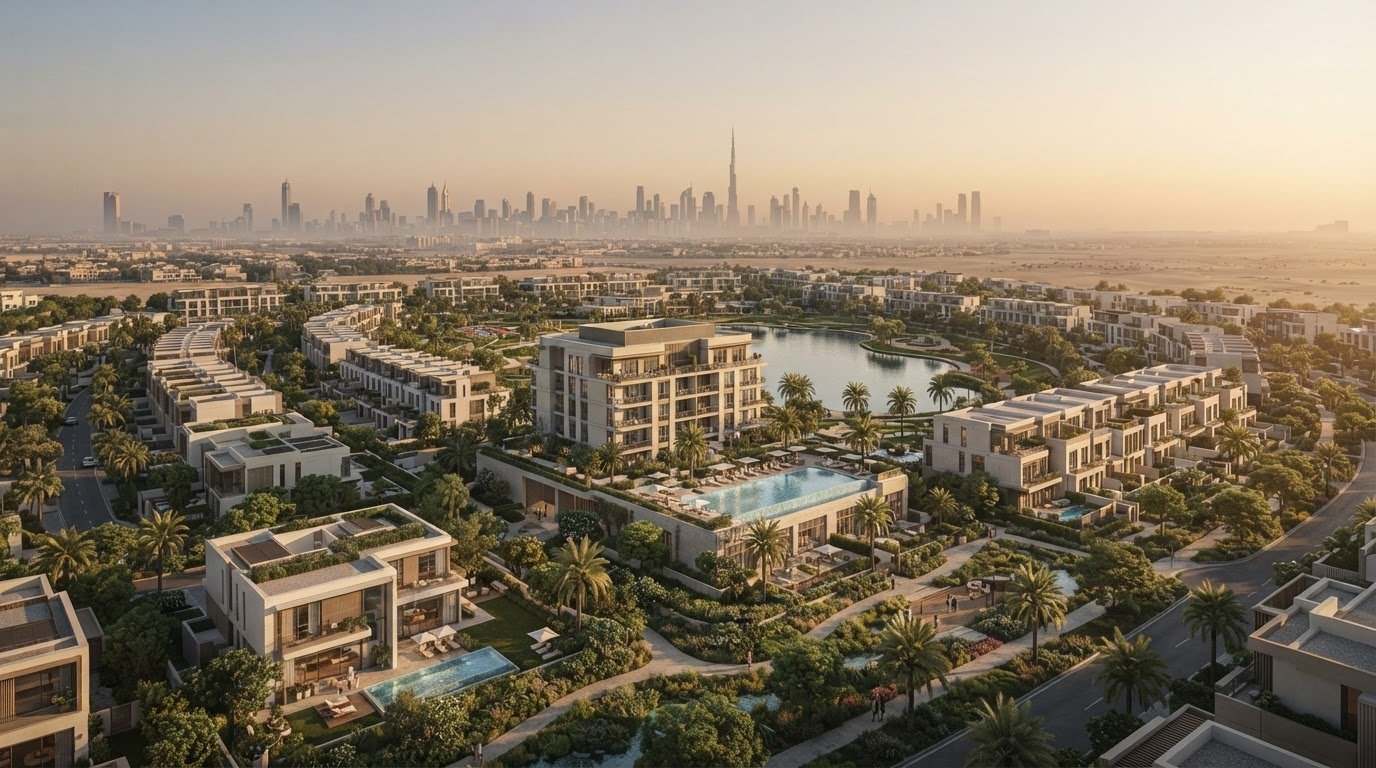
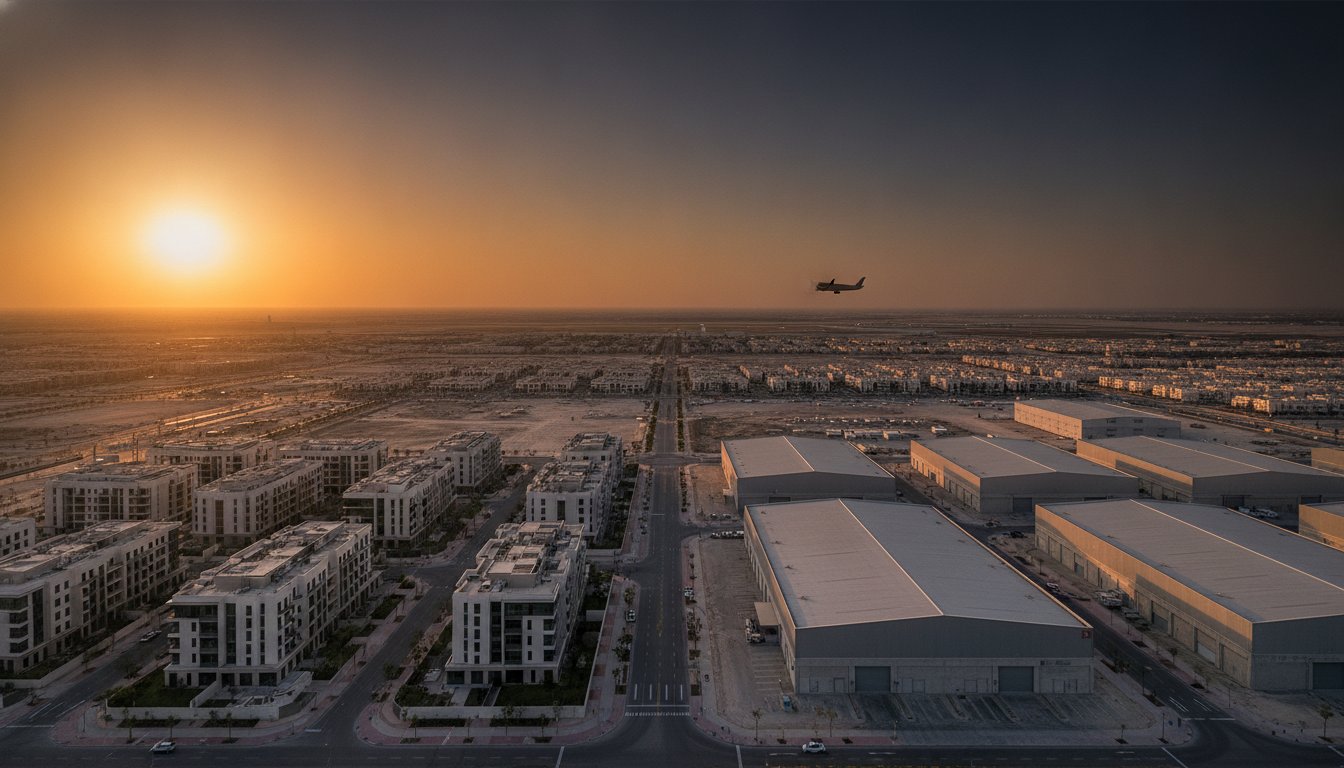
Dubai Investment Park 2 represents a fundamental shift in how the UAE integrates industrial productivity with residential living. It's no longer just a support zone; by 2026, it has matured into a uniquely structured multi-use district that operates as a high-tech logistics and light-manufacturing center. This district follows a "city-within-a-city" philosophy, where commercial and residential sectors aren't just adjacent but functionally integrated. This synergy is a core driver of the area's 503.4% transaction volume growth recorded over the last year.
While Phase 1 established the foundation with high-density industrial assets, dubai investment park 2 offers a different profile. It features a more balanced asset density, allowing for modern infrastructure that supports both heavy logistics and mid-market residential developments. This evolution aligns with the UAE's broader strategy to create self-sustaining economic hubs that reduce commuter transit times and increase operational efficiency for businesses. It's a grounded approach to urban planning that prioritizes long-term utility over short-term speculation.
The Master Plan and Regulatory Framework
The district is managed under a robust model by Dubai Investments PJSC, ensuring a high standard of maintenance and infrastructure oversight. Investors need to understand the nuances of land tenure here. Most industrial plots operate on a long-term leasehold basis, while specific residential pockets offer freehold opportunities. This distinction is critical for accurate yield modeling and capital allocation.
The Dubai Land Department (DLD) provides the necessary regulatory visibility by governing all transactions within the park. In 2026, the DLD has intensified its oversight, particularly regarding escrow accounts for new developments. This ensures that capital is tied strictly to construction milestones, offering a layer of security that traditional industrial zones often lack. It's a transparent framework that builds investor confidence in long-term portfolio stability.
Economic Drivers and National Significance
As a core component of the broader Dubai Investments Park (DIP) master development, the second phase is vital to the UAE's 2026 economic diversification goals. Its location is its greatest asset. Positioned near the Jebel Ali Free Zone (JAFZA) and Al Maktoum International Airport, it serves as a primary node in the national supply chain. This proximity isn't just convenient; it's a strategic requirement for modern commerce.
We've seen a significant clustering of FMCG and specialized logistics companies within dubai investment park 2. These entities choose the district because the infrastructure supports high-spec cold storage and automated fulfillment centers. The proximity to the E311 and E611 arterial roads ensures that goods move efficiently across the Emirates, making it a low-friction environment for commercial leasing. This industrial demand creates a reliable floor for residential occupancy, as the local workforce seeks proximity to these growing employment hubs.
Infrastructure and Connectivity: The Logistics Backbone
Logistics efficiency is the primary driver of industrial asset valuation. In dubai investment park 2, infrastructure isn't just a utility; it's a competitive advantage that directly lowers operational overheads for commercial occupants. By 2026, the district has successfully integrated smart traffic management systems to mitigate peak-hour congestion, ensuring the movement of goods remains predictable. This predictability is what allows institutional investors to model more accurate yields based on stable occupancy from high-tier tenants who prioritize supply chain reliability.
The district's placement provides immediate access to the E311 (Sheikh Mohammed Bin Zayed Road) and E611 (Emirates Road). These are the UAE's most critical arterial routes, connecting Dubai to Abu Dhabi and the Northern Emirates. Proximity to these gateways, alongside the Dubai Investments Park integrated ecosystem, reduces fuel costs and transit times for distribution-heavy businesses. It's a strategic location that effectively places a majority of the UAE’s population within a 90-minute drive, making it an ideal hub for last-mile delivery services.
National Road and Rail Integration
With the 2026 expansion of the national rail network, DIP 2 has transitioned into a multimodal hub. The "15-minute city" planning approach has been adapted for industrial use, ensuring that support services, retail amenities, and staff housing are within a short radius of manufacturing units. This reduces the need for extensive staff transport fleets, which can account for a significant portion of a company’s local operating costs. By lowering these barriers, the district maintains a high retention rate for commercial tenants.
Utilities and Sustainable Infrastructure
Sustainability is no longer optional for global logistics firms seeking to meet international standards. DIP 2 has led the way by integrating solar power grids and greywater recycling systems into new industrial units. These ESG-compliant features aren't just for environmental impact; they provide long-term energy security and lower utility costs in a volatile global energy market. For manufacturers, the reliability of power and water supply is a fundamental pillar of their ROI modeling, as it prevents costly downtime.
The 2026 rollout of 6G and high-speed fiber-optic connectivity has transformed traditional warehouses into smart facilities. These units now support real-time inventory tracking and automated fulfillment systems, attracting tech-forward companies willing to pay a premium for high-spec space. If you're looking to optimize a commercial portfolio in this space, our real estate portfolio management framework can help you identify assets with the most advanced technical specifications to ensure long-term value.
Asset Classes in DIP 2: Balancing Industrial and Residential
Success in dubai investment park 2 stems from the symbiotic relationship between its industrial and residential components. Unlike isolated zones, this district creates a captive market where the industrial workforce directly fuels the residential sector. Investors can choose from three primary asset classes: specialized warehouses, purpose-built staff accommodation, and mid-market apartments. This diversity allows for strategic portfolio hedging, as industrial demand often remains resilient during shifts in the broader luxury residential market.
The commercial landscape has shifted toward 'Premium Industrial' assets. These units combine high-spec warehouse space with sophisticated office components, catering to corporate headquarters that require operational proximity. We see a significant rise in specialized facilities, including temperature-controlled cold storage for the FMCG sector and light manufacturing units. The district's location has also made it a primary choice for 'Last-Mile Delivery' hubs, supporting Dubai's rapid e-commerce expansion. Grade A industrial space, characterized by high ceiling clearances and advanced fire-safety systems, continues to see robust demand as transaction volumes for the area grew by 503.4% over the last year.
Industrial and Logistics Real Estate
The logistics sector remains the backbone of the district. Warehouses are no longer just storage spaces; they're high-tech fulfillment centers. The trend of 'Last-Mile Delivery' hubs is particularly strong here, driven by the need for rapid distribution to nearby residential clusters. These assets offer long-term lease stability, as the high cost of specialized fit-outs often leads to tenant retention. For corporate investors, these properties provide a grounded alternative to more volatile commercial sectors.
Residential Leasing and Staff Accommodation
The residential landscape is primarily defined by its utility and proximity to employment. For investors, the growth of mid-market apartment for rent opportunities within dubai investment park 2 provides a stable income stream with high occupancy levels. These assets serve the professional workforce employed within the park and nearby Expo City, offering a practical living solution that avoids the high price points of central Dubai.
Beyond standard apartments, purpose-built staff accommodation represents a high-yield institutional asset class. These facilities are designed to meet strict regulatory standards for worker welfare, making them essential for large-scale corporate tenants. Residential retention is further supported by a mature community infrastructure, including established schools, clinics, and retail centers. This ecosystem ensures that the district remains a preferred living destination for the mid-income segment, providing the visibility and security that long-term investors require.
Investment Yields and Market Dynamics in DIP 2
In 2026, the financial profile of dubai investment park 2 stands out for its resilience. While other UAE districts navigate speculative price bubbles, this area remains grounded in high-yield performance. Gross rental yields for apartments here range between 9% and 10.5%, significantly outperforming the 5% to 7% typically found in more established residential hubs. This performance is driven by the consistent demand from the local workforce, ensuring that vacancy rates remain low even as new inventory enters the market. Despite a 4.6% dip in median prices per square foot over the last year, a 503.4% increase in transaction volume indicates a strong shift toward ready property sales as investors seek immediate cash flow.
When modeling a portfolio, it's useful to compare investing in Downtown Dubai properties against industrial assets in DIP 2. Downtown remains a primary target for capital appreciation and prestige. However, the industrial sector in DIP 2 offers superior cash-flow stability. Industrial leases often span five to ten years, providing a level of predictability that the residential market can't match. This makes the district an essential hedge for a diversified UAE portfolio, balancing the high-growth potential of central Dubai with the steady income of an industrial hub.
Yield Analysis: Residential vs. Industrial
Industrial assets in the park often command higher net yields than residential units because tenants typically handle more of the maintenance and fit-out costs. The role of professional property management is vital here to ensure yield consistency and regulatory compliance. Additionally, the 2026 RERA rental index provides a transparent framework for mid-market residential units, allowing investors to plan for rental escalations with high visibility. This transparency reduces the friction often found in less regulated markets, making it easier to project long-term returns.
Risk Mitigation for Real Estate Investors
Managing vacancy risk in large-scale industrial portfolios requires a strategic approach to tenant profiling. We prioritize long-term lease structures with established corporate entities to ensure steady income and reduce turnover costs. In the 2026 market cycle, identifying the right entry point is crucial as median prices per square foot have stabilized at AED 1,498. If you're looking to optimize your asset selection, our real estate portfolio management advisory can provide the data-backed visibility you need to conclude a secure transaction.
Strategic Acquisition and Portfolio Management
Acquiring an asset in dubai investment park 2 requires a departure from the speculative mindset common in residential-only districts. This is an operational environment where the value of a property is tied directly to its utility and regulatory compliance. For sophisticated investors, the goal is to secure assets that serve the "Premium Industrial" demand we identified earlier. This involves a methodical selection process that prioritizes long-term structural integrity and the flexibility of the plot usage rights. Success here isn't found in market timing alone, but in the meticulous execution of a data-backed acquisition strategy.
The complexity of managing industrial-residential hybrids makes professional real estate portfolio management dubai a strategic necessity. Unlike standard apartments, industrial assets involve intricate leasehold agreements and specific maintenance requirements that impact the net yield. At Upscale Real Estate, we act as a strategic consultant rather than a mere middleman. Our RERA-licensed advisory (ORN 23084) focuses on providing the visibility you need to navigate these high-value transactions with total confidence.
The Due Diligence Framework
Due diligence in DIP 2 is notably different from other freehold areas in the UAE. We focus on verifying the specific plot usage rights to ensure they align with your intended commercial activity. Environmental compliance is equally vital; industrial units must meet strict standards to operate without risk of regulatory penalties. We also assess the "future-readiness" of warehouses, checking for the high-speed fiber-optic and 6G infrastructure necessary for smart logistics.
- Usage Rights: Confirming the plot is zoned for specialized activities like cold storage or light manufacturing.
- Structural Integrity: Evaluating floor load capacities and ceiling clearances for modern automation.
- Service Charges: Reviewing historical data to ensure costs align with the verified range of AED 12 to 18 per sq. ft.
Optimising Returns through Professional Management
Proactive maintenance is the most effective way to protect your capital expenditure. In an industrial context, a minor failure in cooling or power infrastructure can lead to significant tenant downtime and loss of yield. Professional management ensures these risks are mitigated through scheduled inspections and high-quality contractor oversight. It also plays a critical role in tenant profiling, helping you secure high-tier corporate occupants who value stability over the lowest possible rent.
We leverage the latest data from the Dubai Land Department to model realistic appreciation and rental growth. By grounding our strategy in these verified metrics, we help you build a portfolio that remains resilient against market volatility. Whether you are looking for ready property sales or long-term commercial leasing opportunities in dubai investment park 2, our end-to-end service model provides the steady hand required in this complex market.
Securing Your Position in Dubai’s Industrial-Residential Future
The evolution of dubai investment park 2 into a high-tech logistics and residential hub offers a grounded alternative to the volatility of speculative markets. By prioritizing assets with high technical specifications and ESG compliance, you can secure net yields that consistently outperform established central districts. Success in this complex environment depends on moving beyond surface-level data to embrace a strategy built on regulatory visibility and operational excellence. This district rewards those who prioritize data over intuition.
Navigating leasehold complexities and industrial due diligence requires a steady hand. Upscale Real Estate provides RERA-licensed expertise (ORN 23084) to guide your acquisition and management process. We offer transparent investment modeling and end-to-end property management services to ensure your portfolio remains optimized for long-term appreciation. Partner with Upscale Real Estate for Strategic Portfolio Management to transform these insights into a secure financial legacy. We look forward to helping you master this unique landscape and achieve your long-term investment goals.
Frequently Asked Questions
Is Dubai Investment Park 2 a freehold or leasehold area for international investors?
DIP 2 is primarily a leasehold area for industrial and commercial plots, with renewable leases typically spanning 30 years. However, specific residential developments within the park are available on a freehold basis for international investors. This distinction is vital for the accurate modeling of long-term asset value. Investors should always verify the specific title status of a unit with the Dubai Land Department before concluding any transaction to ensure full regulatory visibility.
What are the average rental yields for industrial properties in DIP 2 in 2026?
Industrial assets in 2026 typically offer gross rental yields between 8% and 11%. These robust returns are driven by the specialized nature of the units, such as cold storage or high-spec manufacturing centers, which command premium rents. Net yields remain attractive because commercial tenants often bear a significant portion of maintenance and fit-out costs. This makes dubai investment park 2 a preferred location for institutional portfolios focused on consistent, long-term cash flow.
How does DIP 2 differ from DIP 1 in terms of property types?
DIP 1 is the more established phase with a higher density of traditional industrial assets and older warehouses. In contrast, DIP 2 features more modern infrastructure and a better balance between industrial and residential sectors. It has evolved into a high-tech logistics hub with newer 'Premium Industrial' units that incorporate advanced office components. This phase has seen the majority of the district's recent 503.4% transaction volume growth, reflecting its status as the primary expansion zone.
Are there residential apartments for sale in Dubai Investment Park 2?
Yes, there are several residential dubai investment park 2 apartments for sale, including new off-plan projects like DAMAC Riverside. While the district was historically recognized for industrial use, the 2026 landscape features a significant volume of mid-market residential units. These properties cater to the professional workforce employed within the park and nearby Expo City. Ready property sales in the residential sector offer accessible entry points with median prices currently around AED 1,498 per square foot.
What schools and amenities are available within the DIP 2 community?
The community is supported by a mature infrastructure that includes established schools like Greenfield International School and The International School of Choueifat. Residents have access to clinics, retail centers, and recreational facilities within the master community. This integrated ecosystem is essential for maintaining high occupancy rates in residential leasing assets. It ensures the district remains a self-sustaining city-within-a-city that supports the long-term retention of a diverse and stable professional workforce.
How close is Dubai Investment Park 2 to the major UAE logistics ports?
The district is strategically positioned within 15 to 20 minutes of Jebel Ali Port and Al Maktoum International Airport. Direct connectivity to the E311 and E611 arterial roads ensures the seamless movement of goods between these critical logistics gateways. This proximity is a primary reason why FMCG and last-mile delivery companies cluster in this area. Reducing transit times directly impacts the operational ROI for commercial tenants, making the location a high-value asset in any logistics portfolio.
What are the service charges like for property owners in DIP 2?
Service charges in the district typically range from AED 12 to AED 18 per square foot annually. These fees cover the maintenance of the master community infrastructure, security, and common area utilities. For industrial property owners, these charges are relatively stable compared to high-end residential districts. Accurate modeling of these costs is a fundamental part of our advisory process to ensure that your net yield projections remain transparent and grounded in the current market reality.
Can companies operate under a Free Zone license within DIP 2?
DIP 2 is an onshore development managed by Dubai Investments PJSC and is not a designated Free Zone. Companies operating here typically require a DED license from the Department of Economy and Tourism. While it doesn't offer the same ownership structures as a Free Zone, its proximity to JAFZA allows businesses to benefit from offshore logistics while maintaining an onshore operational presence. This hybrid advantage is a key factor for companies looking to serve the local UAE market efficiently.